


 Amanda Pell
Campaign A costs $80 per lead. Campaign B costs $40 per lead.
Leadership wants to kill Campaign A. The logic seems sound: if B delivers leads for half the spend, why waste money on A?
Then you start using a revenue attribution tool, and the picture becomes clear.
Campaign A's leads average $15,000 in quote value. Campaign B's leads average $2,000. In other words, Campaign A delivers 7.5x more revenue per dollar spent.
Without revenue attribution, Campaign A's doubled cost per lead looked like dead weight. With it, you see the campaign driving most of your profits.
This is how "efficiency" kills growth. But with the right approach, agencies can stop optimizing for “efficiency” and start tracking which campaigns actually generate pipeline value—before they starve their most profitable work.
Note: Not a WhatConverts user yet? Start your free 14-day trial of WhatConverts today or book a demo with a product expert to see how we help prove and grow your ROI.
When Cost-Per-Lead Lies
Most agencies optimize for cost per lead. It's clean, measurable, easy to explain. It's also dangerously incomplete.
You're running two Google Ads campaigns for a home services client with a $10,000 monthly budget:
| Campaign | Monthly Spend | Leads | Cost Per Lead | Client Decision |
| Campaign A | $5,000 | 60 | $83 | Cut it |
| Campaign B | $5,000 | 125 | $40 | Double down |
Campaign B looks like the clear winner. Leadership wants to reallocate the entire budget there.
But when you track each lead to its actual quote value, the story changes:
| Campaign | Average Quote Value | Total Pipeline Value | Revenue Per Dollar |
| Campaign A | $15,000 | $900,000 | $180 |
| Campaign B | $2,000 | $250,000 | $50 |
Campaign A generates $180 in pipeline value for every dollar spent. Campaign B generates $50.
If you'd shifted the entire budget to Campaign B based on CPL, you would have traded $900K in high-value pipeline for $500K in low-value leads.
"Efficiency" just cost you $400,000 in potential revenue. And what’s worse is that, with the information available to you at the time, it would have been (or seemed to be, at least) the right decision.
The Efficiency Trap
Cost per lead tells you how much each lead costs to acquire. It doesn't tell you what each lead is worth.
That blind spot distorts optimization decisions, especially during budget reviews, reallocations, and renewals:
- Budgets drift toward volume drivers that look good in dashboards
- Campaigns generating fewer but higher-value opportunities get starved
- High-intent keywords ($80 CPL, $15K quotes) lose to cheaper awareness traffic ($40 CPL, $2K quotes)
This is usually where marketing gets pressured to “improve efficiency,” even when revenue is strong.
ROI becomes invisible. You’re reporting performance metrics while leadership is evaluating business outcomes. When the renewal conversation comes up, the numbers don’t protect you—even if the work is driving real growth.
The real damage isn't just wasted budget; it's opportunity cost. Every dollar you shift to "efficient" campaigns is a dollar not scaling the ones that actually deliver revenue.
Teaching Algorithms What "Valuable" Means
Seeing which campaigns generate revenue is one thing. Teaching your ad platforms to prioritize those campaigns is another.
That's where value-based bidding comes in.
Instead of telling Google "get me the most leads" or "keep my cost per lead under $50," you're telling it "prioritize leads worth $15,000 over leads worth $2,000."
The shift is subtle but powerful. Google's Smart Bidding stops chasing volume and starts chasing value. It learns which audiences, keywords, and placements produce high-value leads—then automatically adjusts bids to get more of them.
Read More: Value-Based Bidding for Lead Gen: 5 High ROI Strategies
Campaign Lead Valuation: From Efficiency to Revenue
But before your ad platforms can prioritize valuable leads, you need a system that captures what those leads are actually worth.
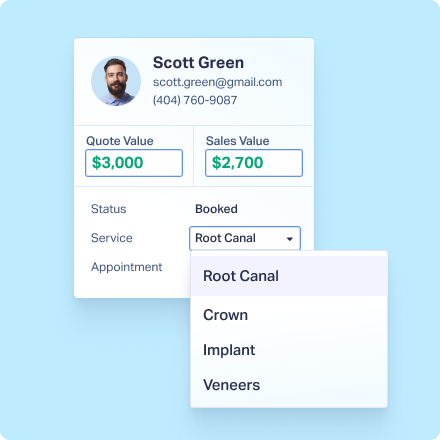
WhatConverts aggregates deal values by campaign, revealing total pipeline value rather than just cost efficiency.
Track quote and sales value at the lead level.
Capture what each lead is worth when they convert—quote value when they request a proposal, sales value when they close.
Aggregate by campaign.
Roll up individual lead values to see total pipeline generated per campaign, not just lead count.
Calculate revenue per dollar spent.
Divide total pipeline value by campaign spend to see which campaigns drive the most revenue, not just the most leads.
Make budget decisions based on value, not volume.
Shift spend toward campaigns that generate high-value pipeline, even if their CPL looks "expensive."
This is especially critical in lead-gen businesses where sales cycles are long and deal sizes vary widely. Without value data, “efficient” becomes a proxy for “cheap,” not “profitable.”
With campaign lead valuation in WhatConverts, marketers stop chasing low-cost leads and start scaling the campaigns that pay the bills.
Proof: The Campaign That Looked Too Expensive to Run
Atomic Marketing faced this exact scenario with a luxury garden office supplier. They'd run a showroom tour campaign in Q1 that delivered stellar results—then killed it because the CPL was astronomical.
The numbers looked terrible. Leads cost £150-£300 each compared to £60-£80 for other campaigns. Leadership wanted it gone.
But Atomic Marketing suspected those "expensive" leads were closing at higher rates and higher values. Using WhatConverts to track revenue by campaign, they proved it: the showroom campaign delivered a 2,567% ROI—nearly twice as high as any other effort that year.
Those expensive leads closed at 70% compared to 30% for cheaper campaigns. They had higher sales values. They generated the client's highest percentage of earnings in Q1—around £100,000.
The client's sales dropped after killing the campaign. When Atomic Marketing proved the ROI with WhatConverts's revenue attribution, they didn't just save the account—they doubled down on the strategy and increased the lead-to-quotable rate by over 20%.
The "expensive" campaign was the most profitable one they ran.
Read More: 2,567% ROI Uncovered by Revisiting a Paused Campaign [Case Study]
From Cost Efficiency to Revenue Growth
When you optimize for cost per lead, you're flying blind on the metric that actually matters: revenue.
Campaign Lead Valuation connects marketing spend to business outcomes:
- Capture quote and sales value for every lead
- Aggregate values by campaign to reveal total pipeline generated
- Calculate revenue per dollar spent for each campaign
- Shift budget toward high-value campaigns, even if CPL looks expensive
- Prove which campaigns drive revenue growth, not just lead volume
Stop optimizing for efficiency and start optimizing for growth.
Start your free 14-day trial of WhatConverts today or book a demo with a product expert to see how we help prove and grow your ROI.
Get a FREE presentation of WhatConverts
One of our marketing experts will give you a full presentation of how WhatConverts can help you grow your business.
Schedule a DemoGrow your business with WhatConverts