

 Amanda Pell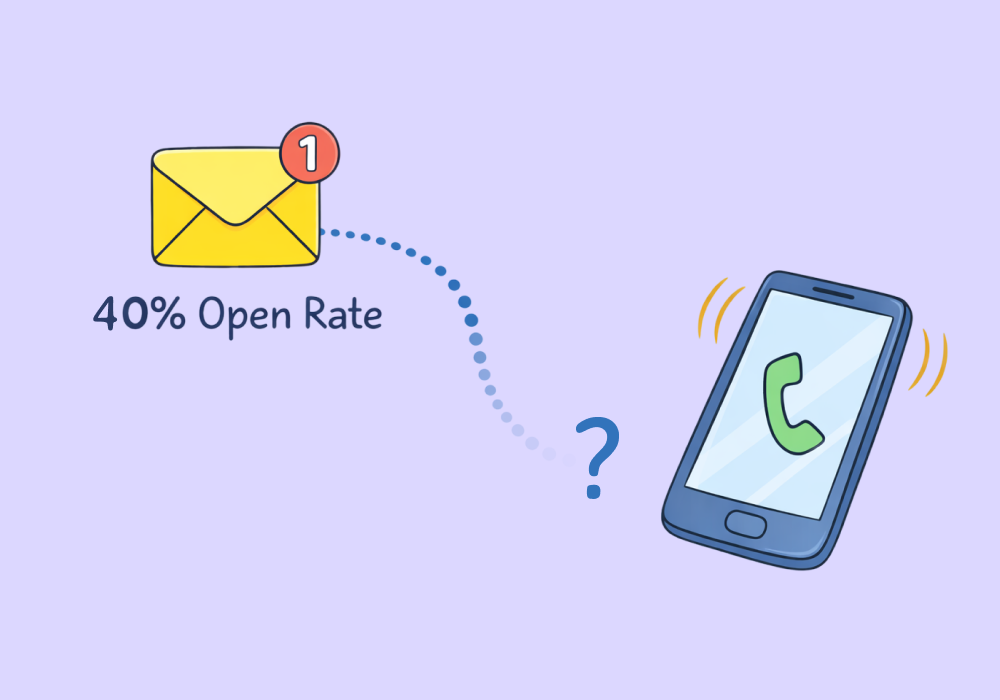
Email engagement in healthcare is outperforming almost every other industry: nearly 40% average open rates. It's not even close.
But when those opens turn into patient calls (and 88% of healthcare appointments are still scheduled by phone) tracking stops cold. Email platforms measure clicks; they don't follow patients to the phone.
Your highest-performing channel goes dark exactly where revenue actually happens. This article breaks down why—and how to connect email campaigns all the way to booked appointments.
Note: Not a WhatConverts user yet? Start your free 14-day trial of WhatConverts today or book a demo with a product expert to see how we help prove and grow your ROI.
Engagement Isn’t the Same as Revenue
Consider what actually happens when a healthcare email campaign performs well.
Your client sends a recall email to 400 patients who are overdue for follow-up appointments.
- 160 open it (a solid 40% open rate)
- 30 click through to make an appointment via your scheduling page
Your email platform reports a successful campaign. But what it doesn’t report:
- How many more picked up the phone instead of booking online?
- How many called, asked a question, and then came back and booked online a week later?
You have open rates. You have clicks. You have zero visibility into what happened next.
That gap isn't a small measurement inconvenience. It's the difference between knowing which campaigns fill your schedule and guessing.
What You're Missing When Tracking Stops at Clicks
Most healthcare clients still book the majority of appointments by phone.
Which means the real journey looks like this: Email → Website → Phone Call → Appointment → Revenue
Your email platform tracks the first two steps, the clinic’s phone system tracks the call, and the practice management software records the appointment.
None of them connect the full story.
So your report looks like this:
| Campaign | Opens | Clicks | Calls Driven | Appointments Booked | Revenue |
| Recall Reminder | 160 | 30 | ? | ? | ? |
| Cosmetic Consult Promo | 95 | 22 | ? | ? | ? |
| Post-Procedure Follow-Up | 80 | 18 | ? | ? | ? |
The clinic sees booked revenue; you see engagement metrics.
But you can’t confidently say that your email campaign is what filled the schedule. And if bookings and revenue dip, you can’t prove that your work wasn’t the cause.
So optimization decisions get made on opens and clicks—not revenue.
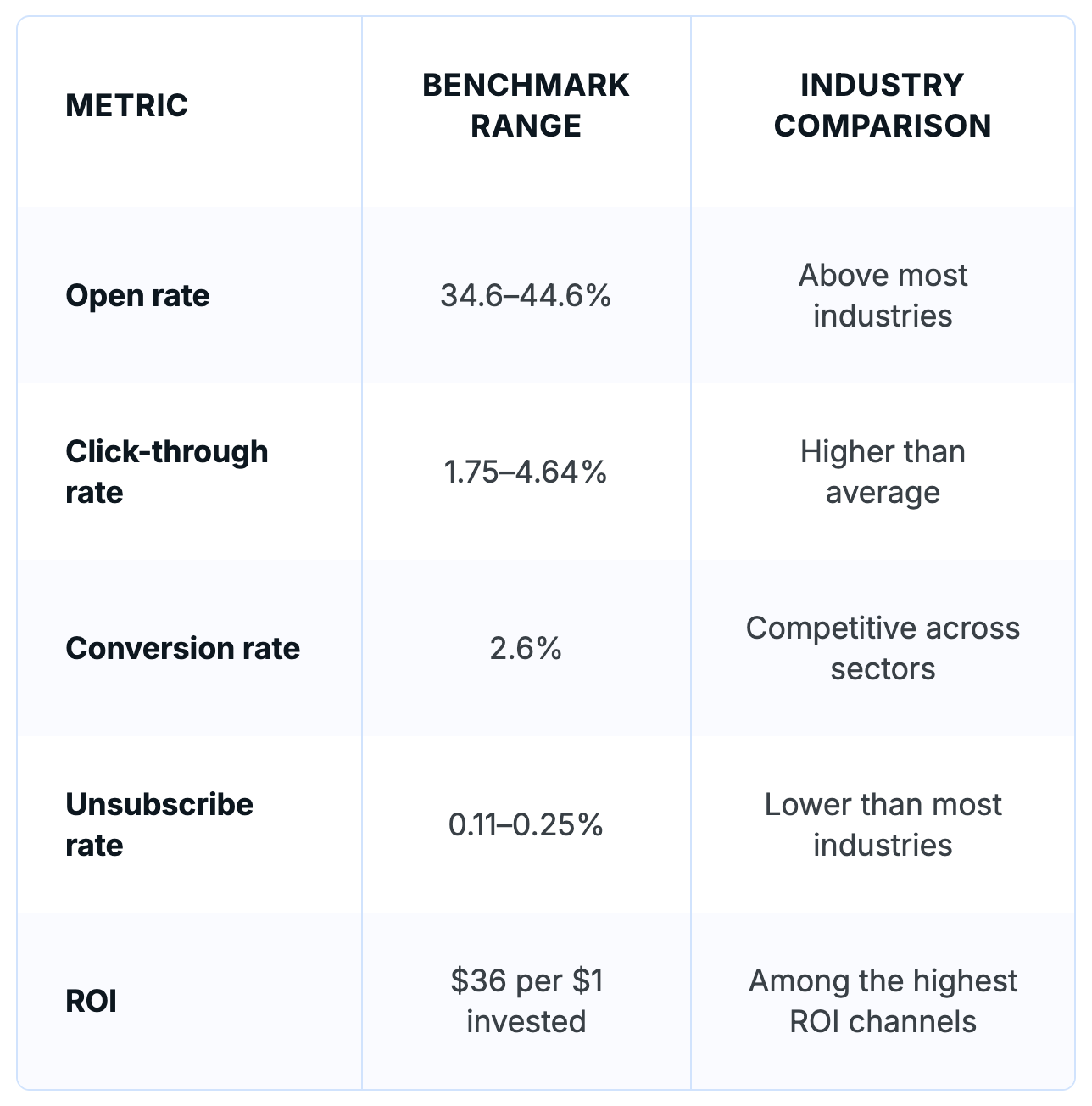
Source: 2026 Healthcare Marketing Benchmarks (WebFX)
The Fix: Connect Email Campaigns to the Calls They Drive
If most appointments are booked by phone, email attribution has to extend beyond the click.
WhatConverts gives each email campaign a trackable phone number. When a patient opens your recall email, clicks through to your website, and calls instead of booking online, that call is attributed back to the exact campaign that prompted it. Not just "organic" or "direct,” but the specific email.
Here's what the complete picture looks like:
1. Assign campaign-level tracking numbers to email campaigns
Every email campaign gets its own number. Patients who call after receiving a recall reminder are tracked separately from patients who call after a cosmetic consultation offer. The source doesn't get lost when the patient switches channels.
2. Track what each caller actually wanted
A call from your cosmetic consult email might be a patient ready to book. Or it might be a patient calling to reschedule for the fourth time. WhatConverts captures call recordings and transcripts, so you know what drove the revenue—not just that a call happened.
3. Connect calls to appointment value
Not every booked appointment is equal. A new cosmetic consultation is worth more than a routine follow-up. Assigning lead values to calls by type shows which campaigns are filling your schedule with high-value patients versus routine volume.
4. Report by campaign, not just by channel
With call data connected to email source, your reporting shifts from "email drove X clicks" to "our recall campaign drove 28 calls, 19 appointments, and $22,400 in booked revenue this month."
That's the data that justifies campaign investment, guides budget decisions, and tells you which messages are worth scaling.
The Campaigns Worth Scaling—And the Ones Worth Cutting
The bigger problem with the attribution gap isn't that you can't prove ROI. It's that you're making scaling decisions without it.
Healthcare practices routinely scale email campaigns based on open rates. High opens signal good subject lines and engaged lists, so more budget goes to the campaigns that perform best on that metric.
But open rates don't measure patients—they measure curiosity. A campaign that generates 40% opens and drives zero qualified calls is not a high-performing campaign. It's a vanity metric with a budget attached.
The campaigns worth scaling are the ones that generate calls from patients ready to book. The ones worth cutting are the ones filling your inbox open stats without filling your schedule.
You can't see the difference without call attribution.
What Changes When You Can See the Calls
When email attribution includes phone calls:
- You see which recall campaigns actually move overdue patients.
- You see which cosmetic promos generate high-value consultations.
- You see which follow-up sequences produce real appointments—and which just drive inquiries.
More importantly, you stop guessing which campaigns to scale.
Instead of “Campaign A had better opens,” you’re saying “Campaign B drove 3x more booked production per click.”
That’s how budget decisions get made confidently.
The Real Email ROI Question
Healthcare email has strong engagement benchmarks.
But engagement isn’t the question your clients care about.
They care about:
- Appointments booked
- Production scheduled
- Revenue generated
When you can follow a patient from email open to phone call to booked appointment, email stops being a vanity metric and starts being a revenue channel you can defend.
And scale.
Stop Reporting Opens. Start Reporting Revenue.
If you’re running PPC and lifecycle campaigns for healthcare clients, email is already performing.
The missing piece isn’t better subject lines.
It’s visibility into what happens after the click.
When you can connect every call back to the campaign that drove it, you don’t walk into reviews talking about opens.
You walk in talking about production.
And that’s the difference between managing campaigns—and proving your value.
Ready to see which email campaigns are actually filling your schedule?
Start your free 14-day trial of WhatConverts today or book a demo with a product expert to see how we help prove and grow your ROI.
Get a FREE presentation of WhatConverts
One of our marketing experts will give you a full presentation of how WhatConverts can help you grow your business.
Schedule a DemoGrow your business with WhatConverts