


 Amanda Pell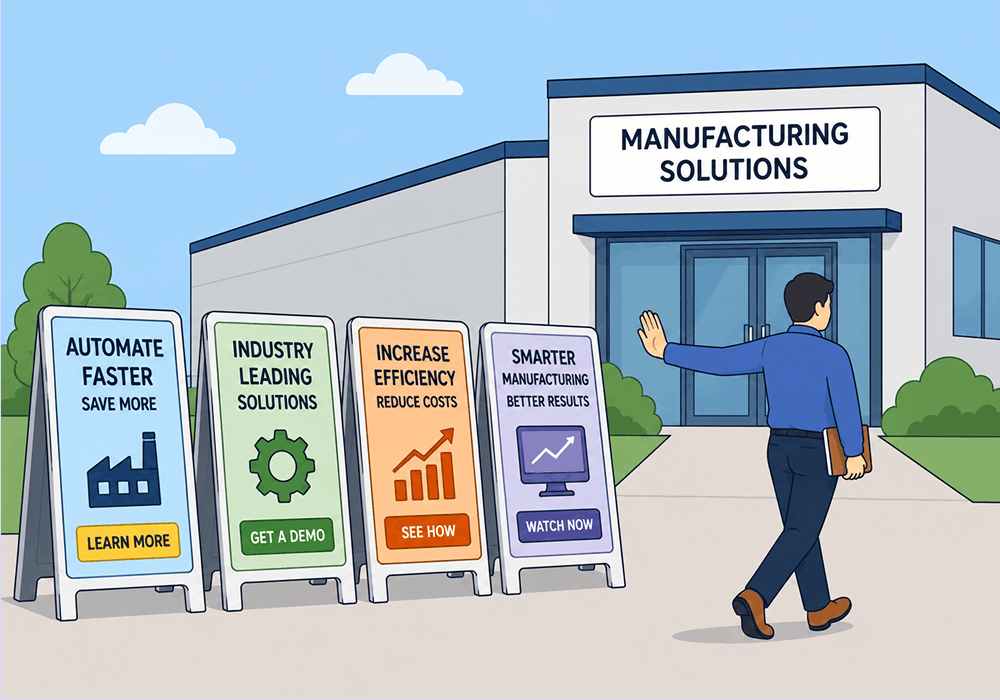
By the time a manufacturing buyer picks up the phone, they've already decided who's going to win.
More than half of industrial buyers make a purchasing decision before they ever contact a vendor. The form fill isn't the start of the journey; it's the finish line of one you couldn't see.
And it's the only part most manufacturing marketers can track.
If most of the decision happens before contact, then most of what built that decision is happening before any of your lead tracking turns on. The pages they read, the spec sheets they downloaded, the searches that brought them back a week later: none of it shows up next to the lead.
This article explains how to capture that pre-contact journey and tie it directly to the lead that eventually arrives.
Note: Not a WhatConverts user yet? Start your free 14-day trial of WhatConverts today or book a demo with a product expert to see how we help prove and grow your ROI.
The Pre-Contact Problem: You're Tracking the Last Step of a Journey You Can't See
Research shows that 40% of B2B buyers consume three to five pieces of content before they reach out to a salesperson. In manufacturing, where evaluations stretch across weeks or months, that's a conservative number.
By the time a qualified buyer fills out your contact form, they've typically:
- Compared specs across multiple vendors
- Read datasheets, case studies, and application guides
- Followed industry accounts and saved posts on LinkedIn
- Walked your white paper through internal procurement
- Narrowed a short-list down to two or three companies
All of that happens in the pre-contact window. The form fill is the moment they pick a winner from the short-list they already built. None of the touchpoints that actually influenced their decision-making process are tracked.
Manufacturing Leads Leave Marketers Blind
When a manufacturing inquiry lands, what you get is a name, a phone number, an email, and whatever the buyer typed into the form. The sales team has a contact to follow up with, and marketing counts another inbound lead.
Marketing has zero information about where the buyer came from, what they read, how long they researched, or which of their campaigns actually worked.
In this data environment, it’s no wonder that 64% of manufacturers feel they're neck-in-neck or behind their competitors on digital marketing. Hard to know whether your spec sheet, your LinkedIn presence, or your technical content is doing the work when none of it connects to the leads that come in.
WebFX's manufacturing subject-matter expert names it directly in the report:
"One of the biggest challenges we see when working with manufacturing clients is lack of tracking and reporting."
The Fix: Capture the Journey That Starts With a Tracked Click
The customer journey doesn’t have to be invisible.
With WhatConverts installed, any trackable click (on a paid ad or UTM-tagged link) initiates a customer journey that documents every touchpoint between the initial click and the eventual conversion. When the visitor converts, that full customer journey becomes part of the lead profile. So you can track each lead’s entire marketing experience, not just the final contact.

Here’s how it works:
1. The First Ad Click Initiates Tracking
When someone clicks one of your campaigns and lands on the site, the WhatConverts tracking script records the visit with full source detail: the campaign, ad group, and keyword that brought them in. From that point forward, every return visit by that same visitor is tied to the same profile, regardless of how they come back.
2. The Customer Journey Goes on the (Background) Record
A buyer who clicked a paid ad in February might return in March through a direct visit, in April through a LinkedIn referral, and finally convert in May. WhatConverts captures each of those return visits and the pages viewed during them, building a record of how the buyer's research actually unfolded between the first click and the conversion.
3. The Conversion Comes with the Full Journey
When the buyer eventually calls, fills out a form, or starts a chat, all of that prior activity attaches to the lead. Sales sees a contact with documented history. Marketing sees which campaigns actually started the relationships that closed, not just which sessions delivered the final conversion.
4. Every Marketing Campaign Gets Credit
A buyer who first clicked a paid search ad four months ago and converts today through a direct visit doesn't get tagged as "Direct" in WhatConverts. The original paid click is preserved as the source that started the journey. That's how content, paid search, and earlier campaigns finally show up next to the revenue they helped produce.
5. Lead Value Closes the Loop on Proven ROI
A documented journey tells you what built the relationship. Adding revenue to the lead tells you whether that relationship was worth building. There are a few ways to make that connection in WhatConverts:
- Update lead values manually in the WhatConverts dashboard when deals close
- Sync revenue automatically through a native CRM integration, and when a deal closes in the CRM, the value flows back to the lead in WhatConverts
- Connect through Zapier or the WhatConverts API for any system without a native integration
Once revenue is tied to the lead, the customer journey isn't just attached to a conversion. It's attached to a closed deal, which is what turns the marketing report from "here's what produced inquiries" into "here's what produced revenue."
Confidence in Marketing Comes from Seeing What Actually Works
The 64% of manufacturers who feel neck-and-neck or behind on digital marketing aren't necessarily losing. They just have no way to know how they’re doing at all.
Confidence in marketing comes from being able to see what's working. Without the customer journey attached to the lead, manufacturers are guessing. They’re running campaigns, watching inquiries come in, and hoping the relationship between the two is what they think it is.
When the journey is attached, the guesswork goes away. You can see which ads show up consistently across the journeys of buyers who became leads, which content keeps reappearing on the path to a closed deal, and which campaigns show up in the journeys of leads who became customers (and which show up in the journeys of leads who didn't).
That's the difference between "we think our content marketing is working" and "the journeys of our highest-value customers consistently include these three pieces." Same activity, but very different level of confidence when it's time to defend the budget or scale what's working.
What You Track Should Match How Buyers Actually Buy
In manufacturing, the moment a buyer contacts you is not the start of the journey. It's the end.
If your reporting only starts at the contact, you're measuring the easiest part of the funnel to win and missing the part where the decision actually got made. The 57% of buyers who made up their minds before the call don't show up as "won" in any campaign. They just show up as a form fill with no story attached.
Ready to see what's actually building your pipeline?
Start your free 14-day trial of WhatConverts today or book a demo with a product expert to see how we help prove and grow your ROI.
Get a FREE presentation of WhatConverts
One of our marketing experts will give you a full presentation of how WhatConverts can help you grow your business.
Schedule a DemoGrow your business with WhatConverts