












































 Amanda Pell
Client churn almost never comes out of nowhere. There are always signs—in the questions clients ask, the emails they stop opening, and the meetings that shift from strategic to skeptical.
Most agencies don’t see it coming because they're watching campaign performance, and campaign performance looks fine. Leads are coming in. CTR is up.
They think everything is great; meanwhile, the client is already halfway out the door.
This article breaks down the warning signs and traces each one back to the reporting and communication failure that made it possible.
Note: Not a WhatConverts user yet? Start your free 14-day trial today or book a demo with a product expert to see how we help prove and grow your ROI.
The Warning Signs Are in Relationship Data, Not Performance Data
Agencies are wired to monitor campaigns. Click-through rates, cost per lead, conversion volume. And when those numbers look good, everything feels stable.
The problem is that clients don't leave because campaigns underperform. They leave because they lose confidence.
Confidence is invisible in a Google Ads dashboard. But it shows up clearly in how clients behave between meetings.
Here's what to watch for.
Read More: Your Reporting Looks Professional—Until a Client Asks About Lead Quality
Signal 1: Report Open Rates Start Dropping
When a client stops opening monthly reports, the instinct is to blame a busy inbox.
It's rarely that simple. Open rates drop when clients stop believing the report contains anything worth reading.
If your reporting is a wall of impressions, clicks, and CPL metrics with no clear line to leads or revenue, clients learn quickly that the report won't answer their real question: Is this working?
When that answer isn't in your report, they stop looking for it there—and start calling competitor agencies to see if they can provide what you can’t.
Signal 2: Questions Shift from "What's Next?" to "Why Did This Happen?"
In a healthy agency-client relationship, clients ask forward-looking questions. They want to know the plan.
When the questions change to "Why did leads drop in March?" or "We only booked four jobs from this campaign—what happened?"—confidence has already eroded.
They're not looking for insight anymore. They're building a case for terminating your contract.
Signal 3: They Ask to Add Internal Team Members to Reporting Emails
This one almost always gets written off as a reasonable operational request. Someone new joined. They want more visibility.
But when a client asks to loop in their CFO, their ops director, or their internal marketing coordinator on reports, it's usually because someone with budget authority has started asking questions the agency hasn't answered.
Read More: Your Client's CFO Wants to Cut the Marketing Budget. Here's the Only Argument That Works.
Signal 4: Response Time to Agency Outreach Slows Dramatically
When a client who used to reply to Slack messages within the hour starts taking three days to respond to emails, the relationship has changed.
Engaged clients communicate. Disengaged clients go quiet.
This is often the last signal before the axe falls. By the time response lag is obvious, the decision has usually been made.
The Common Thread: They Don't Know What They're Getting
Every one of these signals points to the same underlying problem: the client has lost visibility into the value they're receiving.
Not because the value isn't there, but because the reporting doesn't prove it.
A client needs to be able to look at a report and clearly see:
- How many leads came in
- Which ones were qualified
- What they were worth
- Which campaigns produced them
When there are holes in that knowledge, they fill the empty space with doubt in your competency.
What Churn-Proof Reporting Actually Looks Like
When clients understand the value they’re getting from your work, there’s no reason for their confidence to erode. That’s why retention is a reporting problem as much as it's a performance problem.
WhatConverts gives agencies the reporting infrastructure to close that visibility gap before it becomes a churn risk:
Lead-Level Attribution
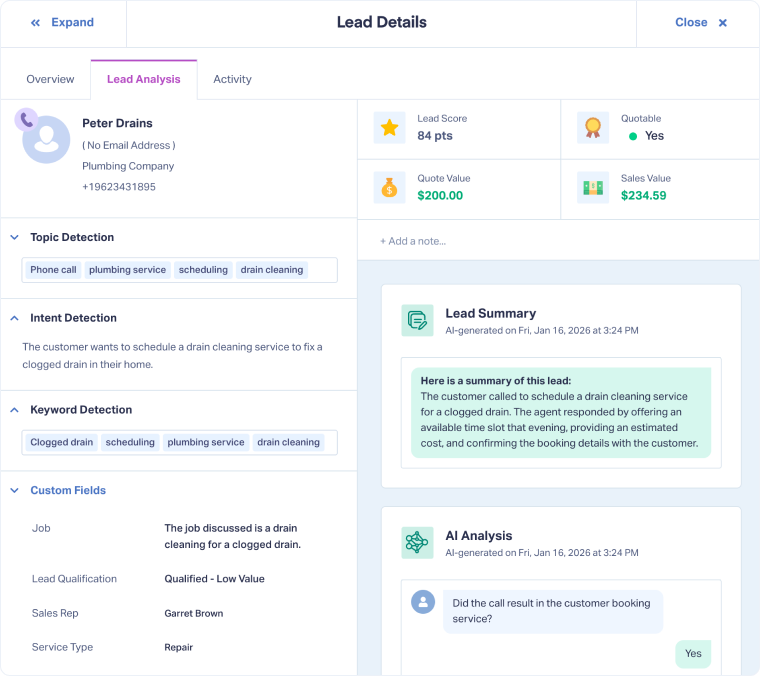
In the Lead Manager, you can access individual lead-level attribution. Each call, form, and chat is always tied to the person behind it, and the person is always tied to the campaign, keyword, and source that brought them in.
So when your client asks, “why did this happen?” or “how do I know these are real leads?” you always have a concrete answer.
Lead Qualification and Value
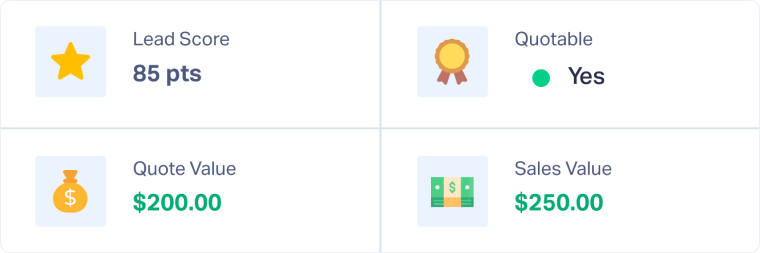
Since everything is documented on a lead-by-lead basis, that means you can evaluate and add data to each individual lead. So you can look at someone’s journey, listen to their call recording, read their chat transcript, and determine whether they’re a real customer. If they are, you can mark them “quotable” and assign the value of the service they’re interested in—so an A/C repair lead might be $500, while a total system replacement lead might be valued at $5,000.
This allows you to actually add up how many qualified customers and potential value each of your campaigns is bringing in. No more “we just don’t believe this is worth what we’re paying”—you can prove to your client that your campaigns are bringing in far more than your services cost.
Client-Ready Reporting
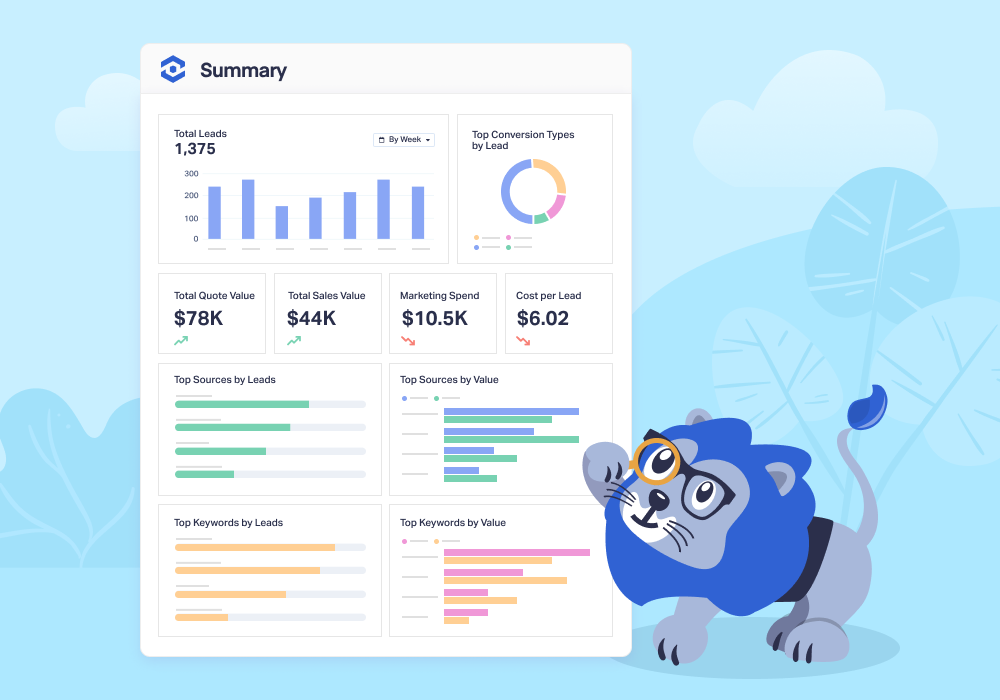
With all of these metrics stored in a single unified database, you don’t need to do any manual work to put it in a format your clients will actually read. The Summary Report keeps a constant, to-the-minute tally of:
- Total leads
- Total quote and sales value
- Marketing spend
- Cost per lead
- Top sources by leads and quotable leads
- Top sources by sales value
When a client opens the report and immediately sees "32 qualified leads, $47,000 in estimated pipeline, driven primarily by Google Ads campaign B"—they don't start asking the skeptical questions. They start asking forward-looking ones.
The Unlock
By the time a client is adding stakeholders to email chains and taking three days to respond, recovery is possible—but it's hard. It’s much easier to prevent the relationship from getting to that point in the first place.
- Monitor report engagement, not just campaign performance. If a client stops opening reports, find out why before they tell you in a cancellation email.
- Audit every client's reporting for the clarity test. Can they see, in 30 seconds, what their marketing produced last month—in leads and value, not just clicks?
- Make lead-level data the baseline, not a premium add-on. Clients who can see the work stay. Clients who only hear about it eventually stop believing it.
- Answer "why did this happen?" before they ask. Proactive attribution reporting closes the audit loop before it opens.
The agencies that retain clients longest aren't necessarily running better campaigns. They're running better reporting.
Ready to close the visibility gap before it becomes a churn risk?
Start your free 14-day trial of WhatConverts today or book a demo with a product expert to see how we help prove and grow your ROI.
Get a FREE presentation of WhatConverts
One of our marketing experts will give you a full presentation of how WhatConverts can help you grow your business.
Schedule a Demo
Grow your business with WhatConverts