








































 Amanda Pell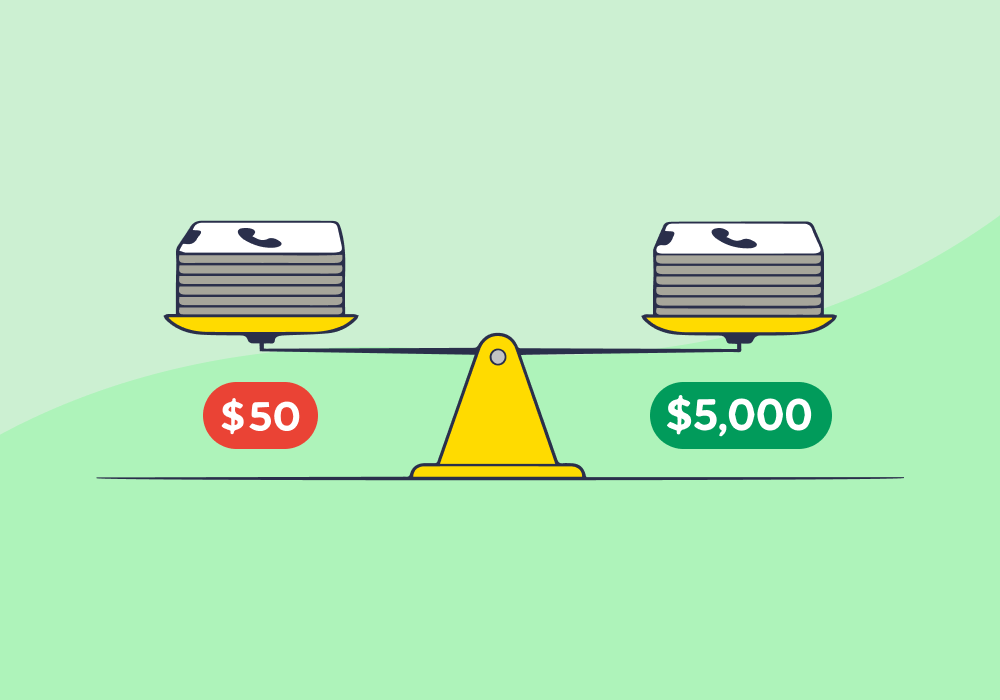
Every call conversion looks the same to Google Ads.
A 6-second hangup counts as success. A 12-minute consultation that books a $5,000 job counts as success. A spam call from a telemarketer counts as success.
When the algorithm can't tell the difference between revenue and noise, it optimizes for whichever comes cheaper. That's usually noise.
This article shows how treating all call conversions equally creates systematic budget waste that compounds monthly—and how understanding call tracking mechanics stops the leak before it costs six figures.
Note: Not a WhatConverts user yet? Start your free 14-day trial today or book a demo with a product expert to see how we help prove and grow your ROI.
When "Performing Well" Hides Systematic Waste
Most call campaigns look successful until you listen to what actually happened.
The conversion count says one thing, while the revenue reality says another.
Here's what agencies typically see: Google Ads reports 150 conversions at $95 CPL. That math looks defensible in client meetings. Spend stayed flat, volume stayed consistent, everyone moves on.
But when those 150 calls break down by actual value:
- 60 never got answered (missed opportunity)
- 35 were existing customers (no acquisition value)
- 25 were pricing shoppers who never booked (dead ends)
- 20 were spam or wrong numbers (pure waste)
- 10 were qualified prospects who converted (actual wins)
Suddenly that $95 CPL becomes $1,425 per actual qualified lead. The campaign didn't perform well—it just looked like it did.
For the complete breakdown of:
- How Google Ads call tracking actually works
- What it can and can't measure,
- What agencies need to think about when phone calls drive real revenue
Check out the full guide:
How Google Ads Learns From Incomplete Signals
Google's bidding algorithms optimize toward whatever you tell them matters.
Mark every call as a conversion? The algorithm chases call volume. It finds keywords, audiences, and placements that generate phones ringing—regardless of whether those calls drive revenue.
The platform isn't making bad decisions. It's making perfect decisions based on incomplete instructions.
Without call quality signals, Smart Bidding treats a 6-second hangup the same as a 12-minute consultation that books a $5,000 job. Both count as "success," so the algorithm pursues more of both.
Here's what that looks like over six months:
| Qualified Leads | Unanswered | Existing Customers | Pricing Shoppers | Spam/Wrong Numbers | |
| Month 1 | 40% | 25% | 15% | 12% | 8% |
| Month 2 | 30% | 28% | 18% | 14% | 10% |
| Month 3 | 22% | 30% | 20% | 16% | 12% |
| Month 4 | 15% | 32% | 22% | 18% | 13% |
| Month 5 | 10% | 33% | 23% | 20% | 14% |
| Month 6 | 7% | 35% | 23% | 20% | 15% |
By month six, your qualified rate has dropped over 80% and your spam calls have nearly doubled. The algorithm didn’t break suddenly. It just drifted toward easier conversions month after month—the kind that fill dashboards but not bank accounts.
Where the Real Cost Accumulates
The damage isn't dramatic. It's compounding.
Wasted clicks add up. When 60% of your call conversions come from low-intent queries, that's 60% of your budget flowing toward dead ends. Month after month, that waste becomes structural.
Optimization stalls. You can't improve what you can't measure. If Google Ads only sees call counts, every optimization decision gets made blind. Budget shifts, bid adjustments, audience expansions—all guesswork.
Client trust erodes. Eventually, someone asks why lead costs keep climbing while revenue stays flat. The answer ("we're generating calls, but they're not converting") doesn't land well.
Fixing it requires relearning. Once the algorithm has spent months optimizing for low-quality signals, correcting course means starting over. New learning period, new data accumulation, new timeline to results. That delay costs more than the original waste.
The math is brutal: a campaign spending $10K monthly on 50% garbage wastes $60K annually. Multiply that across three campaigns, and the agency just lost $180K in budget efficiency—not from bad strategy, but from incomplete tracking.
Why Dashboards Rarely Catch It
Standard reporting makes this problem invisible.
Conversion metrics trend upward. Cost per call stays reasonable. Everything signals "working as intended." The only people who notice are sales teams wondering why call quality tanked.
This creates a reporting gap. Marketing sees success. Sales sees failure. Neither has the data to prove what's actually happening. So the campaigns keep running, the budget keeps flowing, and the waste keeps compounding.
How This Gets Fixed
The solution isn't running fewer call campaigns. It's tracking which calls actually matter.
Google Ads can count calls. It can't tell you which ones booked jobs.
That disconnect is where you’re bleeding budget. A $5,000 consultation and a spam call both register as "conversion achieved." The algorithm learns nothing about what actually works.
Fix the tracking, and the waste stops. Google Ads gets trained on signals that predict revenue instead of just phone activity. Budget shifts toward keywords that generate qualified conversations. Cost per lead becomes cost per real lead.
But first, you need to understand how Google Ads call tracking actually works—and where its visibility ends.
Google Ads Call Tracking: What Agencies Need to Know breaks down what Google can and can't measure once a call starts, and how to build the tracking infrastructure that connects phone leads to actual outcomes.
Ready to see which call campaigns are driving revenue versus just driving volume?
Start your free 14-day trial of WhatConverts today or book a demo with a product expert to see how we help prove and grow your ROI.
Get a FREE presentation of WhatConverts
One of our marketing experts will give you a full presentation of how WhatConverts can help you grow your business.
Schedule a Demo
Grow your business with WhatConverts