











































 Amanda Pell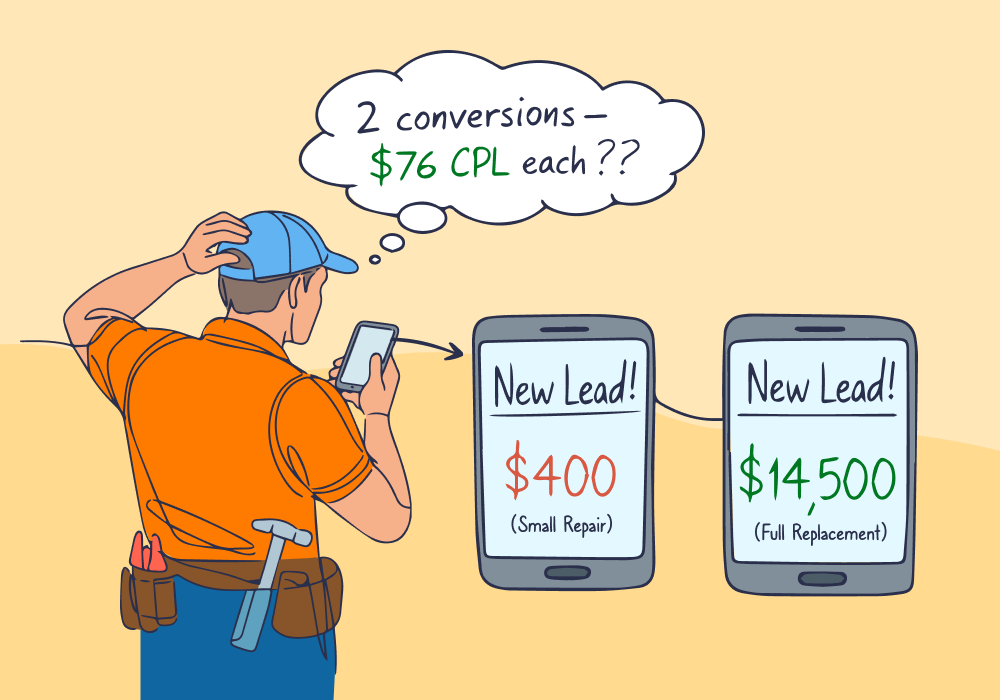
According to WebFX's latest roofing marketing data, the average cost per roofing lead is around $350.
That number is often used to judge performance and make budget decisions. If your CPL is higher, you’re told to cut. If it’s lower, you double down.
But the benchmark treats every roofing lead the same. A $400 repair request counts the same as a $15,000 roof replacement. When high- and low-value jobs are averaged together, the benchmark pushes spend toward cheap leads instead of profitable ones.
This article explains why that happens—and how tracking lead quality keeps you from cutting the campaigns that actually grow revenue.
Note: Not a WhatConverts user yet? Start your free 14-day trial today or book a demo with a product expert to see how we help prove and grow your ROI.
The Benchmark Illusion: When "Average" Hides Everything
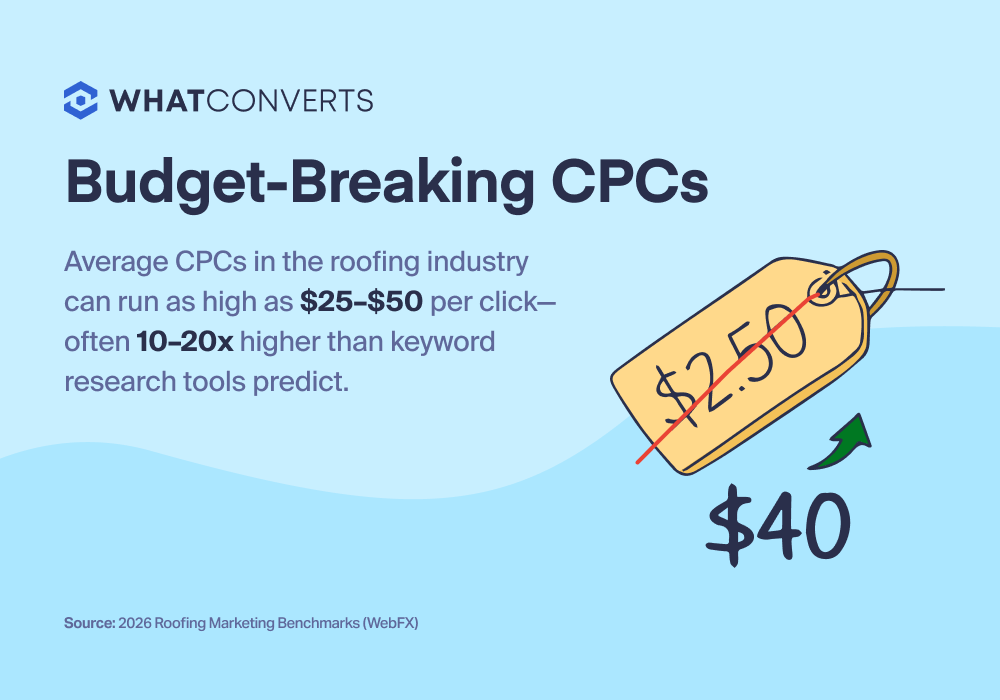
WebFX reports that roofing contractors spend an average of $350 per lead across Google Ads campaigns, with actual CPCs running $25-$50 per click—often 10-20x higher than tools like Ahrefs predict due to local competition and seasonal spikes.
Here's what those numbers don't tell you:
- Which leads asked about full replacements versus patch jobs
- How many calls were existing customers with warranty questions
- What percentage were price shoppers collecting quotes with no intent to buy
- Which campaigns drove the $15K jobs that actually fund the business
A roofing company could hit the $350 CPL benchmark perfectly while drowning in repair requests and missing every replacement opportunity. The average becomes meaningless when lead quality varies by 20x.
What Happens When You Optimize to Benchmarks Without Quality Data
Let's say a roofing contractor runs three Google Ads campaigns with a combined $8,000 monthly budget:
| Campaign | Leads | CPL | Benchmark Performance |
| Campaign A | 85 | $290 | ✓ Below average |
| Campaign B | 35 | $380 | ✗ Above average |
| Campaign C | 12 | $650 | ✗✗ Way above average |
Every benchmark metric says cut the expensive campaigns. Double down on repairs. Chase that sub-$300 CPL.
But when you track what those leads were actually for, reality reverses:
| Campaign | Leads | CPL | Avg Job Value | Total Value | ROAS |
| Campaign A - Mostly Repair Jobs | 85 | $290 | $850 | $72,250 | 2.9x |
| Campaign B - Mostly Emergency Roofing Jobs | 35 | $380 | $2,400 | $84,000 | 6.3x |
| Campaign C - Mostly Reroofing Jobs | 12 | $650 | $14,500 | $174,000 | 22.3x |
The "expensive" Campaign C costs $650 per lead—but because Campaign C is mostly attracting reroofing jobs, each lead represents $14,500 in potential revenue. That's not expensive. That's the most profitable spend in the entire account.
Without lead-level quality data, benchmarks push you to optimize for waste.
Why Roofing Lead Quality Varies More Than Other Industries
Roofing sits at an extreme end of lead-gen complexity. The service range spans from:
- $200-$800 repairs (shingle replacement, minor leak fixes)
- $2,000-$5,000 mid-tier work (section repairs, emergency storm damage)
- $8,000-$25,000+ replacements (full tear-offs, premium materials, large homes)
Ad platforms can't distinguish between these. To Google Ads, a phone call is a phone call. A form submission is a form submission.
But to your business, one call funds operations for a month while another barely covers the estimate visit.
WebFX's data shows roofing ad costs climbing as competition intensifies—high local contractor density can push premium keywords to $35-$60 per click. When everyone's fighting over the same traffic, the only sustainable edge is knowing which leads are actually worth winning.
The Fix: Track Service Intent → Assign Value → Optimize for Revenue
Roofing contractors who win in competitive PPC markets follow a simple framework:
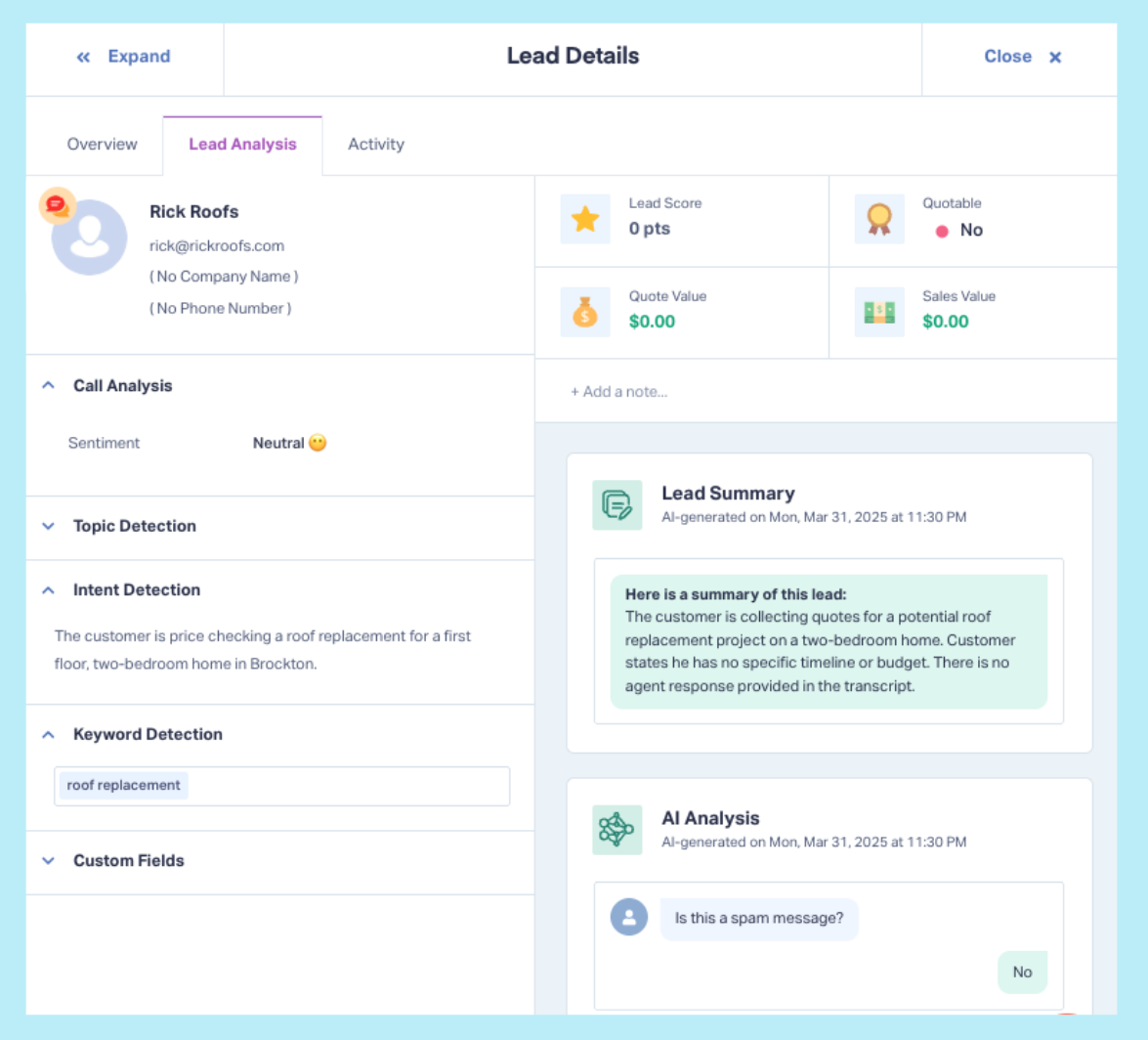
1. Capture what each lead asked for
Every phone call reveals the service they want. "I need a full roof replacement" versus "I've got a small leak in my bathroom."
WhatConverts automatically captures that intent from call recordings and transcripts, then tags it to the source campaign and keyword.
2. Value leads by job type, not just conversion count
Assign realistic values based on your actual job averages:
- Repairs = $600
- Emergency/storm = $2,500
- Replacement = $12,000
Now every lead carries dollar potential, not just a tally mark.
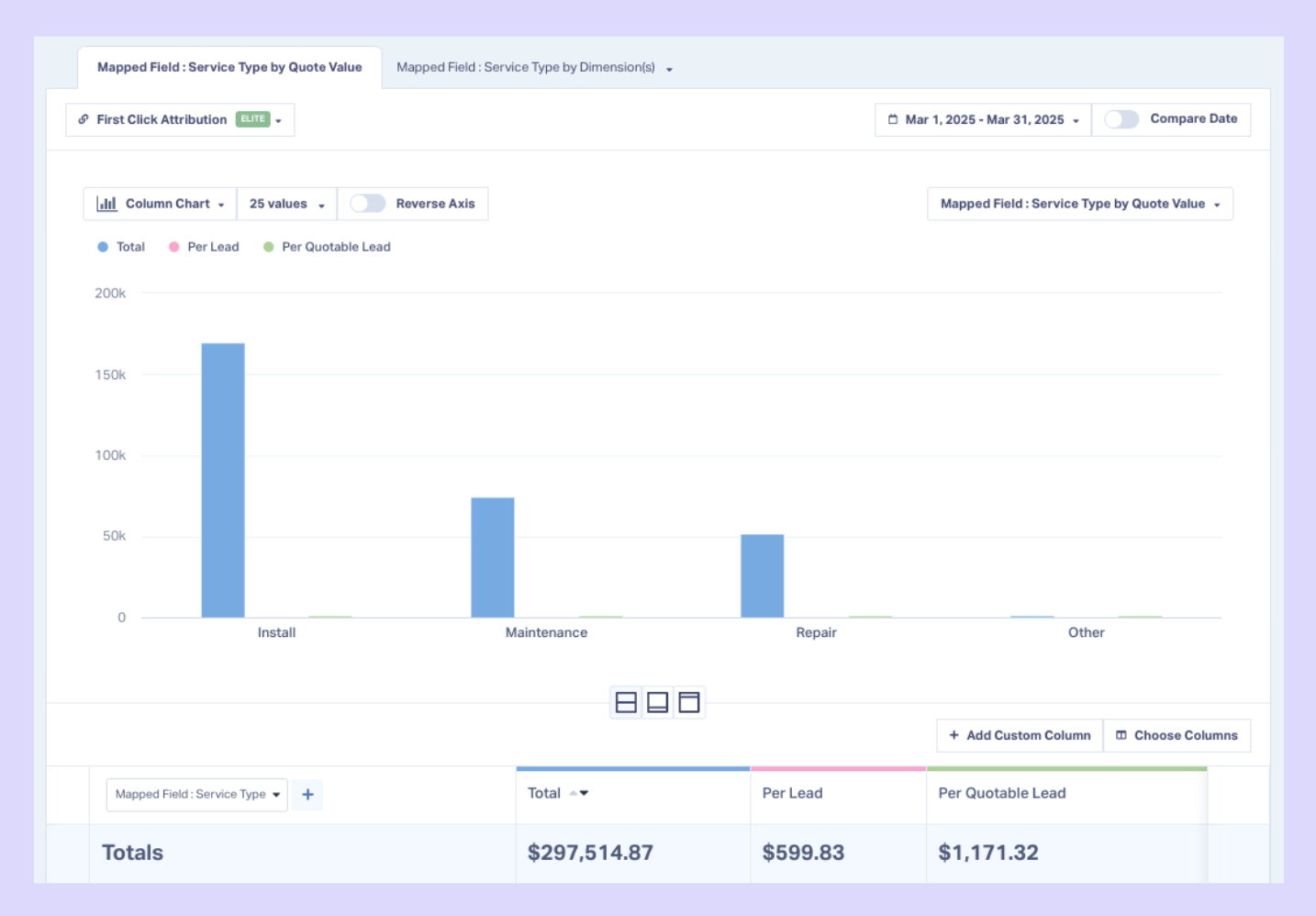
3. Report by service to see what's driving real business
When you filter your reporting by service type, the truth becomes obvious: which campaigns fill your calendar with patch jobs versus the work that actually grows the company.
4. Feed that value data back to ad platforms
WhatConverts syncs lead values to Google Ads automatically. Smart Bidding stops optimizing for cheap clicks and starts prioritizing the searches that lead to high-value jobs.
Case Study: Agency Trains Smart Bidding to Target High-Value Roofing Leads
Profit Roofing Systems, a marketing agency specializing in roofing contractors, wanted to use Google's Smart Bidding to scale results. But they faced the same problem every roofing marketer hits: the algorithm couldn't tell a $400 repair from a $15,000 replacement.
Using WhatConverts, they built a system that taught Smart Bidding what "valuable" actually means:
- Integrated with AccuLynx CRM to automatically pull quote values and appointment data into WhatConverts.
- Marked only quotable leads as conversions sent to Google Ads—filtering out tire-kickers, spam, and unqualified calls before they poisoned the algorithm.
- Started passing lead values to Google, giving Smart Bidding the data it needed to prioritize high-value opportunities over cheap wins.
The results in just 3 months:
- 12.4X ROAS (up from 6.9X)
- 57% jump in revenue
- 21% more qualified leads
- 60% fewer spam/unqualified leads
- 19% higher average quote value
Smart Bidding stopped chasing easy conversions and started hunting the jobs that actually grow roofing businesses.
Read the full story: How Profit Roofing Systems Trained the Algorithm to Win 12.4X ROAS
The Real Benchmark That Matters
Industry averages can't tell you if your PPC spend is working. Only your actual lead value can do that.
When roofing costs climb and competition increases, the contractors who survive aren't the ones with the lowest CPL. They're the ones who know which leads are worth $200 and which are worth $20,000—and optimize accordingly.
That clarity doesn't come from benchmark reports. It comes from tracking every lead individually, understanding what they asked for, and valuing them based on real business impact.
Ready to move beyond meaningless benchmarks?
Start your free 14-day trial of WhatConverts today or book a demo with a product expert to see how we help prove and grow your ROI.
Get a FREE presentation of WhatConverts
One of our marketing experts will give you a full presentation of how WhatConverts can help you grow your business.
Schedule a Demo
Grow your business with WhatConverts