












































 Amanda Pell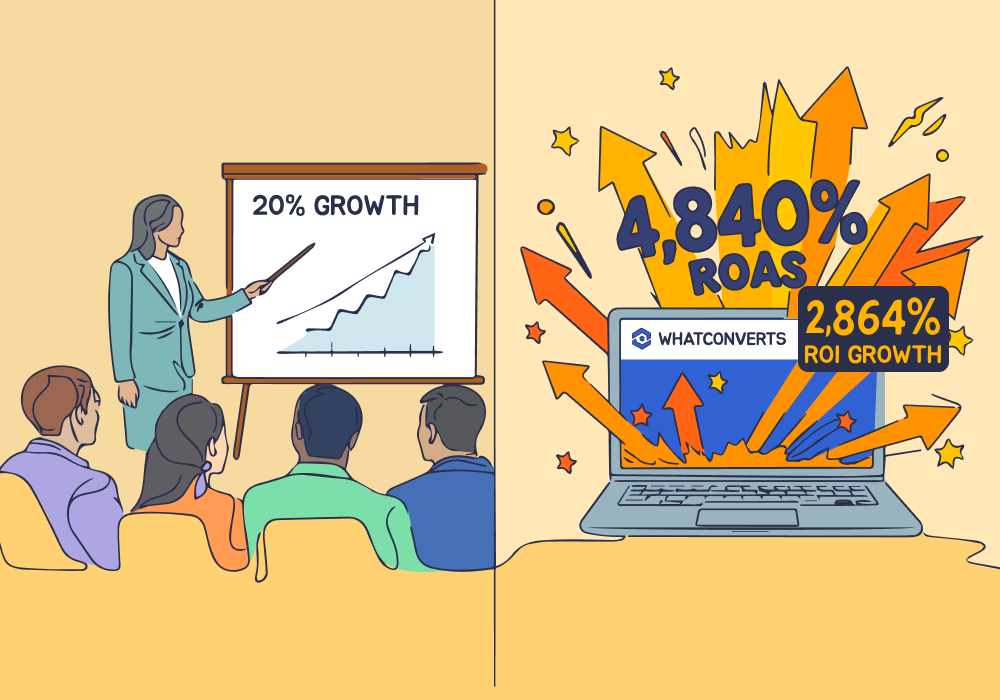
Your 2026 plan projects 20% revenue growth. The client has doubts that you can hit a target that high. You defend the projection with data, industry benchmarks, cautious optimism.
But even at that “high” number, you're operating under a false ceiling.
When marketers feed lead value data back to Google Ads instead of just conversion counts, they're seeing 300%, 500%, even 1,200% improvements in cost-per-acquisition—improvements so dramatic they'd be dismissed as impossible in any January planning meeting.
The revenue jump you think is unrealistic is actually conservative once you stop letting algorithms optimize blind. And we have the results to prove it.
Note: Not a WhatConverts user yet? Start your free 14-day trial today or book a demo with a product expert to see how we help prove and grow your ROI.
The False Growth Ceiling Problem
Every growth projection assumes your current performance determines your ceiling.
If last year's campaigns delivered a 3X return, this year's "aggressive" plan might stretch to 4X with perfect execution. That logic holds when performance is static—but ad platforms aren't static.
Google Ads and Meta make thousands of bidding decisions per second. Feed them conversion counts and they chase volume. Feed them conversion values and they chase profit.
The difference isn't incremental. It's exponential.
What Q1 Growth Plans Miss
Most growth targets are built from last year's data: X leads at Y cost produced Z revenue. To hit 20% growth, we need 20% more leads or 20% better close rates.
That math ignores the optimization ceiling you're currently hitting.
When ad platforms only know "lead = yes" they can't tell the difference between a $500 job and a $25,000 job. So they optimize for cheap conversions—easy clicks, low-value inquiries, tire-kickers who'll never close.
The algorithm is doing exactly what you told it to do. It just doesn't know what actually matters.
The Numbers That Sound Impossible
Here's what happens when marketers feed lead value back to ad platforms instead of just conversion counts:
Core & More Technologies: Medical Supply Revenue 8Xed
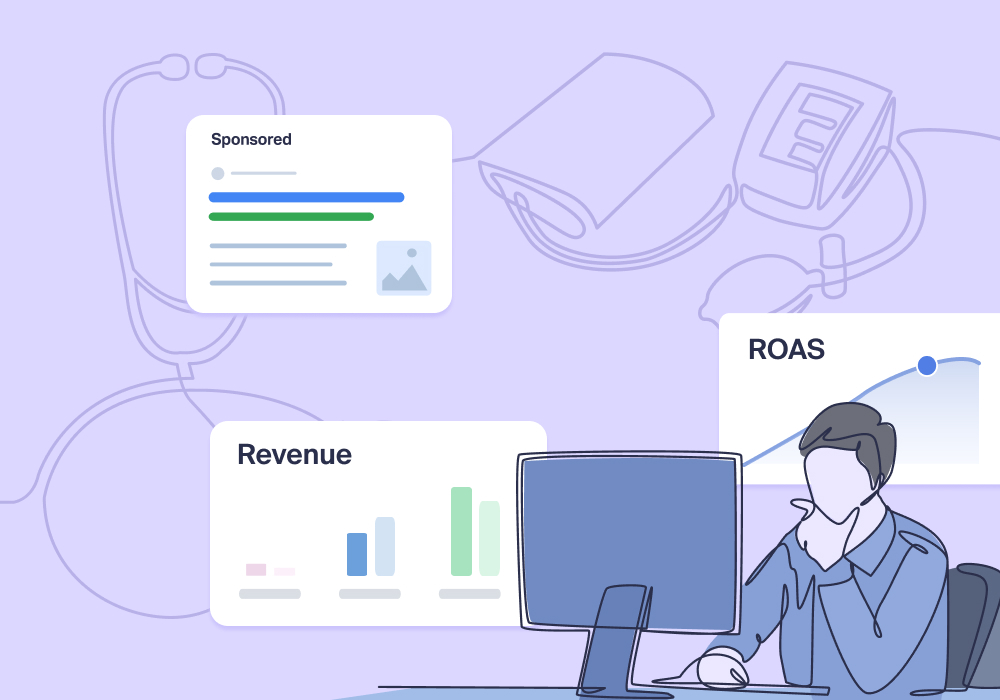
A medical supply company working with Core & More Technologies started with a 1.3x ROAS. Standard performance—nothing to write home about.
Then they implemented WhatConverts to track which leads turned into actual sales and synced that data to Google Ads. Smart Bidding suddenly knew which conversions generated revenue versus which just filled the funnel with noise.
The result:
- 48x ROAS
- Monthly customers: 20 to 100+
- Revenue: $100k to $800k
Read the Full Case Study: Core & More Delivers 10x ROAS and 8x Revenue w/ WhatConverts
Coastal Reign: 2x ROAS Became 7x in Six Months
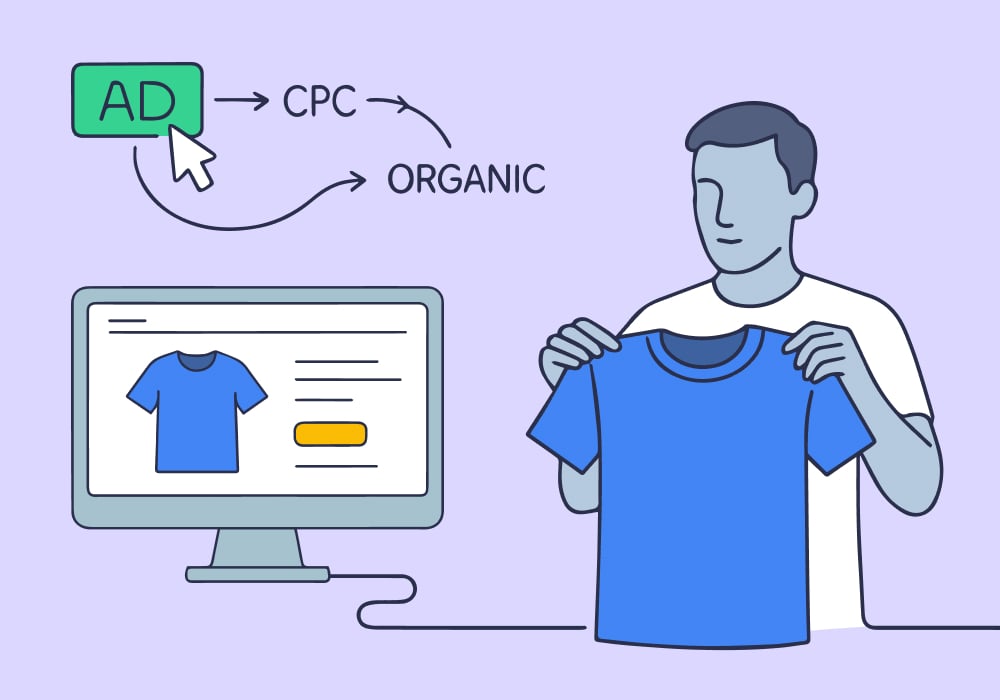
This custom apparel e-commerce brand was already profitable at 2x ROAS, but had no visibility into which campaigns drove repeat customers versus one-time buyers.
After implementing lead-level attribution showing customer lifetime value, they discovered organic search generated far more repeat purchasers than paid ads—but paid ads initiated the relationship. By feeding conversion values back to Google and optimizing for customer quality instead of just order count, ROAS jumped to 7x. Same budget. Smarter targeting.
Read the Full Case Study: E-commerce Store Unlocks 7x ROAS with Lead-Level Attribution
Profit Roofing Systems: Teaching Google the Difference Between $200 and $18K
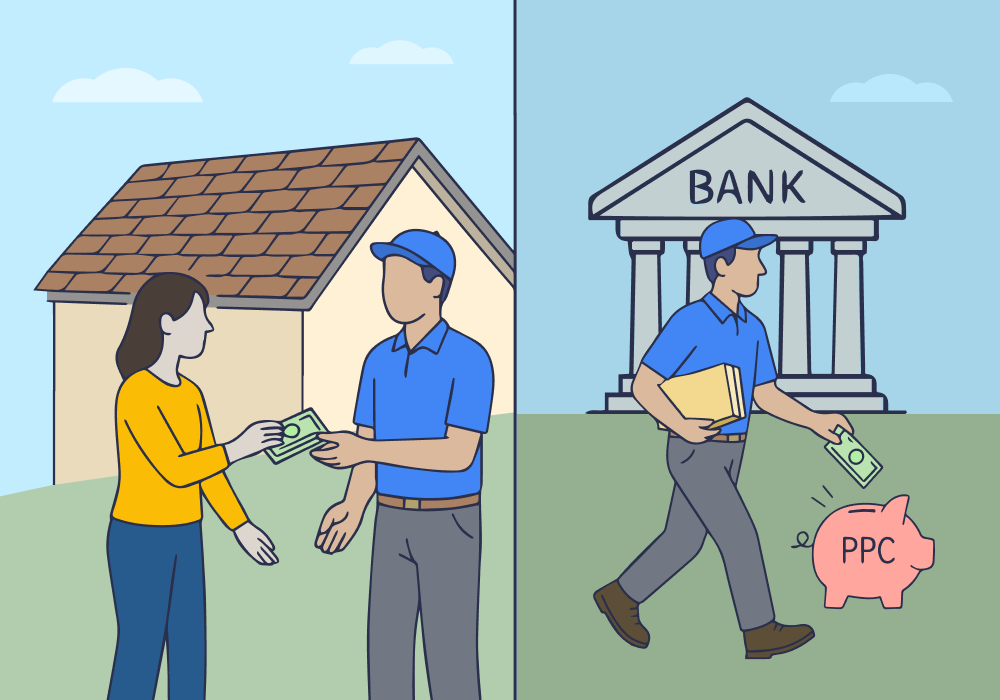
Most roofing leads look identical to Google: someone filled out a form. But Profit Roofing's $200 repair leads and $18k replacement jobs have very different profit margins.
By tagging each lead with service type and feeding that value to Google Ads, Smart Bidding learned which audience signals predicted high-value projects.
The outcome:
- 6.9x to 12.4x ROAS
- 57% revenue increase
- Eliminated wasted spend on cheap repair inquiries
Read the Full Case Study: Agency Learns How to Train the Algorithm, Wins 12.4X ROAS
Engineered Media: Proving Supplier ROI, Unlocking 2,864% Growth
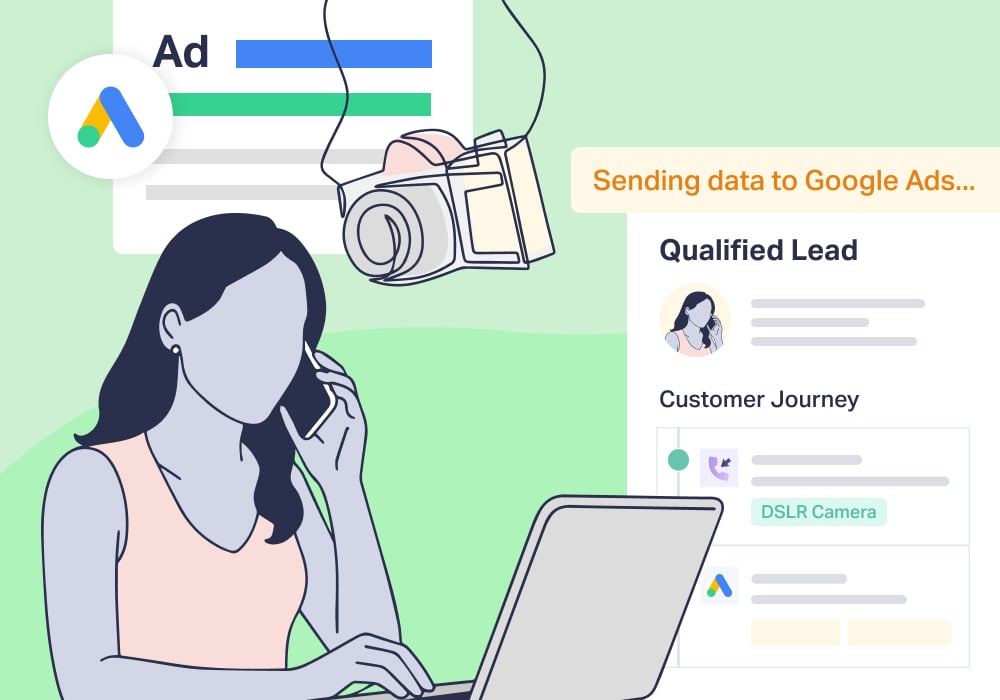
This agency's e-commerce camera client relied on supplier-funded campaigns from Sony and Canon—but couldn't prove which supplier budgets actually sold cameras. Standard attribution showed clicks and conversions but not revenue by supplier.
After connecting marketing source to closed sales in WhatConverts, they could show Sony exactly which campaigns generated $352k in first-touch attributed revenue.
What happened next:
- Sony increased budget 241%
- Overall ROI grew 2,864%
- Suppliers volunteered more funding based on transparent proof
Read the Full Case Study: How Engineered Media Proved ROI to Product Suppliers—Fueling a 2,864% Growth in Marketing Returns
Bolt DMS: From 4x to 21x ROI Through Keyword Mining
This roofing client was drowning in low-value leads—repair jobs worth £150 when they needed £7k roof replacements.
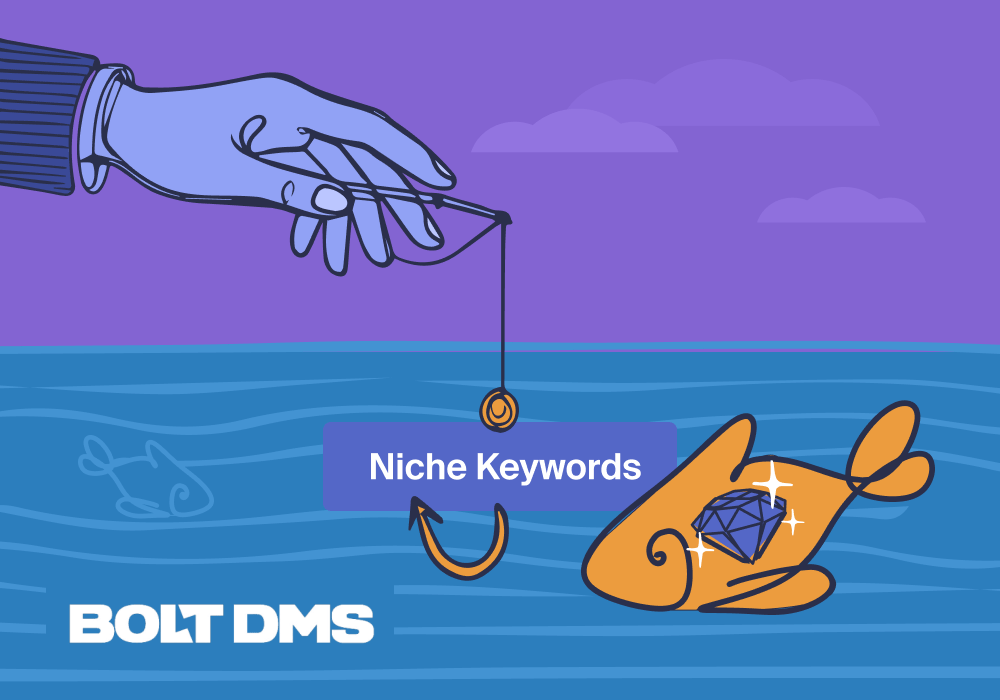
BOLT DMS used WhatConverts call recordings to identify niche keywords prospects actually used when discussing high-value projects: "fiberglass roof installation," "zinc roofing," "commercial flat roof." They shifted spend from generic "roofers near me" to these specialist terms with lower competition.
The results:
- £205k in booked work in 90 days
- 4x to 21x ROI
- Lead quality skyrocketed
Read the Full Case Study: Agency Strikes Gold with £205,000 Win by Mining Niche Keywords
These case studies aren't outliers. They're what happens when you remove the blind spot.
Why the Algorithm Can't See Revenue
Google Ads knows someone converted. It doesn't know if that conversion was worth $50 or $50,000.
So when you run Value Bidding or Target ROAS, the platform guesses. It assumes all conversions have similar value and optimizes for volume at your target cost.
That's the ceiling.
The moment you start syncing actual lead values—quote size, sale amount, service type—Smart Bidding stops guessing. It learns which audience signals predict high-value conversions and automatically prioritizes them.
Suddenly the algorithm isn't fishing for minnows. It's hunting tuna.
From Blind Optimization to Revenue Targeting
Here's what value-based optimization looks like in practice:
- Track every lead source to revenue outcome. Not just "Campaign A generated 50 leads" but "Campaign A generated $125,000 in closed revenue."
- Assign values automatically. Tag leads by service type, quote size, or actual sale amount so every conversion carries a dollar figure.
- Feed that data to Google and Meta. Use automated integrations to sync conversion values back to ad platforms in real time.
- Watch Smart Bidding reorient. The algorithm identifies high-value audience patterns and shifts spend toward what actually drives profit.
- Scale confidently. When you know Campaign C produces 10X returns, doubling its budget isn't aggressive—it's obvious.
That's the unlock. Not working harder, not spending more—just giving automation better feedback.
What This Means for Your 2026 Plan
If your growth target assumes current performance, it's already obsolete.
Those 300%, 500%, 1,200% improvements aren't aspirational. They're what happens when you stop measuring marketing by conversion counts and start measuring it by revenue.
The agencies and marketers hitting those numbers aren't special. They just stopped letting ad platforms optimize blind.
When you can show Smart Bidding which leads turn into $25x jobs versus $500 inquiries, your ceiling disappears. Budget decisions become simple. Growth projections stop feeling aggressive and start feeling conservative.
The Real Question
Your plan projects 20% growth. But what if you could teach Google which leads are actually worth chasing?
That's not a hypothetical. It's what these marketers did—and their results prove the ceiling was never real.
Ready to stop projecting growth based on blind optimization?
Start your free 14-day trial of WhatConverts today or book a demo with a product expert to see how we help prove and grow your ROI.
Get a FREE presentation of WhatConverts
One of our marketing experts will give you a full presentation of how WhatConverts can help you grow your business.
Schedule a Demo
Grow your business with WhatConverts