










































 Amanda Pell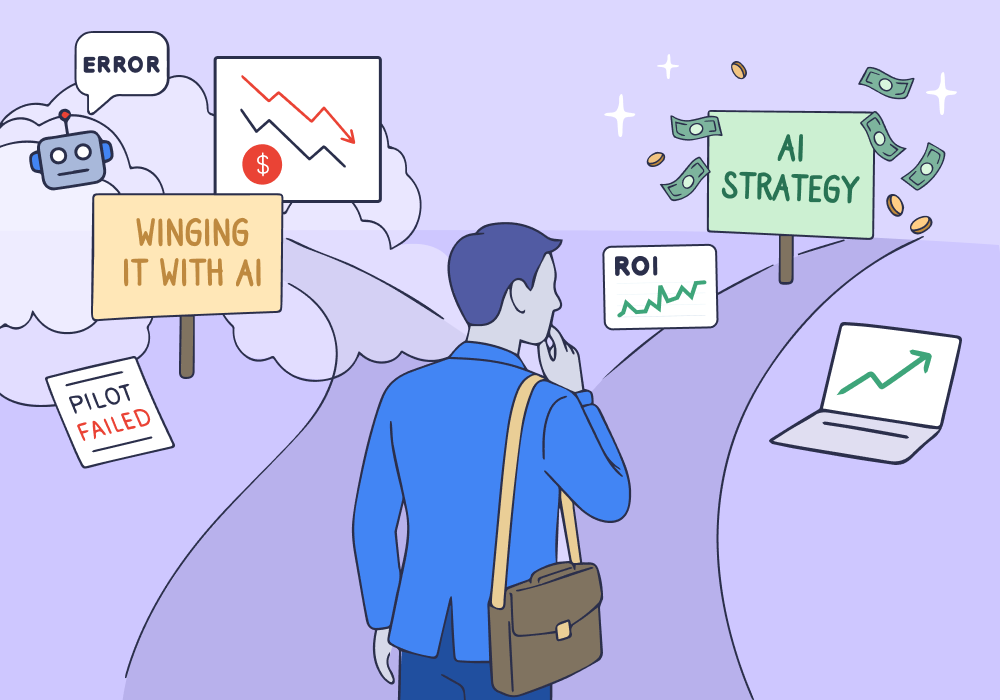
Agencies are caught in an AI Catch-22. Fall behind, and competitors leave you in the dust; rush in without a strategy, and you burn budget on tools you don’t fully understand.
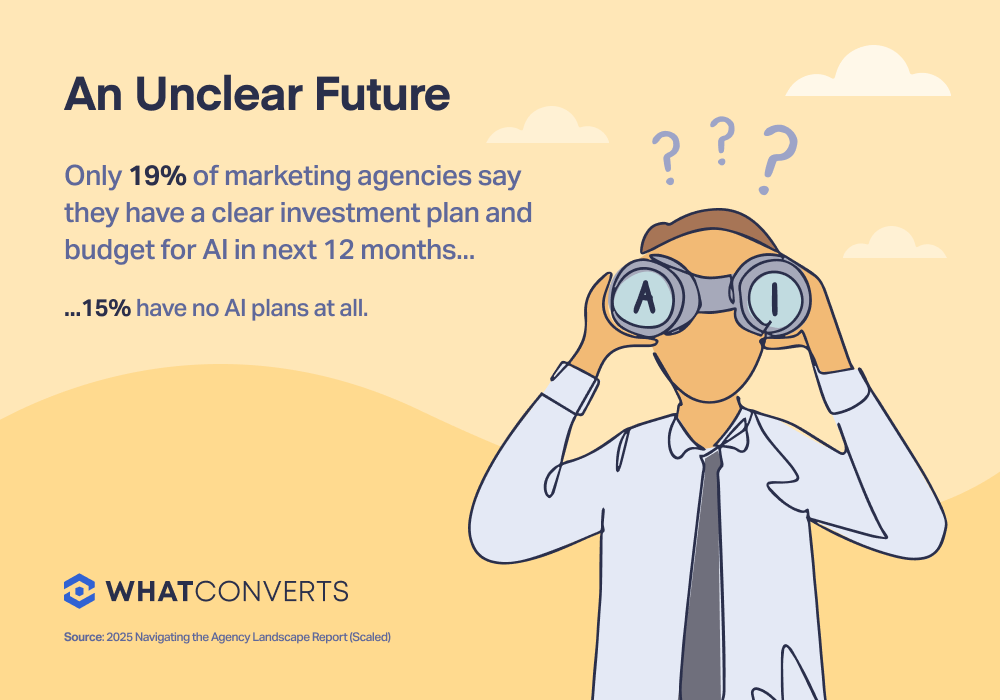
Pressure is rising fast. Only 19% of agencies have a clear AI plan and budget, while 15% have none. That leaves 66% stuck in the middle—moving toward AI because clients expect it, but without the strategy, inputs, or infrastructure to make it profitable.
The risk isn’t just wasted time or subscriptions. It’s letting AI optimize for the wrong thing. MIT research shows that 95% of enterprise AI pilot programs fail. Large companies can absorb six-figure losses; agencies running on tight margins cannot.
The winners won’t be the agencies that chase every new tool. They’ll adopt purpose-built AI that solves real problems: identifying qualified leads before sales wastes time, and surfacing actionable insights automatically.
The Real AI Risk: Value Blindness
Finding the right tool is only half the AI battle. The other half is feeding it good inputs.
If you don’t feed AI platforms meaningful lead quality or lead value signals, the algorithms have only one thing to optimize for:
Cheap, high-volume conversions.
That means:
- More junk leads
- More wasted sales time
- Campaigns that look better but produce worse revenue
This is a predictable outcome. AI simply maximizes the signals it receives; give it “conversions” and it will hunt for the easiest, cheapest ones it can find.
The Optimization Trap: When AI Makes the Wrong Things Faster
Here’s what this looks like in the real world.
An agency adopts an AI-powered lead generation tool (like PMax) that promises more leads, faster. It works…kind of. Form submissions double, phone calls triple, and dashboards spike green.
Clients feel hopeful. Then the sales reports come in.
| Metric | Before AI | After AI |
| Leads | 75 | 180 |
| Qualified Leads | 42 | 19 |
| Sales Time Spent | ~4 hours | ~14 hours |
| Revenue | $34,000 | $18,000 |
The algorithm did exactly what it was told: maximize conversions.
But without lead quality inputs, it couldn’t tell the difference between:
- A real buyer
- A low-intent price shopper
- Bots, spam, and garbage
The AI generated volume, but not value. Sales teams spent twice as many hours qualifying leads that went nowhere, and the cost per qualified opportunity actually increased.
This is what happens when agencies adopt AI tools that promise speed and efficiency without connecting to actual business outcomes.
You end up doing a faster, better job at generating worthless leads.
When You Can’t Connect AI to Revenue, Budget Burns Fast
AI that optimizes for volume instead of value only delivers more of what you already have too much of: unqualified leads.
Agencies end up paying for:
- Inflated conversion counts
- More manual lead triage
- Frustrated clients wondering why performance isn’t improving
The AI produces outputs; it just doesn't produce revenue.
Meanwhile, competitors with strategic AI adoption are building real differentiators. They’re teaching the algorithm what a profitable lead looks like. You’re teaching it how to maximize cheap conversions.
And the gap widens every month.
The Agencies Getting AI Right Ask One Question
Instead of chasing the newest AI tool, they ask: which activities, if done better or faster, would directly increase revenue or reduce costs?
For nearly every lead-generation agency, the answer is the same: lead qualification.
Sales teams waste hours:
- Calling dead leads
- Following up with non-buyers
- Booking discovery calls with no-budget prospects
That’s where purpose-built AI fundamentally changes the game.
The Solution: Give AI the Signals It Needs to Optimize for Value
WhatConverts's Ask AI analyzes every lead the moment it enters your system—call, form, or chat. It extracts the signals AI tools can’t get on their own:
- Buying intent
- Qualification markers
- Potential lead value estimate
Then Lead Intelligence rules score, categorize, and route leads automatically — turning raw conversions into high-quality revenue signals.
And because WhatConverts sends those signals back into Google Ads and other ad platforms, the algorithm finally has the input it’s missing: “This is what a valuable lead looks like; go find more of these.”
Suddenly sales time drops, qualified lead rates rise, and wasted spend shrinks.
AI stops working blind and starts working profitably.
Proof: What Happens When AI Gets Lead Quality Signals
A full-service digital agency called Collideascope adopted this approach after struggling with AI-generated junk leads. By automating lead qualification and syncing lead-value signals into Google Ads, they transformed their results:
- 3x more qualified leads
- 61% lower CPL
- 8% decrease in monthly ad spend
They didn’t increase budget or add tools; they just gave AI the data it needed.
Read More: The Optimization Flywheel: How Collideascope 3Xed Qualified Leads and Cut CPL by 61% [Case Study]
The Cost of Waiting Is Compounding
Every day you run AI-driven campaigns without lead-quality inputs, your budget is at risk.
WhatConverts gives AI the one thing it can’t get on its own: Lead-quality and lead-value signals that transform algorithms from volume-chasing to revenue-driving.
Agencies don't need to become AI labs. They need to stop treating AI like magic and start treating it like any other business investment—with clear problems, proven solutions, and measurable impact on revenue.
Ready to adopt AI that connects directly to revenue? Start a 14-day WhatConverts trial to see how purpose-built lead intelligence solves real business problems—or book a demo to see how agencies are proving AI ROI with concrete numbers.
Get a FREE presentation of WhatConverts
One of our marketing experts will give you a full presentation of how WhatConverts can help you grow your business.
Schedule a Demo
Grow your business with WhatConverts