


 Amanda Pell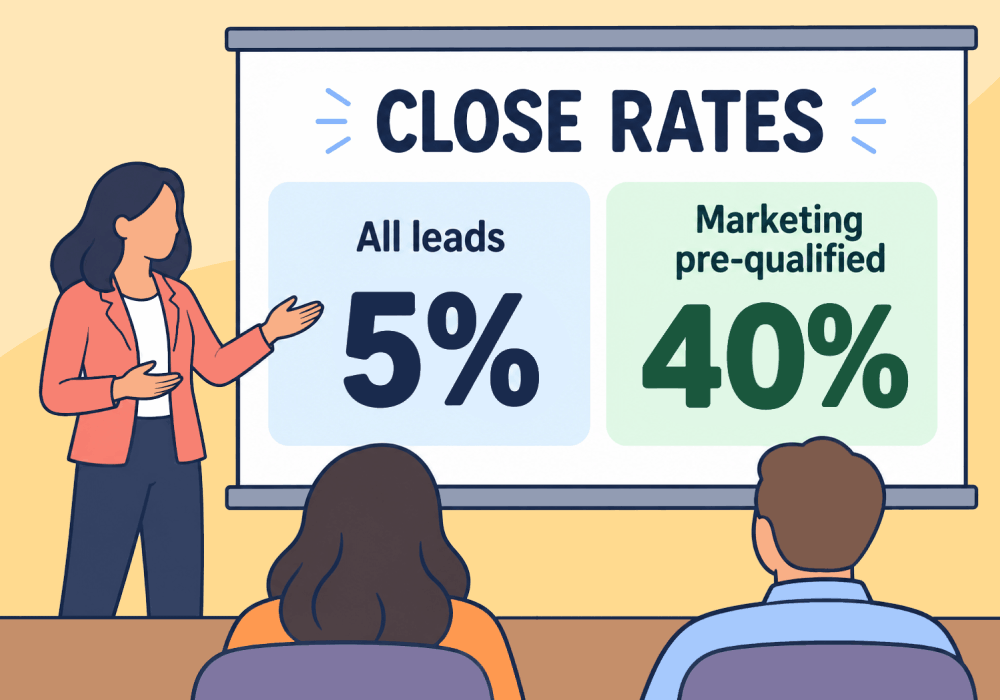
Most PPC agencies think of lead generation as the finish line. You run the campaigns, capture the calls and forms, hand over prospects with real buying intent, and your job is done. Actually closing the leads is the client’s job.
Here’s the thing: closing leads may not be your responsibility, but a client who can’t close leads will quickly become your problem when they stop making enough money to afford your contract.
It’s in your best interest to do whatever you can from the marketing side to set your client up for sales success.
This article shows how to use the lead data you already collect to make your client better at closing, without taking over their sales job.
Note: Not a WhatConverts user yet? Start your free 14-day trial of WhatConverts today or book a demo with a product expert to see how we help prove and grow your ROI.
How Good Leads Go Bad
You deliver 100 qualified prospects, and your client closes 15 of them. The other 85 were unanswered, mishandled, or went cold.
From your vantage point, you can see the campaigns are healthy. But when the client looks at their bank account, they decide the marketing isn’t working. They claim your leads are low-quality, and since you can’t see what happened after you handed them over, you can’t prove otherwise.
When a client stops seeing your leads turn into revenue, three things happen:
- Ad budgets stall, since the client can’t justify spending more on leads that aren’t turning into money.
- The relationship sours, as you insist the campaigns are going well while the client struggles to make ends meet.
- The contract eventually gets cut, because your work feels like a cost with no return.
None of these are problems that you caused, but all of them are problems you’ll pay for.
Related Reading: Where Good Leads Go to Die: the Poor Call Handling Problem
Handoff Is the Middle, Not the End
Most agencies treat the leads themselves, and perhaps the resulting report, as the final deliverables. They optimize everything up to the point of conversion and then let the client handle the rest.
That approach keeps things neat and tidy, but it also limits the value of the agency’s work to whatever the client’s sales team is able to do with it.
The better approach treats lead handoff as the midpoint on a group project. Your part of the project may be done, but you’re still going to be graded on the final result. So it’s in your best interest to make sure your client is equipped with what they need to take their portion of the project across the finish line.
Here’s how to do it.
The Sales Coaching Material Hidden in Your Marketing Data
Here's the part most agencies miss: everything your client needs to improve their sales can come from well-tracked marketing data that you have.
When you track PPC leads from the marketing source through to the conversion action itself, each lead you track carries context the client's sales team doesn’t normally see. Call tracking shows answer and follow-up rates. Recordings and transcriptions document how well inquiries are actually handled. Marketing data provides key qualifying information like service location and search term.
Related Reading: Lead Enrichment: Turn Intent Data into Revenue Signals
Provide your client’s sales team with that data and they can:
- See which calls are going unanswered and add phone coverage during high-traffic times
- Use qualifying context clues to prioritize lead follow-ups by likely buying intent
- Assess call recordings to evaluate sales rep performance and implement call coaching
- Understand which services or offers convert at the highest rates
Each of those is a specific, actionable improvement. And each one is invisible to your client unless they have the lead-level data tying the marketing to the outcome.
Turning Data Into Coaching Evidence
Marketers can supercharge their clients’ sales process by enriching every marketing lead until it tells the full story, then bringing that story to the client.
WhatConverts makes this storytelling automatic by capturing each lead with its marketing source as well as the content of its call or form fill. Marketers can mark each lead qualified manually or set up automation rules so leads self-qualify based on certain criteria, and even attach a quote value based on the service each lead is interested in.
Each WhatConverts lead becomes a record that shows what came in, how it was handled, and whether it turned into revenue. That data is what informs the Sales Call Handling report, which automatically calculates answer rates, average time to answer, and missed calls by city or sales agent.
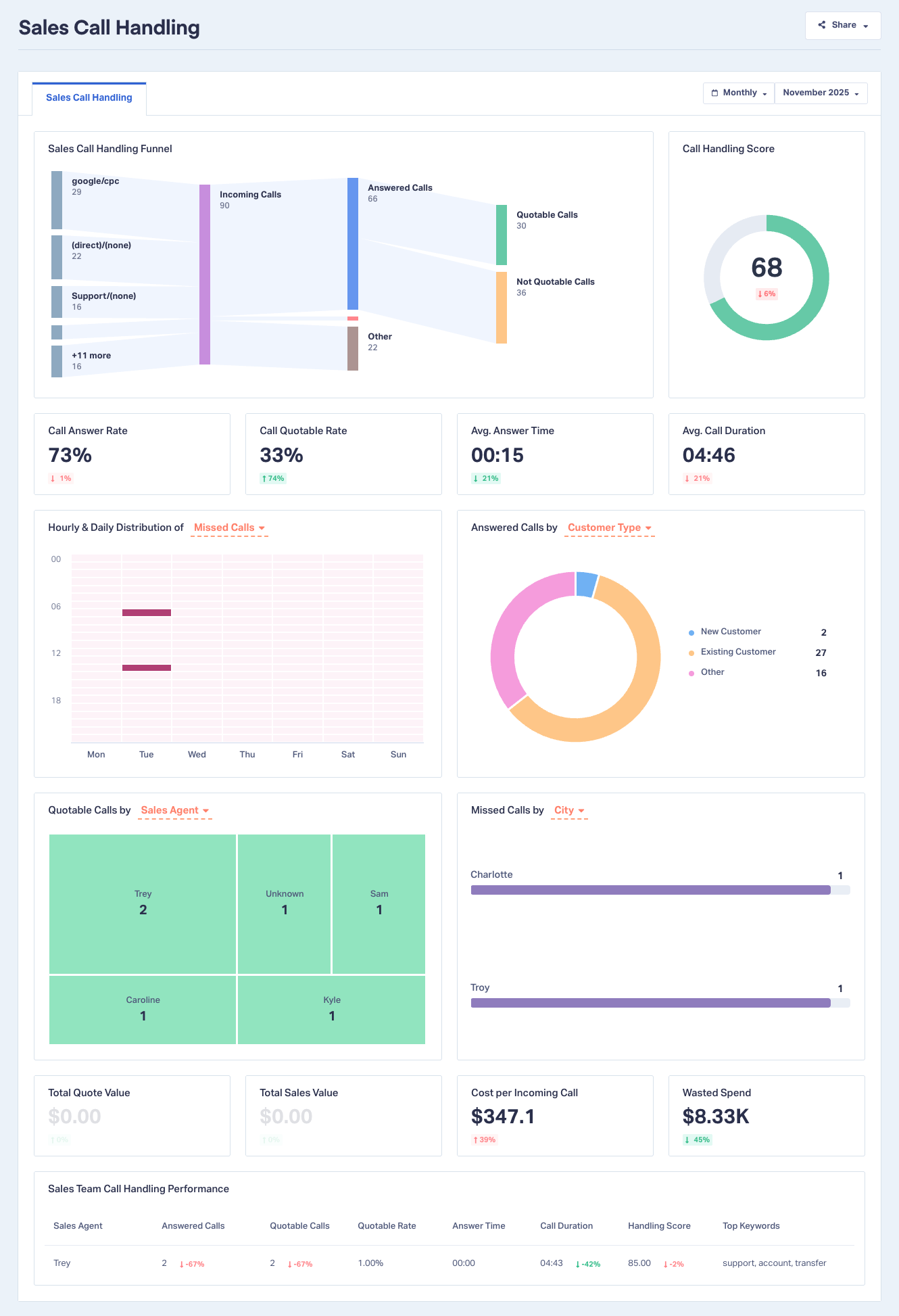
Your agency isn’t doing sales work. You’re just using marketing intelligence to show your client exactly where their sales process is leaking opportunities, backed by recordings and dollar values the client can’t argue with.
Related Reading: How to: Improve Call Handling with Zero Extra Training
What This Unlocks
When you help a client close more of what you send, the whole relationship shifts:
- Capture every lead with its recording, source, and outcome attached.
- Qualify and value each one so closed revenue ties back to your marketing.
- Surface the handling patterns costing the client winnable deals.
- Review the evidence together and agree on what to fix.
- Watch a rising close rate justify more budget for the campaigns that feed it.
Better closing means more revenue from the same lead volume, which means a client who can afford you and credits you for the growth.
Your leads got them the opportunities. Your data got them the sale.
Ready to turn the leads you already track into proof your client can act on?
Start your free 14-day trial of WhatConverts today or book a demo with a product expert to see how we help prove and grow your ROI.
Get a FREE presentation of WhatConverts
One of our marketing experts will give you a full presentation of how WhatConverts can help you grow your business.
Schedule a DemoGrow your business with WhatConverts