












































 Amanda Pell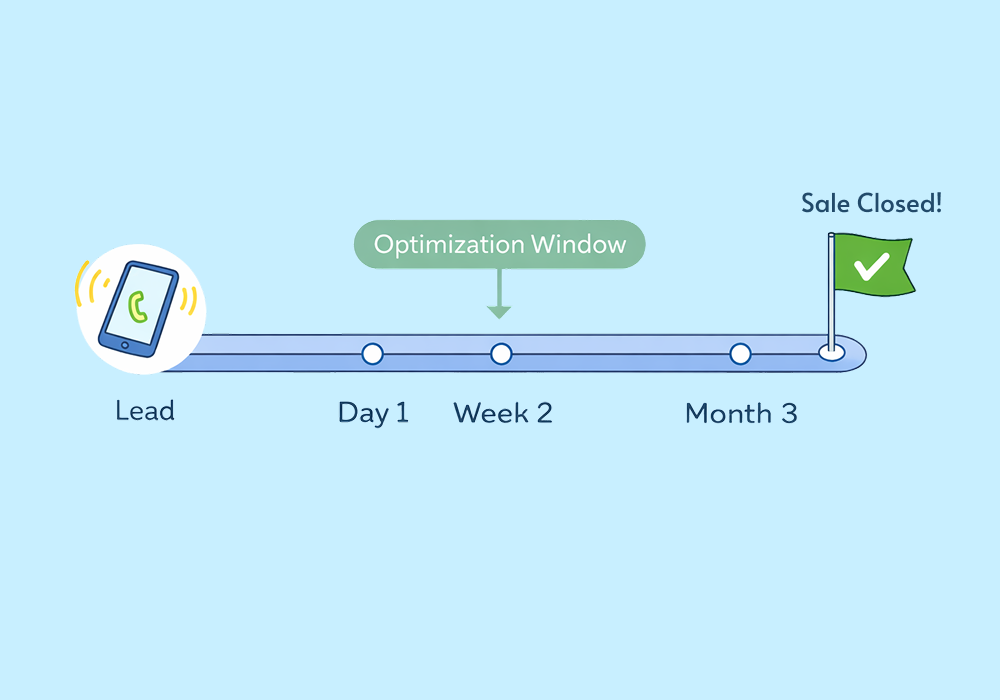
Google's bidding algorithm wants one thing: feedback.
The faster and more frequently you tell it what a "good" conversion looks like, the better it gets at finding more of them.
Identifying qualified conversions is a strong start. But attach a dollar value to each one, and Google can see not just which leads are good—but how good they are, relative to each other.
That's when optimization gets precise.
But if your sales cycle runs weeks or months, that feedback loop is broken from the start. Sales value can't teach the algorithm anything when it takes 90 days to arrive.
The fix is simpler than it sounds: use quote value instead. By assigning an estimated lead value the moment a prospect qualifies (rather than waiting for a deal to close) you can feed Google a fast, representative signal that keeps optimization moving in real time.
Here's how it works.
Note: Not a WhatConverts user yet? Start your free 14-day trial today or book a demo with a product expert to see how we help prove and grow your ROI.
Why Long Sales Cycles Are an Optimization Problem
For e-commerce businesses, the optimization feedback loop is immediate.
Someone clicks an ad, buys a product, and the transaction sends revenue data straight back into the platform. Google learns almost immediately which campaigns are producing value.
Lead generation isn’t as simple.
A user clicks an ad, fills out a form, or calls a business. That’s the conversion Google sees. But the real outcome—whether that lead becomes a customer—might not happen for weeks or months. Until then, Google’s algorithm has almost nothing to work with. It knows a lead happened; it just doesn’t know whether that lead was actually valuable.
So the system keeps optimizing based on incomplete signals. For businesses with long sales cycles, that means campaigns can run for months before the algorithm understands what actually produces revenue.
What Quote Value Does Instead
When you shift to using quote values, the algorithm gets information much more quickly.
Instead of waiting for the final sale, marketers send the projected value of the potential job as soon as the lead is qualified. These projected values are accurate enough to give Google the information it needs to prioritize lead targeting toward the most valuable opportunities.
Here’s how it works. Let’s say a prospect clicks on an ad and calls about a commercial HVAC installation.
During the call, the sales team gathers details about the building and prepares an estimate. The quote comes out to $18,000—the potential value of that lead.
It may not close immediately (or at all) but it’s clear this isn’t a routine maintenance call or a price shopper. It’s a serious opportunity.
When that quote value gets sent back into Google Ads, the platform receives a much stronger signal than a simple “lead generated.” Now the algorithm knows which clicks are producing higher-value opportunities, not just more leads.
Why Quote Value Works Better for Long Sales Cycles
Quote value improves optimization for three key reasons.
1. It Speeds Up Feedback
Revenue may take months to appear, but quotes happen much earlier in the sales process.
Instead of waiting for closed deals, the algorithm starts learning from qualified opportunities almost immediately.
2. It Increases Data Volume
In many industries, only a fraction of leads turn into sales. But far more leads reach the quoting stage.
By feeding quote values back to the platform, you dramatically increase the number of meaningful signals the algorithm can learn from.
3. It Represents Real Opportunity
The algorithm doesn’t need to know whether every lead closes.
What it needs to know is whether the lead was worth pursuing.
Quote values capture that difference. They separate casual inquiries from genuine revenue opportunities.
What This Looks Like in Practice
Imagine you're running Google Ads for a commercial roofing company with a 60-day average sales cycle.
If you only track closed deals, the algorithm gets very little data. By the time revenue appears, weeks have passed.
But if you start tracking and sending quote values, everything speeds up. Within a few days, several leads reach the quoting stage:
- One project is quoted at $4,000
- Another at $12,000
- A large commercial repair at $25,000
All three of those quote values get sent back into Google Ads.
Now the algorithm can see which keywords, audiences, and campaigns are producing higher-value opportunities.
Over time, bidding starts shifting:
- Keywords that generate large commercial quotes receive more budget.
- Searches that consistently produce small jobs receive less.
The system begins optimizing for revenue potential, long before the final sale occurs.
The algorithm doesn't need to know whether the lead closed. It needs to know whether the lead was worth pursuing.
Quote value answers that question immediately.
How WhatConverts Enables Quote Value Tracking
WhatConverts makes this process practical for agencies and marketers.
When leads come in through calls, forms, or chats, they’re captured inside the platform with full marketing attribution. From there, marketers can attach quote values to each lead.
Some teams enter this value manually after reviewing the opportunity. Others use automation rules that assign values based on lead details or call transcripts.
Once the quote value is recorded, WhatConverts can send that data back into Google Ads as a conversion value.
Instead of optimizing campaigns based only on lead volume, the platform begins optimizing around the opportunities most likely to generate meaningful revenue.
See how it works in action: The Optimization Flywheel: How Collideascope 3Xed Qualified Leads and Cut CPL by 61% [Case Study]
A Faster Path to Smarter Optimization
Long sales cycles don’t have to slow down campaign optimization.
The real problem isn’t time—it’s waiting for the final sale before giving the algorithm meaningful feedback.
Quote value closes that gap.
By sending opportunity value back into Google Ads earlier in the sales process, marketers can help the algorithm learn faster, prioritize better opportunities, and allocate budget more effectively.
Instead of optimizing for the most leads, campaigns begin optimizing for the leads most likely to matter.
Start your free 14-day trial of WhatConverts today or book a demo with a product expert to see how we help prove and grow your ROI.
Get a FREE presentation of WhatConverts
One of our marketing experts will give you a full presentation of how WhatConverts can help you grow your business.
Schedule a Demo
Grow your business with WhatConverts