




































 Amanda Pell
AI has taken marketing by storm. Generative content, automated bidding, predictive analytics—everyone's using it somewhere.
But when it comes to lead scoring? Only 13% of marketers have adopted AI.
That means 87% are still manually qualifying leads or relying on outdated rule-based systems that assign arbitrary points for "opened email" or "visited pricing page."
The 13% who've made the switch aren't just saving time. They're seeing patterns humans miss, learning which leads actually convert, and prioritizing follow-up based on revenue signals instead of guesswork.
These early AI lead scoring adopters are ahead of the curve. This article shows exactly what they're doing differently, and why the other 87% are leaving money on the table.
Note: Not a WhatConverts user yet? Start your free 14-day trial today or book a demo with a product expert to see how we help prove and grow your ROI.
Why Most Marketers Still Score Leads Manually
Traditional lead scoring feels safe. You assign points based on actions: +10 for downloading a guide, +15 for requesting a demo, +5 for visiting the pricing page three times.
When a lead hits 50 points, they're "qualified."
The problem? Points don't predict revenue. A prospect could rack up 75 points downloading ebooks and never buy. Meanwhile, someone who calls once and mentions a $20,000 budget gets 10 points because they didn't fill out a form.
Manual scoring systems optimize for engagement, not intent.
AI flips this. Instead of counting actions, AI reads what prospects actually say. When someone mentions "we need this by Friday," AI detects urgency. When they ask about financing, AI flags buying intent. When they request a high-value service, AI captures it immediately.
Manual systems score behaviors that might indicate interest. AI scoring extracts actual intent from conversations.
How AI Lead Scoring Works
Traditional lead scoring relies on behavioral signals: page visits, email opens, form completions. These actions suggest interest but don't reveal what the prospect wants or whether they're ready to buy.
AI lead scoring analyzes the conversation itself. Instead of inferring intent from clicks, AI extracts it directly from what prospects say: the service they're asking about, urgency in their timeline, budget mentions, questions that signal buying readiness.
To perform AI lead scoring, marketers need conversation-level intelligence:
- Call recordings and transcripts to detect urgency, budget signals, and service intent
- Full lead context including attribution and journey to distinguish high-value opportunities from noise
- Automated qualification rules that score leads based on conversation content, removing manual bottlenecks
- Platform integration so qualified lead data feeds back to ad platforms for value-based optimization
With complete conversation intelligence, AI lead scoring shifts from "which leads engaged most" to "which leads are worth the most."
The Competitive Advantage: AI Lead Scoring Meets Smart Bidding
AI lead scoring automates qualification. But the real advantage emerges when paired with Google's Smart Bidding.
Smart Bidding analyzes thousands of signals and adjusts bids automatically, thousands of times per day. The problem is that Google only knows a conversion happened—not if it was a high-scoring lead or a tire-kicker.
You can fix this with lead scoring, but manual lead scoring is slow and incomplete. By the time you've listened to calls, assigned values, and uploaded to Google, the algorithm has made thousands of decisions on partial information.
AI lead scoring solves both problems. It extracts actual buying intent from conversations—urgency signals, budget mentions, service requests—and assigns accurate values instantly.
Now the algorithm learns which segments, keywords, and campaigns drive high-value leads versus just volume.
The competitive advantage is accuracy at speed: AI lead scoring gives Smart Bidding quality intelligence fast enough to matter.
How WhatConverts Powers AI Lead Scoring
WhatConverts captures every call, form, and chat—then uses AI to figure out which leads actually matter.
Every phone call gets recorded and transcribed automatically. AI reads those transcripts and pulls out buying intent signals: Did they mention a specific service? A timeline? A budget? Qualifying questions or just browsing?
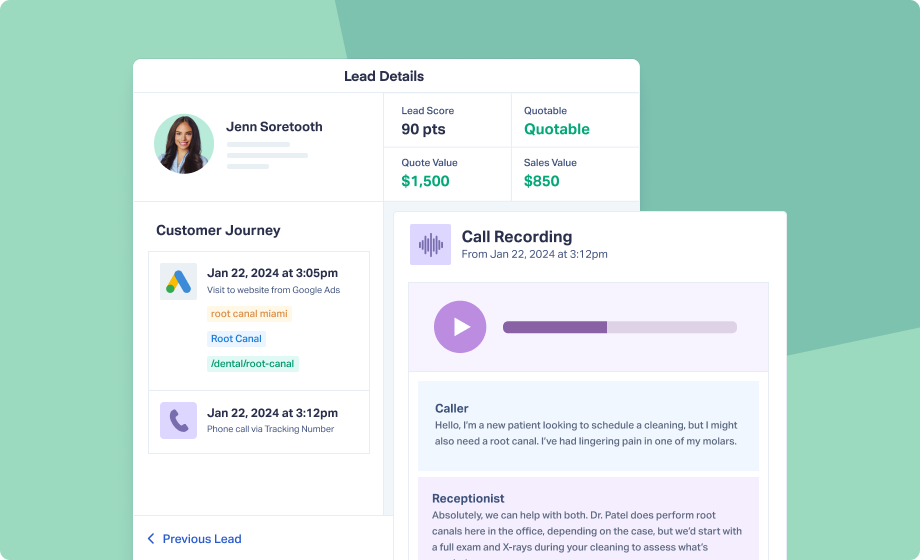
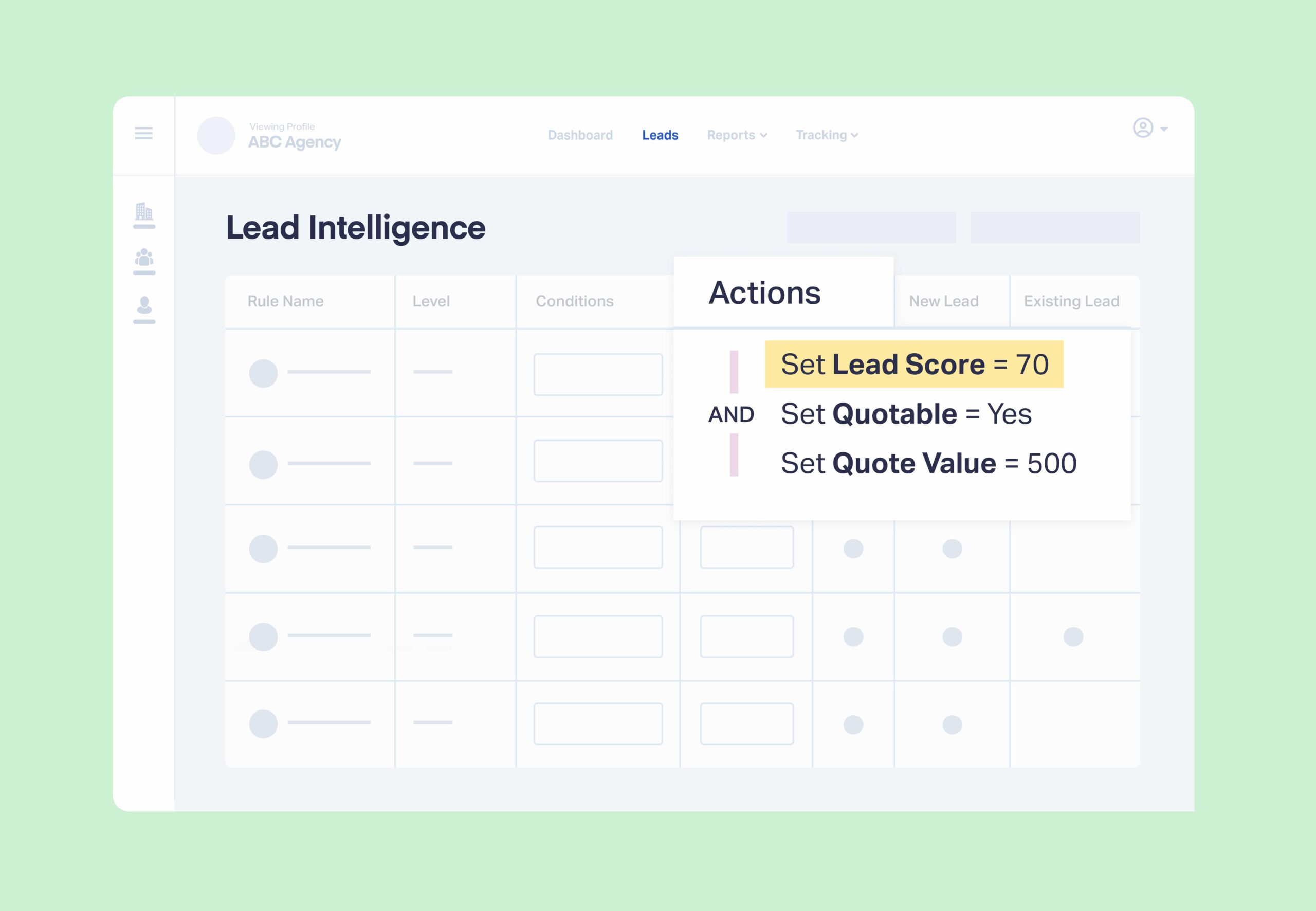
From there, you can score leads manually or set up Lead Intelligence Rules to do it automatically. Each lead gets a qualification status and value based on actual conversation content—not behavioral guesswork.
Every lead includes complete marketing attribution—campaign, keyword, ad, landing page, customer journey—so you see exactly which marketing drives your most valuable leads.
That's the full cycle: capture the conversation, let AI extract intent, score the lead, feed intelligence back to Google.
Case Study: 3X More Qualified Leads Through AI-Powered Optimization
Collideascope's campaigns generated plenty of leads, but quality varied wildly—and manual scoring couldn't keep up.
They implemented WhatConverts to capture call recordings, transcripts, service intent, and quote values. That data fed back into Google Ads dozens of times per day.
Google's Smart Bidding stopped optimizing for "more conversions" and started optimizing for "more valuable conversions."
Results: 3X more qualified leads, -61% CPL, and 8% decrease in monthly ad spend.
The algorithm didn't change. The data feeding it did.
Read More: The Optimization Flywheel: How Collideascope 3Xed Qualified Leads and Cut CPL by 61%
The 13% vs. The 87%
The gap between marketers using AI for lead scoring and those still doing it manually isn't about access to technology. It's about understanding how the pieces fit together.
Smart Bidding is powerful, but blind without quality data. Manual lead scoring provides that data, but too slowly. AI lead scoring solves both problems—extracting buyer intent from conversations and feeding it to Google fast enough to matter.
The 13% aren't just automating qualification. They're teaching Google's algorithm to chase revenue instead of conversion counts.
For the 87% still doing it manually, every delayed upload means Smart Bidding made hundreds of decisions without knowing which leads were valuable. Every pattern that goes undetected is a widening competitive gap.
Ready to join the 13%?
Start your free 14-day trial of WhatConverts today or book a demo with a product expert to see how we help prove and grow your ROI.
Get a FREE presentation of WhatConverts
One of our marketing experts will give you a full presentation of how WhatConverts can help you grow your business.
Schedule a Demo
Grow your business with WhatConverts