





























 Amanda Pell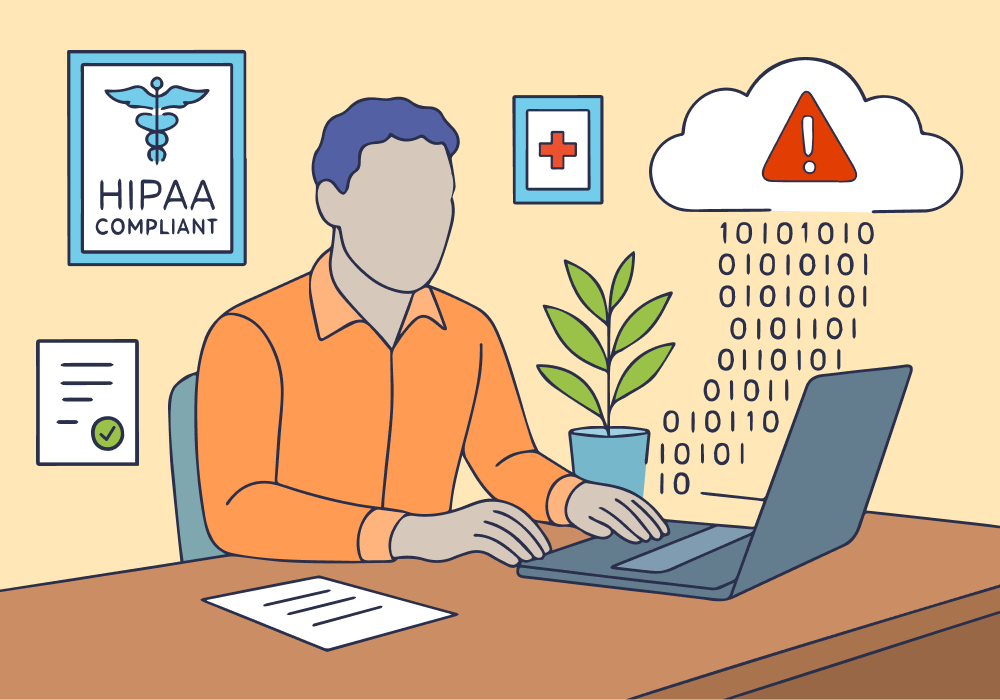
Most medical practices don’t violate HIPAA on purpose.
They violate it by using tools that were never designed to handle protected health information in the first place.
Calls are recorded, and inside those everyday calls is PHI—names, conditions, insurance details, appointment requests. Information HIPAA regulates, regardless of whether it came from a medical chart or a marketing campaign.
That’s where the risk begins.
Because HIPAA compliance doesn’t stop at the practice. It extends to every vendor that touches patient data—including call tracking and lead tracking platforms.
Most practices don’t realize that every platform they use must be HIPAA certified—until something goes wrong.
Why Call Recording Creates Hidden HIPAA Risk
HIPAA doesn’t prohibit recording patient calls. What it prohibits is unprotected PHI.
When patients call a medical practice, they often share sensitive details without being prompted. Those conversations are routinely recorded for quality assurance, training, or marketing insight.
From a compliance standpoint, each of those recordings may contain PHI. And once that call is recorded, HIPAA governs how it’s stored, accessed, shared, and audited.
The rules are simple, but strict. In order to qualify as HIPAA-compliant software, platforms need to offer:
- Data encryption at rest and in transit
- Strict access controls and user authentication protocols
- Audit logs for all user interactions
- Automatic session timeouts and forced re-authentication
- Secure data storage and transmission protocols
- Ability to restrict and monitor access to Protected Health Information (PHI)
- Mechanisms to prevent unauthorized data sharing or distribution
The violation usually isn’t the recording itself, but rather what happens after the call ends.
The Real Cost of Non-Compliance
HIPAA violations are categorized by severity, and fines scale accordingly:
| Fine per Incident | Annual Maximum for Repeat Offenses | |
| Tier 1: Unknowing Violation | $100–$50,000 | $25,000 |
| Tier 2: Reasonable Cause | $1,000–$50,000 | $100,000 |
| Tier 3: Willful Neglect (Corrected within Required Time Period) | $10,000–$50,000 | $250,000 |
| Tier 4: Willful Neglect (Not Corrected) | $50,000 | $1.5 million |
That means, if an audit uncovers 200 non-compliant recordings, even if they were an innocent mistake, you're facing a $20,000 minimum fine.
But fines aren't the only cost. Practices also face:
- Mandatory corrective action plans that consume staff time and resources
- Reputational damage from publicized breaches
- Lost referrals when patients lose trust
- Increased malpractice insurance premiums after violations
A $3,000 fine sounds manageable. A $50,000 settlement plus corrective action plus reputation damage? That's practice-ending.
Where Most Call Tracking Platforms Fall Short
Most call tracking tools were built for general marketing use—not healthcare.
They’re good at capturing calls and routing them. They’re not designed to apply HIPAA-required safeguards by default.
Common gaps include:
- Recordings stored without encryption at rest
- Broad user access with no role-based controls
- No audit trail showing who accessed PHI and when
- Notifications that expose call details via email
- No Business Associate Agreement with the vendor
When any of those are missing, recorded calls can become compliance liabilities.
And when an audit or complaint surfaces, the responsibility sits with both the software provider and the practice.
HIPAA Compliance Isn’t About Recording Less
A common reaction to this risk is to stop recording calls altogether, but that’s not what HIPAA requires.
HIPAA requires that PHI—wherever it exists—is handled with appropriate administrative, technical, and physical safeguards.
In other words, the issue isn’t having the data. It’s how the data is protected.
That’s the distinction most practices don’t discover until after the fact.
What HIPAA Compliance Looks Like in WhatConverts
HIPAA compliance in WhatConverts isn’t a promise or a checklist. It’s a specific operating mode that applies required protections across the platform.
When HIPAA mode is enabled:
- Lead data containing PHI is encrypted at rest and in transit
- Access to sensitive information is limited to authorized users
- All access to PHI is logged for auditing purposes
- Insecure webhooks and data sharing are disabled
- Notifications are restricted to prevent PHI exposure
- A Business Associate Agreement is available for covered entities and partners
The goal isn’t to change marketing workflows, but to ensure those workflows don’t create compliance exposure.
Read More: HIPAA-Compliant Call and Form Tracking
Why This Matters for Practices and Agencies
HIPAA liability doesn’t stop with the medical practice.
Agencies and vendors that handle PHI are also responsible for how that data is protected. That creates risk on both sides when non-compliant tools are used.
Without HIPAA-compliant tracking:
- Practices assume risk they can’t see
- Agencies inherit liability they didn’t intend
- Compliance becomes reactive instead of built in
HIPAA mode removes that ambiguity by putting the required safeguards directly into the system handling inbound calls and leads.
Compliance Shouldn’t Be a Surprise
HIPAA fines are expensive, audits are disruptive, and reputational damage is hard to undo.
Most of these situations don’t come from bad intent. They come from using tools that were never designed for regulated data.
HIPAA-compliant call and form tracking exists to prevent that—not by asking teams to be more careful, but by making sure the system itself handles PHI correctly.
That’s the difference between hoping you’re compliant and knowing you are.
Ready to protect your practice from HIPAA fines while keeping the marketing data you need?
Start your free 14-day trial of WhatConverts today or book a demo with a product expert to see how we help prove and grow your ROI.
Get a FREE presentation of WhatConverts
One of our marketing experts will give you a full presentation of how WhatConverts can help you grow your business.
Schedule a Demo
Grow your business with WhatConverts