


 Amanda Pell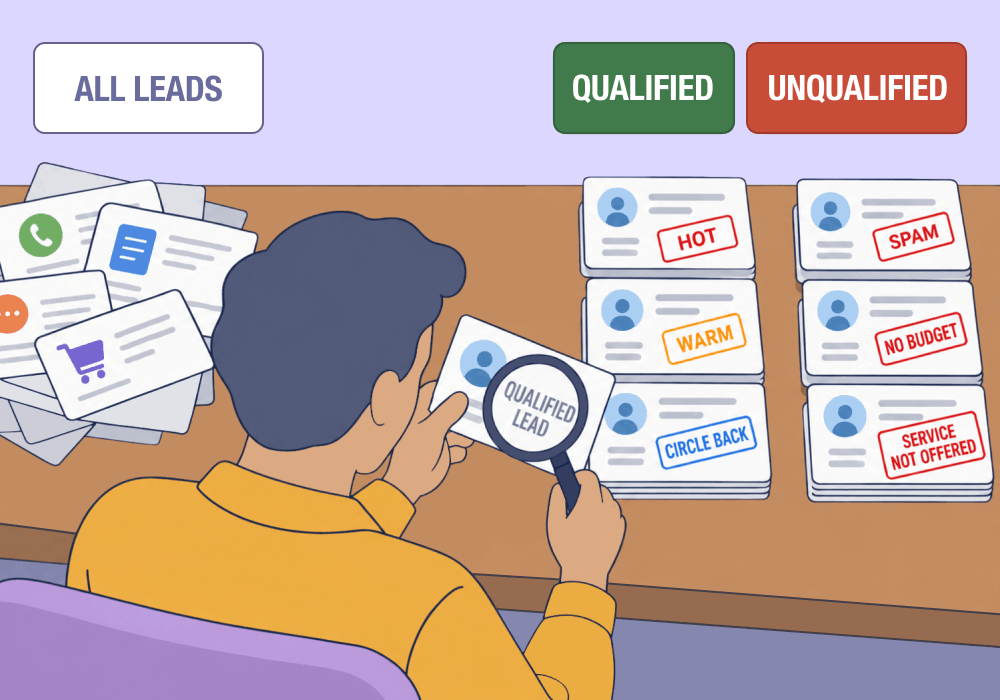
"Lead quality" is one of the most used phrases in marketing, and one of the least well-defined.
It gets treated like a mood. A campaign "feels" like it's bringing in good leads, or it doesn't. One day a client decides the leads are "bad," and everyone accepts that judgment without agreeing on what it actually means.
But lead quality isn't a vibe attached to a campaign. It's a property of each individual lead, and it can be assessed.
A single lead is either a real buying conversation or it isn't. It's from your service area or it isn't. It's for a service you offer, or it isn't.
This article breaks down what lead quality actually means, the concrete signals that determine it, and how to measure it consistently, so it becomes a data point on every lead instead of a gut feeling about a channel.
Note: Not a WhatConverts user yet? Start your free 14-day trial of WhatConverts today or book a demo with a product expert to see how we help prove and grow your ROI.
What Lead Quality Actually Means
A high-quality lead is a real prospect who is interested in and capable of buying what your client sells.
That's it. Strip away the jargon and every definition comes back to the same four questions:
- Is it real? An actual person with an actual need; not a robocall, a wrong number, or a job applicant?
- Is it relevant? Someone asking about a service your client offers, in a location your client serves?
- Is it ready? A prospect with intent to buy, not someone comparison-shopping for a project three years out?
- Is it worth it? A lead with enough potential value to justify the cost of acquiring their business?
A lead that clears all four bars is high quality. A lead that fails one is a little lower quality (but still worth attention), and a lead that fails several is just junk.
The point is that "quality" is not one single thing. It's a set of specific, checkable conditions.
Related Reading: How to Measure Lead Quality [+ Scoring Checklist]
The Problem: Quality Isn’t Clear at the Conversion
Here’s the issue that marketers have: the answers to those four quality questions are still hidden when the lead conversion occurs. It’s difficult to tell if an isolated ad click is real, relevant, ready, or worth it when all you can see is that a conversion occurred.
Most of the time, quality doesn’t get assessed until the lead is on the phone with a sales rep, and many marketers and clients have simply accepted that as a necessary part of the lead handoff process.
But here’s why ignoring lead quality on the marketing side is a problem:
Blindly Sending Truckloads of Leads for Clients to Sort Through Isn’t a Service
If you don’t know the quality of the leads you’re sending over, you’re taking a massive risk by potentially dumping piles of garbage onto your client’s desk for them to deal with.
If there aren’t enough high-quality leads in the pile to justify the junk, then your agency is in the business of generating labor, not leads.
You Can’t Target Good Leads Unless You Know Which Leads Are Good
Google Ads’s automatic bidding is not capable of targeting quality leads. All it can do is bring in a lot of leads at the lowest cost.
The only way to tell Google Ads which leads to target is by showing it which conversions are good and which aren’t, and you can’t do that if you don’t have that information yourself.
Related Reading: Send Quote Value with Google Ad Conversions
The Solution: Connect Lead Quality Data to the Marketing Conversion
The answers to the four lead quality questions can be found in two places:
- The content of the sales conversation
- The data collected during the lead journey
Marketers usually don’t have access to this information, because marketing-side tracking ends with the marketing conversion. When a client says, “this is a good lead,” marketers aren’t able to connect it to the good conversion (and good campaign) that drove it. All they learn is that, out of however many leads they drove this month, this one was good. Nice to hear, but not actionable information.
Marketers need to be able to see which conversions are producing good leads, so they can identify the campaigns and channels that are producing those good conversions and grow them to get more.
Here’s how to do it:
1. Track the Marketing Conversion and the Sales Conversation in the Same Place
When the lead mentions that they’re urgently seeking your client’s service and looking for a quote, that gets documented alongside the specific marketing channel, campaign, keyword, and ad that brought in this high-quality lead.
Here’s what that looks like in WhatConverts:
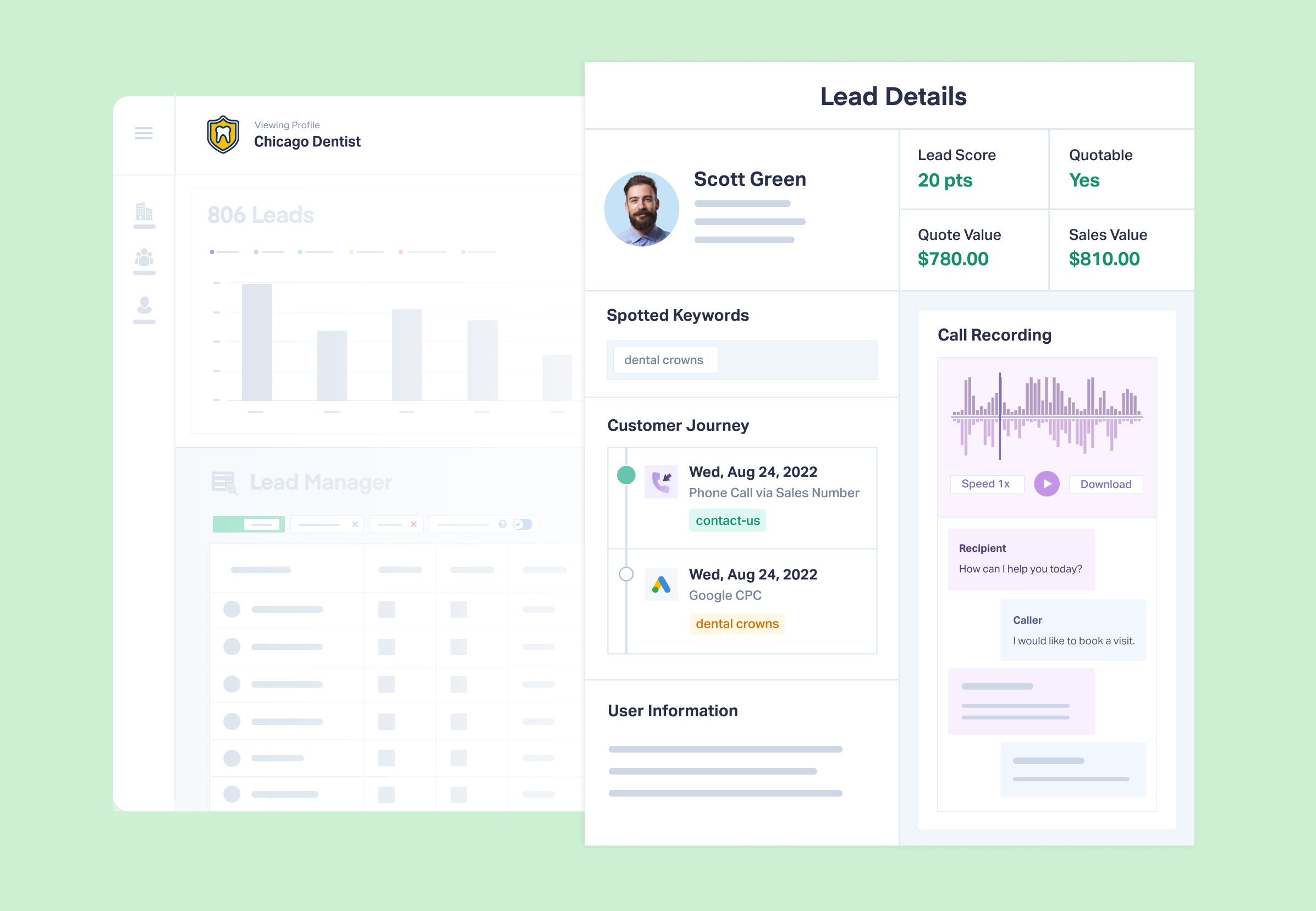
Every single conversion from all of your marketing channels gets routed back to the centralized Lead Manager, which attributes every marketing touchpoint and sales conversation to the prospect behind them. When a lead is evaluated and marked quotable, marketers can see exactly what marketing drove that high-quality lead.
Since each lead is documented alongside its quotable status as well as its marketing source, WhatConverts makes it possible to report on lead quality across entire campaigns. So you can see not just which individual conversions drove quality prospects, but which channels and keywords are driving the most high-quality leads.
How It Works: Using the Lead Manager
2. Use Context Clues to Automatically Extract Quality Data
Some lead quality questions can be answered without listening to the whole sales call. Calls that lasted less than 30 seconds can be filtered as spam. Transcripts with phrases like “just looking” can be flagged as low-intent.
Here’s what that looks like in WhatConverts:
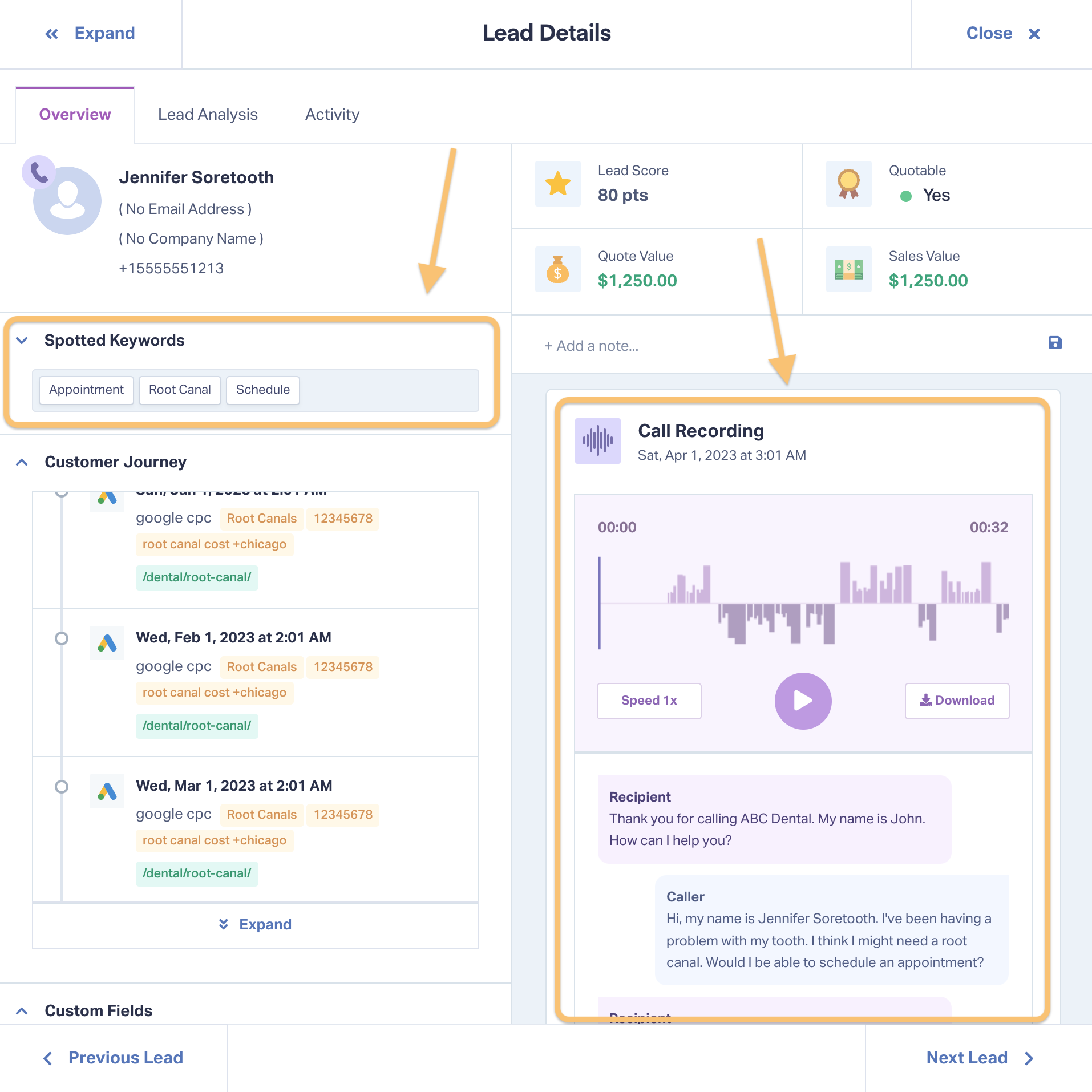
WhatConverts captures the context around every lead automatically. Call duration, the keywords and pages that brought the lead in, whether the caller is new or returning, and a full transcript of the conversation all get logged the moment the lead comes in. You can set duration thresholds to filter short calls as spam, and search transcripts for the phrases that signal high or low intent. So a lot of the quality picture is already assembled before anyone opens the lead, and the signals that used to require a manual listen are sitting right on the record.
3. Set Up Automations to Evaluate Lead Quality at Scale
Even when sales conversations are documented where marketers can see them, you can’t realistically sit and listen to every call. Use tools that automatically analyze the content of each conversation and surface spotted keywords like “urgent need” “ready to book” or the name of the specific service they’re interested in.
Here’s what that looks like in WhatConverts:
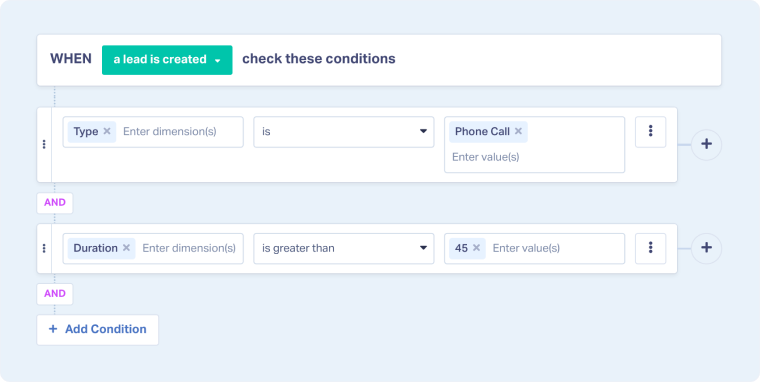
Lead Intelligence applies your quality rules for you. You define what a good lead looks like once, using criteria like call keywords, the service mentioned, pages visited, and the ad that drove the click. Then it evaluates every incoming lead against those rules, marking leads quotable, adding quote and sales values, and flagging spam without anyone lifting a finger. Quality becomes a scored field on every lead, so you can filter by it, report on it across campaigns, and send only your qualified conversions back to Google Ads to train it toward the leads that are actually worth having.
Measure Quality Instead of Guessing at It
Lead quality was never a vibe. It's a real, assessable property of every lead you generate, built from signals you already have.
Define what quality means, apply the same standard every time, and attach it to the lead as data. Do that, and you stop debating whether a campaign "feels" good and start proving which leads are worth paying for.
Ready to make lead quality something you measure per lead instead of guess per campaign?
Start your free 14-day trial of WhatConverts today or book a demo with a product expert to see how we help prove and grow your ROI.
Get a FREE presentation of WhatConverts
One of our marketing experts will give you a full presentation of how WhatConverts can help you grow your business.
Schedule a DemoGrow your business with WhatConverts