


 Amanda Pell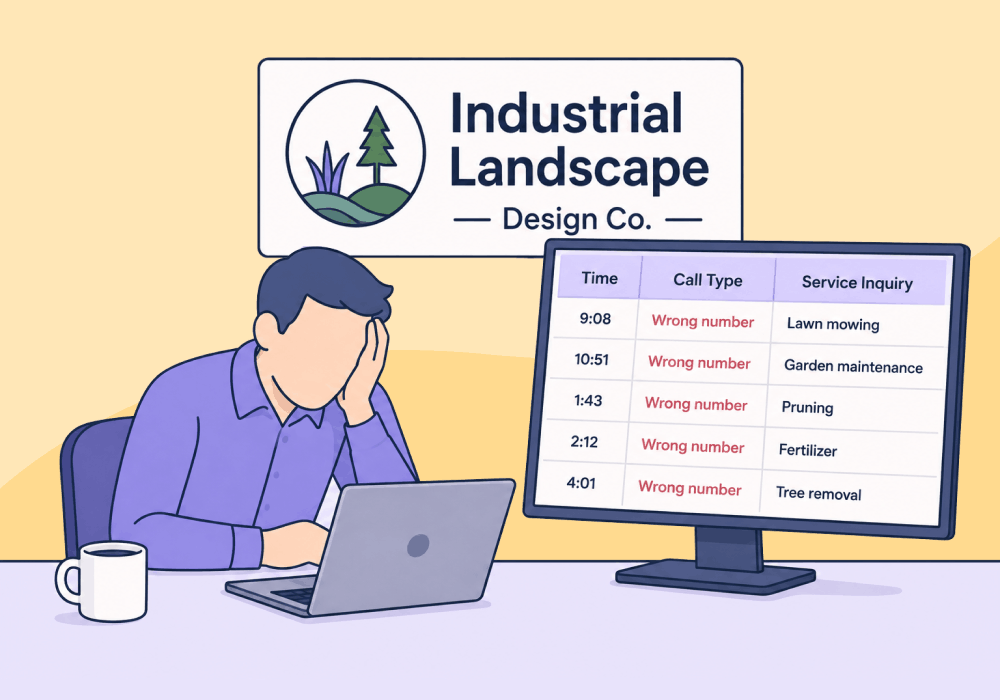
Hardscaping leads cost nearly twice as much as lawn care clicks on Google Ads. So when a hardscaping campaign starts pulling in lawn mowing inquiries, it isn't just a lead quality problem. It means high-end landscapers are paying premium CPLs for leads that will never book a $40k patio job.
That’s the problem with Google’s broad match algorithm. Someone searching “landscape design near me” is planning a high-ticket project, while someone searching “lawn mowing near me” wants someone to cut their grass every other week. Totally different buyers, budgets, and services, but to Google’s algorithm, they’re close enough.
This article explains how search term contamination happens in landscaping campaigns and how to use keyword-level lead tracking to expose it before it drains your budget.
Note: Not a WhatConverts user yet? Start your free 14-day trial of WhatConverts today or book a demo with a product expert to see how we help prove and grow your ROI.
A $40K Patio Job and a $50 Mowing Gig Look Identical to Google
This is what's called search term contamination: a campaign matching to queries outside its intended service category. It's particularly hard to catch because it doesn't look like a problem in the dashboard.
A call from a prospect who wants a $40K patio and outdoor kitchen: conversion. A call from someone pricing out weekly lawn service: also a conversion. From the platform's perspective, they're identical. A number dialed, a form submitted.
So the campaign looks fine. CPL is reasonable. Conversion rate holds. Nothing in the dashboard flags the issue.
In reality, the difference in cost and conversion rates between the two services is stark:
| Service | Avg. CPL | Avg. Conversion Rate |
| Hardscaping | $153.27 | 3.13% |
| Lawn Care | $84.24 | 5.54% |
Lawn care leads are cheaper and convert at a higher rate, which means Google's algorithm is actively incentivized to find more of them.
Left unchecked, a hardscaping campaign will gradually drift toward the path of least resistance: cheap clicks from the wrong audience.
Without keyword-level lead data, there's no way to tell it's happening, and the algorithm has no reason to stop.
Why the Search Terms Report Doesn’t Solve the Problem
Auditing the search terms report is the right instinct, but it only tells half the story.
It shows which queries triggered your ads. It doesn't tell you:
- Whether the person who clicked actually called
- What they asked for
- Whether the lead was worth anything
A "hardscaping near me" click that turns into a mowing inquiry looks identical to one that turns into a $45,000 install until someone qualifies the lead.
For landscapers running high-ticket campaigns, that gap is where budget gets spent on the wrong audience.
Keyword-Level Attribution Shows What’s Actually Producing Revenue
WhatConverts ties every lead back to the exact keyword that drove it. Not just which keywords got clicks, but which ones produced real contacts, what those contacts were asking for, and what they were worth.
That means, instead of looking at traffic patterns, you can see what buyers were actually asking for:
| Keyword | Leads Generated | Actual Intent |
| landscape design near me | 12 | 8 mowing inquiries, 2 sprinkler repairs, 2 patio projects |
| outdoor kitchen contractor | 5 | 4 qualified hardscaping projects |
| backyard renovation company | 7 | 5 high-ticket install opportunities |
Without lead qualification, Google sees all 24 leads as successful conversions. In reality, only a fraction are the kind of projects the campaign is supposed to generate.
How One Landscaping Agency Cut Non-Offered Service Leads by 92%
Lawnline Marketing, a Tampa agency specializing in green industry clients, ran into this exact problem with a large lawn care client spending $150K+ a year on lead generation across Google Ads and Local Service Ads.
Using WhatConverts, they filtered the client's lead data to isolate the contamination. They:
- Started with 6,000+ total leads across channels
- Narrowed to the 1,092 that were unqualified
- Filtered those by reason for disqualification
- Surfaced 226 leads asking about a service the client didn't offer (mowing)
- Traced 92 of those back to a single channel
Once they could see which channel was generating the mismatched leads, the fix was straightforward. They corrected the service categorization on the listings, and non-offered service leads from that channel dropped by 92% almost immediately.
The leads had been generating, billing, and counting as conversions long before anyone could see they were the wrong leads. Lead-level reporting made the contamination visible. The fix took minutes.
Read More: Lawnline Marketing Achieves 92% Fewer Unqualified Leads in Under 5 Minutes [Case Study]
How WhatConverts Stops Search Term Contamination
Once search term contamination becomes visible, fixing it gets much easier.
When a hardscaping campaign starts pulling in lawn care inquiries, it shows up immediately in lead reporting. You can see the keyword, hear the call, read the transcript, and flag the lead. From there, the fix is fast:
- Negatives that reflect reality. Calls tagged as "lawn mowing," "lawn maintenance," or "grass cutting" become negative keywords before another dollar is spent on that intent.
- Lead values that teach the algorithm. Hardscaping leads get a job value attached. Mowing inquiries get filtered out. Google Ads only receives conversion signals from leads that actually match what the campaign is trying to win.
- Optimization that compounds. Once Smart Bidding is working from accurate signals, it stops chasing cheap clicks and starts targeting the buyers who are actually planning big jobs.
This is the difference between a campaign that hits its CPL target and one that fills the pipeline with $40K installs.
The Fix in Practice
- Connect keyword-level tracking so every lead is tied to the search term that drove it
- Review lead content (calls, transcripts, form submissions) to identify mowing and maintenance inquiries routing through hardscaping campaigns
- Build negative keyword lists from real lead data, not assumptions
- Assign lead values by job type and pass only qualified hardscaping leads back to Google as conversions
- Let Smart Bidding optimize toward the buyers actually worth winning
If you're running ads for big-job landscaping, you should know exactly which keywords are filling your pipeline and which ones are wasting it.
Start your free 14-day trial of WhatConverts today or book a demo with a product expert to see how we help prove and grow your ROI.
Get a FREE presentation of WhatConverts
One of our marketing experts will give you a full presentation of how WhatConverts can help you grow your business.
Schedule a DemoGrow your business with WhatConverts