


 Amanda Pell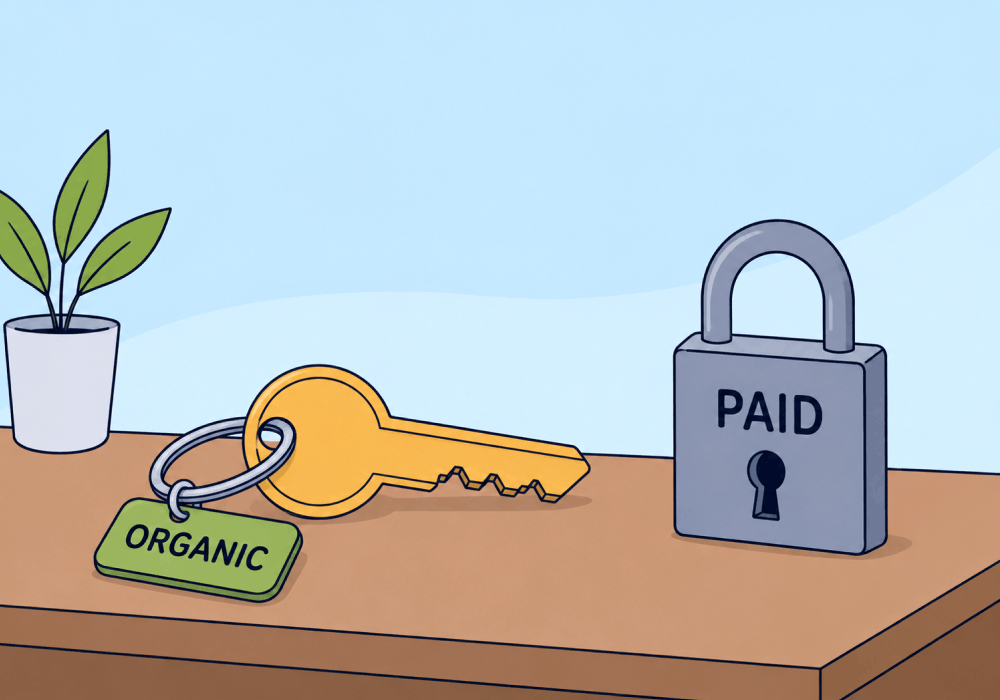
Every agency pitch to a skeptical B2B client runs into the same wall: "Our industry is too niche for PPC. Nobody is searching for what we sell, and Google Ads will just burn money on the wrong clicks."
It's a fair worry. Niche B2B keywords are low-volume and expensive, and one bad agency experience is enough to close the door on paid search for good.
But most clients are sitting on the exact proof they're asking for. It's hidden in their organic traffic.
This article shows how to use organic conversion data to de-risk a paid search launch and turn a skeptical client into a believer.
Note: Not a WhatConverts user yet? Start your free 14-day trial of WhatConverts today or book a demo with a product expert to see how we help prove and grow your ROI.
The Problem: Low Volume Reads as "No Demand"
When a client sells a niche product like alloy grades or industrial fasteners, search volume is thin. A keyword might get 70 searches a month instead of 7,000. To a nervous client, low volume looks like no demand. So they assume Google Ads can't work.
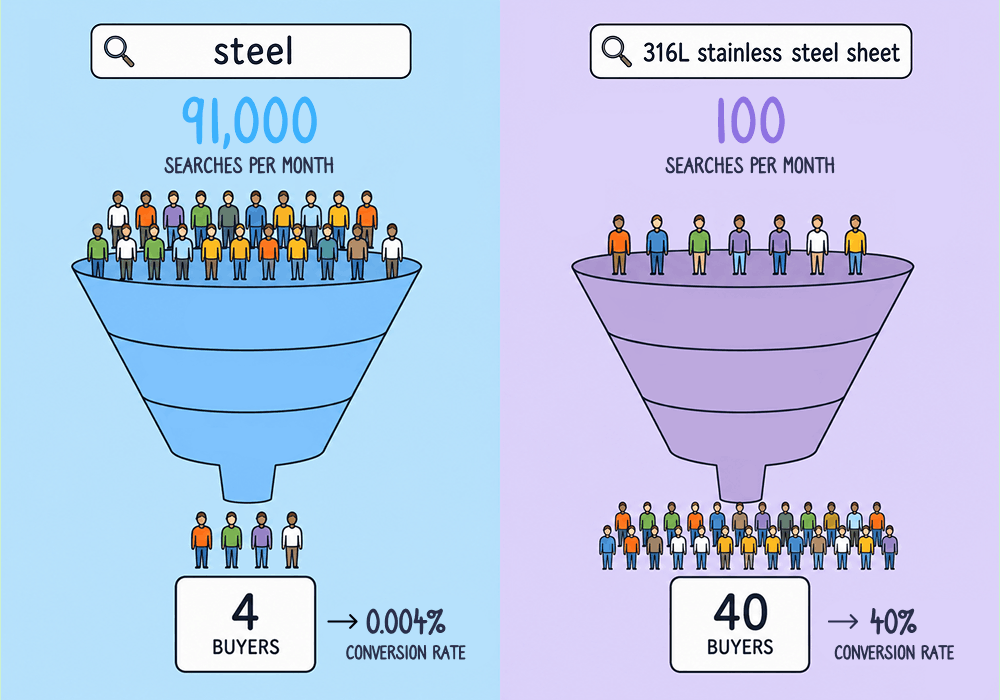
But low volume doesn't mean low opportunity. Volume tells you how many people search. It says nothing about whether those searches turn into revenue.
In a niche industry, a keyword with 100 searches a month can be worth more than one with 91,000, because those 100 people searching for it are ready to buy.
The issue is that the client can't see any of that. They're looking at search volume, and search volume says the opportunity is small. So you're left arguing for a paid budget on faith, with no proof the keywords convert. And faith is exactly what a burned client doesn't have left to give.
The Insight: Organic Is a Free Proof of Concept
Here's what most agencies miss: a client's organic traffic has already run the necessary experiment.
If an organic landing page pulls in qualified leads that turn into real jobs, that landing page has demonstrated buying intent for whatever keywords it ranks for. The only thing missing is reach. PPC simply buys more visibility for a search you already know converts.
A landing page that converts organically will convert through paid search. The risk isn't whether demand exists. You've already proven it does. The risk is only whether you can profitably buy more of it.
That reframes the entire pitch. You're not asking the client to gamble on unproven keywords. You're asking them to scale the ones their own website already validated for free.
How to Overcome It: Mine Conversions, Not Clicks
The move is to build paid campaigns around the searches your client is already winning organically. It's a three-step workflow:
- Find the top-converting organic landing pages. In WhatConverts, filter your leads to organic traffic, then sort by qualified leads or revenue. Ignore high-traffic pages with no conversions. You want the pages that produce business.
- Identify the queries those pages rank for. Take those URLs into Google Search Console, Ahrefs, or Semrush. Pull the ranking queries for each one. These are the actual searches turning into leads.
- Filter for specific, high-intent terms. Skip broad heads like "steel" or "nickel." Bid on the precise terms: alloy grades like "316L stainless steel sheet," industry designations like "ASTM A36 plate," or specific part numbers. These are the queries qualified buyers type.
Now your campaign launch isn't a guess. It's a budget allocation backed by the client's own conversion history.
Related Reading: Which Landing Pages Drive the Most Leads? This Report Tells You
Why WhatConverts: Organic Attribution Down to the Keyword
This whole approach depends on one thing: knowing which organic pages produce qualified, high-value leads. Google Analytics will show you traffic by page. It won't show you which of those pages drove a $40,000 quote versus which ones drive newsletter signups.
WhatConverts captures full marketing attribution on every lead, organic included. Each call, form, and chat is tied back to the source, campaign, and keyword that drove it, then qualified and valued.
That means you can:
- See revenue by organic landing page, not just visits. Filter your leads to organic, then sort by quote or sales value to find the terms actually producing business.
- Separate qualified leads from noise. A keyword's lead count means nothing if those leads are spam or tire-kickers. Qualification shows you the terms worth scaling.
- Carry the same tracking into paid. Once campaigns launch, the same attribution proves the PPC leads are converting, so you can reallocate budget toward winners in real time.
You walk into the pitch with a list of pages, each tagged with the revenue it already earned, plus the search queries those pages rank for. That's not a forecast. That's evidence.
Proof: EngNet Used Organic Data to Earn 27x ROI
EngNet, an engineering-focused digital marketing agency, inherited a specialty metal supplier that had soured on Google Ads after bad experiences with previous agencies. The client was generating just 500 leads a year and wanted nothing to do with paid search.
EngNet ran a successful organic campaign first, then used WhatConverts data from the supplier's high-performing organic landing pages as a proof of concept. The process:
- Find the best landing pages
- Determine which keywords they ranked for
- Target those keywords with ads
Instead of bidding on broad terms like "steel" or "nickel," they targeted the specific alloy types and industry designations that organic data showed were already converting. They pitched a low-risk three-month trial. If the numbers didn't hold, the client could walk away with minimal losses.
The numbers held. Over eight years, the strategy delivered 27x return on investment, 38% annual growth, and 15x more quality leads per year.
The keywords were never the gamble. The client just couldn't see the proof until WhatConverts surfaced it.
The Unlock
A skeptical B2B client doesn't need a louder pitch. They need evidence, and they're already generating it.
Here's the workflow:
- In WhatConverts, filter leads to organic traffic and sort by qualified value to find the top-converting landing pages.
- In Search Console or Ahrefs, pull the queries those pages rank for.
- Filter to specific, high-intent terms (alloy grades, industry designations, part numbers).
- Build paid campaigns around those proven queries.
- Keep tracking attribution into PPC to confirm the leads convert and reallocate toward winners.
When organic data does the convincing, paid search stops being a leap of faith and becomes the obvious next step.
Ready to turn your client's organic data into a paid strategy they'll actually approve?
Start your free 14-day trial of WhatConverts today or book a demo with a product expert to see how we help prove and grow your ROI.
Get a FREE presentation of WhatConverts
One of our marketing experts will give you a full presentation of how WhatConverts can help you grow your business.
Schedule a DemoGrow your business with WhatConverts