







































 Amanda Pell
Economic confidence is collapsing. Budgets are shrinking.
And marketing agencies sit squarely in the crosshairs.
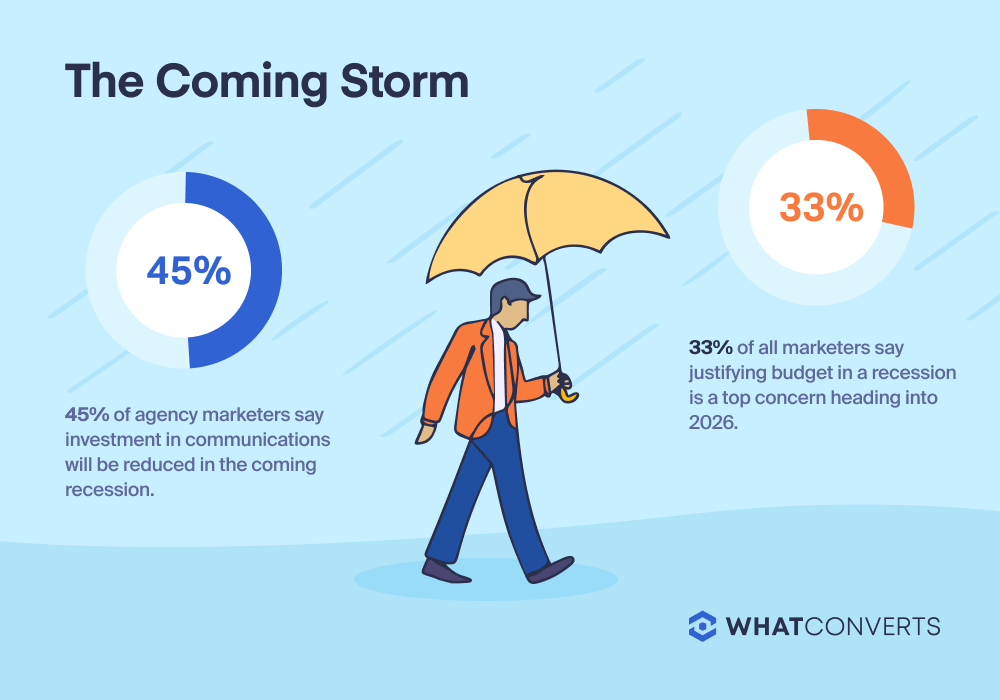
Onclusive's PR, Comms, & Marketing: The 2026 Outlook report reveals that one-third of all marketers say "justifying budget and investment in a period of recession" is a top concern heading into 2026.
Plus, nearly half of agencies expect clients to cut spend—and many already feel the pressure to defend every dollar.
In a recession, survival depends on proof. The agencies that win aren’t cutting harder. They’re optimizing smarter.
This article shows how leading marketers are automating their way through the downturn by connecting every lead to revenue and letting that data drive every decision.
The Recession Justification Problem
When budgets tighten, leadership asks one question: "What can we cut?"
Marketing agencies know the answer they want: cut anything that doesn't drive proven revenue. Which means agencies face a double challenge during a recession.
They need to prove:
- Their marketing brings in value
- They can deliver better results with less budget
Most agencies can't do either.
Says Sam Rodriguez, Strategic Marketing Leader at PAR Technology:
“The big question hanging over PR, communications, and marketing right now isn’t whether we’re doing enough; it’s whether what we’re doing actually matters. For years, we’ve relied on metrics such as impressions, clicks, or sentiment.
But if we’re honest, most of those numbers don’t survive a five-minute boardroom conversation.”
Optimize on Value, Not Conversions
Recession-era marketing requires ruthless optimization. But the real differentiator is what you optimize for: conversions or value?
A home services company runs five Google Ads campaigns with a combined $15,000 budget:
| Campaign A | Campaign B | Campaign C | Campaign D | Campaign E | |
| Conversions | 87 | 34 | 52 | 19 | 22 |
| Cost per conversion | $40 | $82 | $62 | $158 | $112 |
Leadership says cut 40% from the budget. Where do you cut?
Every cost-per-conversion metric says cut Campaigns D and E. Slash the "expensive" campaigns. Double down on Campaign A's efficiency.
But when you track those conversions to actual business outcomes, the truth reverses:
| Campaign A | Campaign B | Campaign C | Campaign D | Campaign E | |
| Conversions | 87 | 34 | 52 | 19 | 22 |
| Cost per conversion | $40 | $82 | $62 | $158 | $112 |
| Revenue generated | $0 | $67,000 | $12,000 | $94,000 | $51,000 |
| ROI | None | 24x | 3.7x | 31x | 21x |
Campaign A generated the most conversions and the best cost per conversion. It also generated zero dollars of actual business.
Without attribution connecting conversions to revenue, you optimize toward waste. With it, you see that the "expensive" Campaign D costs $158 per conversion, but each earns $4,947.
That's not expensive. That's a 31x return. And it’s proof your client’s investment is paying off.
Why Manual Optimization Isn’t Enough Anymore
When budgets shrink, every dollar demands proof. Most marketers already trim wasted spend and rebalance campaigns toward what converts.
That’s smart. But in 2025, it’s also table stakes.
The real shift is happening inside the ad platforms themselves. Automated systems like Smart Bidding and Performance Max now decide where every dollar goes. They’re only as smart as the data they receive: feed them raw conversion counts, and they’ll chase volume; feed them lead value, and they’ll chase profit.
That’s how top agencies turn automation into an advantage. They teach the algorithm what a profitable lead looks like by sending lead data (including lead value) back to ad platforms. The algorithm then identifies the audience signals that predict high-value leads and automatically prioritizes them.
The payoff? Sharper targeting, smarter bids, and higher ROI.
But here’s the trick: you have to feed the algorithm lead quality data. Without it, it’s flying blind.
How Top Agencies Automate Optimization (and Win)
Most teams still treat optimization as a weekly task: pull reports, score leads, upload results.
But top agencies treat it as a continuous process, a live feedback loop between their lead tracking, analytics, and ad platforms.
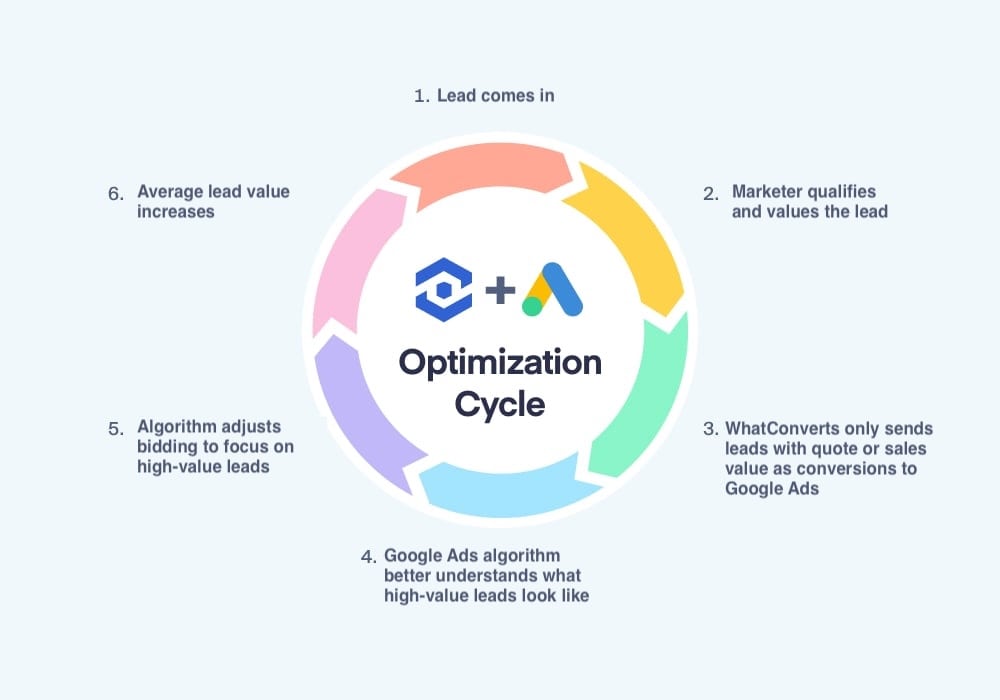
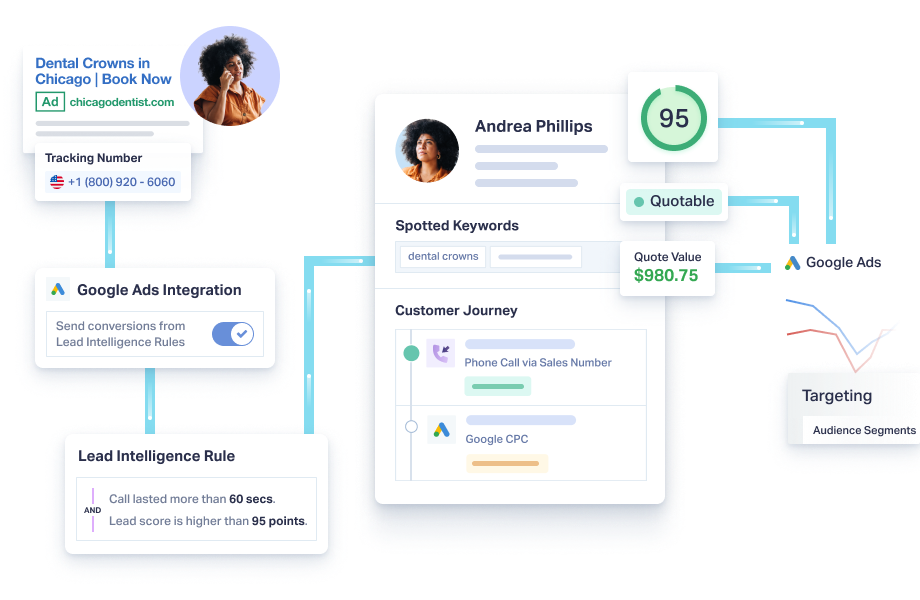
With WhatConverts, that loop runs automatically. Every call, form, and chat is captured with full attribution, qualified, valued, and synced back to Google Ads in real time. The result is a system that teaches Google what real ROI looks like hundreds or even thousands of times a day, not just once a week.
This creates an ongoing optimization cycle:
- Capture every lead and source.
- Qualify and assign value automatically.
- Send that data back to ad platforms instantly.
- Watch automated bidding prioritize the campaigns that drive profit.
Each lead sharpens the next decision. Optimization becomes continuous and compounding.
Case Study: Agency Automates Optimization to 3X Qualified Leads
Collideascope, a full-service agency, adopted this approach during a downturn. They automated value syncing through WhatConverts, feeding lead quality and revenue data back to Google Ads dozens of times per day.
The results: 3x more qualified leads, -61% CPL, and an 8% decrease in monthly ad spend. While other agencies slowed down, Collideascope accelerated optimization speed and client results.
That’s the difference between reporting performance and driving it automatically.
Read More: The Optimization Flywheel: How Collideascope 3Xed Qualified Leads and Cut CPL by 61% [Case Study]
The Recession Survival Advantage
In a recession, optimization speed decides who stays and who gets cut. Ad platforms make thousands of decisions per second. Your data has to move just as fast.
With WhatConverts, every qualified lead becomes a live signal that fuels smarter bidding. Instead of chasing more conversions, your campaigns automatically chase the ones that generate revenue.
That’s how Collideascope 3Xed qualified leads while cutting CPL by 61%. They didn’t spend more. They just gave Google better data, faster.
When budgets shrink, the slow lose. The agencies that automate optimization don’t just survive. They win.
Ready to approved your value and automate ROI?
Start your free 14-day trial of WhatConverts today or book a demo with a product expert to see how we help prove and grow your ROI.
Get a FREE presentation of WhatConverts
One of our marketing experts will give you a full presentation of how WhatConverts can help you grow your business.
Schedule a Demo
Grow your business with WhatConverts