


 Amanda Pell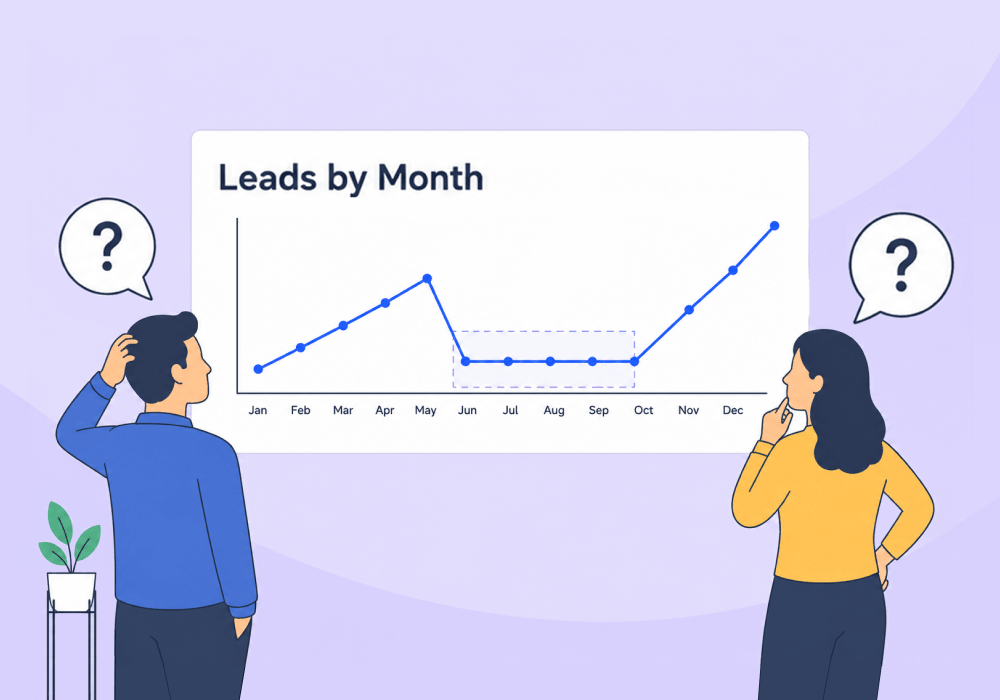
Every slow season, the algorithm makes the same mistake.
Conversion volume drops faster than historical patterns predict because an unusually slow stretch, a new client without much conversion history, or just a sharper dip than last year gives Smart Bidding too little to go on.
So it does what it always does when the data runs thin: it pulls back. Bids drop and impressions shrink. By the time demand returns, the campaign has already been deprioritized.
Now it needs weeks to recover ground it never should have lost.
This is the seasonal signal problem. And it's one of the most predictable, preventable failures in home services marketing.
Note: Not a WhatConverts user yet? Start your free 14-day trial of WhatConverts today or book a demo with a product expert to see how we help prove and grow your ROI.
What the Algorithm Sees vs. What's Actually Happening
Take a home services client with a predictable slow season: HVAC in late fall, roofing in winter, lawn care at either end of the calendar.
Volume drops and the phones slow down. That's expected.
But here's the problem: the algorithm isn't reading market conditions. It's reading conversion counts. And a six-week dip in conversions looks identical to a six-week campaign failure.
Smart Bidding interprets low performance the same way regardless of cause. According to Google’s bidding guide, the algorithm will spend less when there’s potential for very low performance. Fewer conversions means lower bid confidence, and lower bid confidence means reduced investment. Reduced investment causes fewer impressions, which causes fewer conversions, which causes lower bid confidence. Next thing you know, the poor performance loop is self-perpetuating.
By the time seasonal demand comes back (because it always comes back) the campaign has to rebuild from scratch. Bids are suppressed. You're paying more to recover your position than you would have spent to protect it.
Why Don’t Raw Conversion Counts Work for Seasonal Businesses?
Most agencies report seasonality to clients as a normal part of the business cycle. And it is.
The algorithm doesn't know that.
Feed Google Ads nothing but raw conversion counts, and it treats every dip the same way as a sign to reduce investment. It has no way to distinguish between:
- A campaign that stopped working
- A market that temporarily slowed down
Those are completely different situations. One calls for optimization, while the other calls for protection.
Without that distinction, you get the same response to both: the algorithm retreats, and you spend the first four weeks of peak season digging out of a hole.
How to Protect Signal Quality Through a Slowdown
The solution is to work with the algorithm rather than against it.
Use Historical Lead Value, Not Just Recent Conversion Volume
WhatConverts tracks every lead with full attribution, qualification status, and assigned value across every season, every year. That history tells a more accurate story than a six-week conversion count. When volume dips, historical value data shows the algorithm that these campaigns have a proven track record, even when current volume is low.
Make Adjustments Before the Slowdown Hits
Adjust tCPA targets upward or tROAS targets downward to give the algorithm more room to bid during low-volume periods, and apply data exclusions to known slow windows so that stretch doesn't corrupt the long-term performance baseline. Use prior-year WhatConverts performance data to identify when slowdowns historically begin and end so you're making those changes proactively, not reactively.
For shorter anticipated dips (like a holiday weekend or a weather event) Google's seasonality adjustment settings let you temporarily signal expected conversion rate changes to the algorithm.
Qualify and Value Every Lead, Even Off-Season Ones
Slow season leads are worth more per conversion than the algorithm thinks, because there are fewer competitors for them and the buyers who reach out in slow periods often have higher intent. Assigning actual quote and sales values to those leads keeps the algorithm calibrated to real business outcomes instead of volume.
The Agencies That Get This Right
Agencies that protect campaign performance through seasonal slowdowns aren't spending more to maintain bids. They're giving the algorithm something to hold onto when raw conversion counts can't tell the full story: historical lead value, verified qualification rates, and consistent attribution.
That's the quality data that keeps Smart Bidding from reading a predictable market pattern as campaign failure.
When slow season ends, those campaigns don't need to rebuild. They're already there.
Ready to stop losing ground every slow season?
Start your free 14-day trial of WhatConverts today or book a demo with a product expert to see how we help prove and grow your ROI.
Get a FREE presentation of WhatConverts
One of our marketing experts will give you a full presentation of how WhatConverts can help you grow your business.
Schedule a DemoGrow your business with WhatConverts