


 Amanda Pell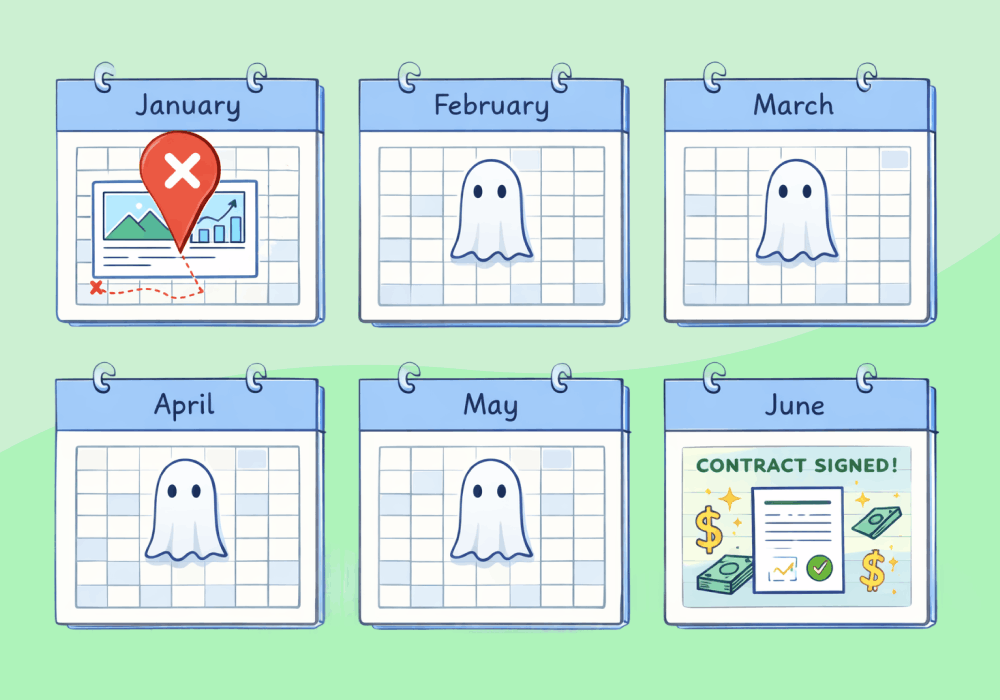
Last-touch attribution has a blind spot, and it’s blocking the campaigns doing the most relationship-building work from getting the credit they deserve.
High-intent service leads don't materialize out of nowhere. They follow a path, and sometimes it’s a long one. A blog post read six months ago, two service pages visited, three weeks of sitting on it, and only then—a phone call.
Your report attributes that call to "direct." The content team gets nothing, the SEO team gets nothing, and the PPC team—who has no idea organic content is warming up their pipeline—keeps optimizing as if every high-value call came from a paid click.
This article shows what that journey actually looks like, why last-touch attribution can't see it, and what it takes to give every touchpoint the credit it earned.
Note: Not a WhatConverts user yet? Start your free 14-day trial of WhatConverts today or book a demo with a product expert to see how we help prove and grow your ROI.
What the Customer Journey Actually Looks Like
Most agencies think of the path to conversion as linear: ad click → landing page → form fill → lead. Clean, measurable, and attributable.
But that's not how high-consideration service buyers behave. A prospect researching a $15,000 HVAC replacement or a $30,000 roofing job isn't clicking your ad and calling on the same day.
More often, the journey looks like this:
| Touchpoint | Channel | Time |
| Reads "What to Expect from a Full HVAC Replacement" | Organic search | 6 months ago |
| After reading, sends an informational chat: “how long does a full HVAC replacement take?” | Chat | 6 months ago |
| Returns to browse /services/hvac-replacement/ | Direct | 4 months ago |
| Visits /pricing/ | Direct | 3 weeks ago |
| Calls the office | Direct | Today |
Five touchpoints, one lead, and one (incorrect) attribution: (direct) / (none).
The blog post that started the entire relationship is invisible.
Why Last-Touch Attribution Gets This Wrong
Last-touch attribution assigns 100% of the credit to the final interaction before conversion. For a prospect who typed your URL directly into the browser after months of research, that means the attribution model reads "direct"—and nothing else.
This creates a specific, compounding problem for full-service agencies.
When content and SEO produce high-intent leads that enter the pipeline warm, those leads look like they appeared organically. No campaign gets credit. Budget decisions get made without any of that signal. And when it's time to justify the content retainer or the SEO spend, there's nothing in the data to defend it.
Meanwhile, your paid channels look disproportionately efficient. They're closing leads that other channels spent months nurturing—and getting sole credit for the conversion.
The leads aren't being lost. Just the truth about where they came from.
The DIY Approach (and Why It Falls Short)
Agencies that recognize this problem often try to piece it together manually:
- Cross-reference GA4 data for multi-channel paths and assisted conversions.
- Review form fields for "how did you hear about us" responses.
- Ask sales teams whether leads mentioned specific content.
- Build custom UTM taxonomies to tag content traffic more precisely.
These approaches surface some signal. But they're time-intensive, incomplete, and almost entirely useless for phone call attribution—which is where most high-value service leads convert. GA4's assisted conversion data doesn't capture calls. And no UTM parameter follows a prospect through six months of direct return visits.
The multi-touch picture stays fragmented.
What Full-Funnel Attribution Actually Requires
Closing the attribution gap on content-driven leads requires connecting each conversion to the full customer journey—including every touchpoint before the call, not just the last one.
WhatConverts tracks the complete customer journey for every lead: calls, forms, and chats. When a prospect finally calls six months after first finding a blog post and performing a "mini-conversion" that opens their lead tracking profile, the Customer Journey view shows the entire path—first organic visit, subsequent direct visits, every page they viewed before converting.
That means the conversation moves from "direct, source unknown" to: "This lead found us through organic search six months ago, returned twice to service and pricing pages, then called. Organic content drove this pipeline."
Attribution that proves content is working—before anyone thinks to ask.
Key capabilities that make this possible:
- First-touch and multi-touch visibility. See the original traffic source, not just the last one.
- Session history tied to each lead. Know which pages they visited and when, across every session.
- Call attribution with full journey context. Calls get the same multi-touch treatment as form fills.
- Source-level reporting. Filter by organic, direct, paid, and referral to see which channels are actually building pipeline.
Seeing the Whole Picture
Last-touch attribution isn't wrong because it tracks conversions. It's wrong because it only tracks the moment someone finally committed—not the months of marketing that made them ready to.
For agencies running paid search alongside content and SEO, that distinction determines how budget gets allocated, which channels survive client scrutiny, and whether the campaigns doing the most trust-building ever get credit for it.
Here's what changes when you have full-journey data:
- Prove content's contribution to pipeline. Show which blog posts and landing pages appear in the journey of your highest-value leads.
- Defend multi-channel strategy with real data. Stop justifying organic investment with traffic metrics and start showing its role in actual conversions.
- Optimize PPC with better context. Know when paid clicks are closing warm leads versus generating new ones—and bid accordingly.
- Report with confidence. Every touchpoint has a story. Show clients the whole one.
When attribution captures the full path, every channel gets the credit it earned—and every budget decision gets made with the complete picture in view.
Ready to see what's actually driving your highest-value leads before they call
Start your free 14-day trial of WhatConverts today or book a demo with a product expert to see how we help prove and grow your ROI.
Get a FREE presentation of WhatConverts
One of our marketing experts will give you a full presentation of how WhatConverts can help you grow your business.
Schedule a DemoGrow your business with WhatConverts