











































 Amanda Pell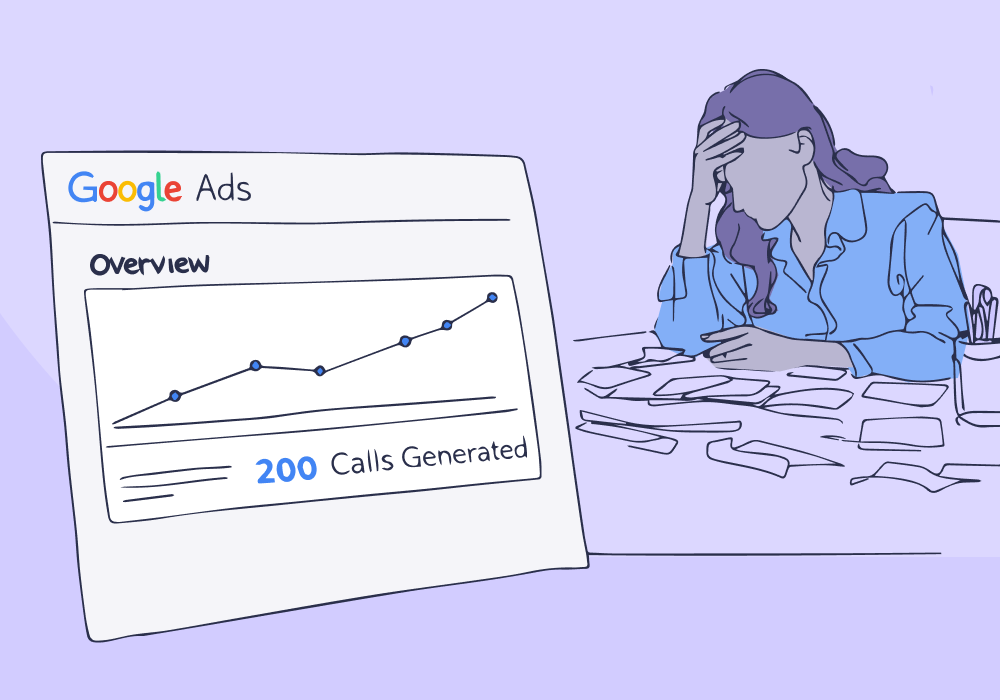
Success in call-driven campaigns is supposed to feel obvious. More calls, more opportunities, more growth.
But there's a version of success that silently bleeds profitability, where every metric trends up while the business struggles to scale.
Call volume climbs. Cost per lead drops. Dashboards glow green. Yet sales teams drown in qualification work, clients question ROI, and revenue growth lags behind activity.
The campaigns aren't failing. They're optimizing for the wrong win.
When volume is treated like a victory, Google Ads chases activity instead of outcomes. This article shows why call count misleads—and what signals actually separate calls that grow businesses from calls that just keep teams busy.
Note: Not a WhatConverts user yet? Start your free 14-day trial today or book a demo with a product expert to see how we help prove and grow your ROI.
Why Call-Driven Campaigns Often Look Like Wins Early
Calls are high-intent compared to clicks. Someone picking up the phone has cleared a higher bar than someone who just landed on a page.
Early-stage call volume often correlates with revenue. More calls usually means more opportunities, and that upward trend in reports reinforces confidence.
For agencies, calls are also easier to defend. "We generated 200 calls this month" sounds tangible. Clients understand it. Leadership approves it.
Early success makes call-driven campaigns easy to trust.
How Google Ads Interprets That Success
Here's what Google Ads sees when call volume increases:
- Calls increasing → conversions increasing
- Cost per call staying stable or improving
- The system assumes: more calls = better outcomes
Google's bidding strategies respond by prioritizing the signals that generate calls. Keywords that drive call volume get more budget. Audiences that click-to-call get higher bids.
The problem? Google Ads doesn't know why calls are happening—only that they are.
It can't tell if the person calling is a $200 tire-kicker or a $20,000 qualified prospect. It just sees "conversion event triggered" and optimizes for more of them.
Where the Hidden Cost Starts to Appear
As campaigns mature, subtle consequences emerge:
- Call volume grows faster than deal value
- Sales teams spend more time filtering and qualifying
- Lead quality becomes inconsistent but hard to quantify
- Budget requests meet more resistance because growth feels expensive, not efficient
This happens gradually. There's no sudden crash—just a slow realization that effort is outpacing outcomes.
An HVAC company hits 300 calls in a month. Great volume. But 180 of those calls are service inquiries averaging $150. Only 40 are system replacements averaging $8,000.
The campaign optimized for call count, but the business needed it to optimize for deal size.
Why Reporting Doesn't Surface the Cost
Conversion metrics still look strong. Cost per lead often improves as call volume scales. Dashboards reinforce confidence—calls are up, CPL is down, everything trending positive.
But the cost isn't visible in metrics. It's felt in operations.
Sales reps spend more hours per closed deal. Clients question why revenue isn't scaling with lead volume. Agencies struggle to explain why "more leads" isn't translating to "more growth."
The reporting shows success. The business feels pressure.
The Difference Between Productive Calls and Distracting Calls
Not all calls advance the sale at the same rate:
Productive calls:
- Align with high-value services
- Come from qualified prospects ready to buy
- Justify the time and cost to handle them
Distracting calls:
- Consume sales resources without advancing deals
- Generate activity metrics without revenue impact
- Still count as conversions in campaign reporting
Google Ads treats both equally by default. A 20-second misdial and a 15-minute consultation both trigger the same conversion signal unless you tell the platform otherwise.
When the algorithm can't distinguish between them, it optimizes for whichever is cheaper to generate.
How This Changes the Agency-Client Dynamic
Clients start to feel: "We're busy, but not growing. We need to cut costs."
Agencies feel: "We're delivering results, but they want more for less."
Conversations shift from celebrating performance to justifying spend. Questions get more pointed. Renewals get tougher.
The agency delivered exactly what was measured. The client expected what was promised—growth. The disconnect isn't about effort. It's about what success was measured against.
Why This Isn't a Google Ads Problem
Google Ads is doing its job. Call-driven campaigns are valid. The issue isn't platform failure—it's interpretation and visibility.
If the only signal Google receives is "call happened," it will optimize for call volume. If the only data you have is call count, you'll report on call count.
The problem isn't success—it's what success is measured by.
For the complete breakdown of:
- How Google Ads call tracking actually works
- What it can and can't measure,
- What agencies need to think about when phone calls drive real revenue
Check out the full guide:
The Moment Agencies Realize They Need Better Call Visibility
It usually happens when:
- Sales pushes back: "These leads aren't as qualified as they used to be."
- A client asks: "Why are we spending more but closing the same number of deals?"
- You review call recordings and realize half the volume is noise, not opportunity.
That's when call count stops feeling like enough. You need to know which calls matter, why they converted, and what makes a call worth the cost to generate it.
The campaigns aren't failing. But without visibility into call quality and context, optimization stays stuck at the surface level.
What Happens When You Can See Inside the Calls
WhatConverts captures every call with full attribution, records the conversation, and lets you qualify and value each lead based on what was actually discussed.
Now you can:
- Identify which campaigns generate qualified prospects vs. tire-kickers
- Assign values to calls based on service type and deal potential
- Sync that data back to Google Ads so Smart Bidding optimizes for value, not just volume
The campaign strategy doesn't change. The feedback loop does. Instead of "200 calls this month," you see "200 calls, 60 qualified, $180K in quoted value, driven primarily by these three campaigns."
That's the difference between defending call volume and proving revenue impact.
Why This Matters Beyond Reporting
Call-driven campaigns can look successful long before their limitations become obvious. Volume masks inefficiency. Activity obscures intent. Metrics that trend up still miss what matters most—whether the leads are actually worth pursuing.
Understanding how Google Ads tracks calls, what it optimizes toward, and where visibility ends is critical if phone leads drive performance.
Without that clarity, success becomes a lagging indicator. You find out calls weren't valuable after the budget's been spent.
Learn how Google Ads call tracking actually works and what agencies should consider to make call-driven success sustainable: Google Ads Call Tracking: What Agencies Need to Know
Ready to see which calls actually drive growth—and teach your campaigns to prioritize them?
Start your free 14-day trial of WhatConverts today or book a demo with a product expert to see how we help prove and grow your ROI.
Get a FREE presentation of WhatConverts
One of our marketing experts will give you a full presentation of how WhatConverts can help you grow your business.
Schedule a Demo
Grow your business with WhatConverts