









































 Alex Thompson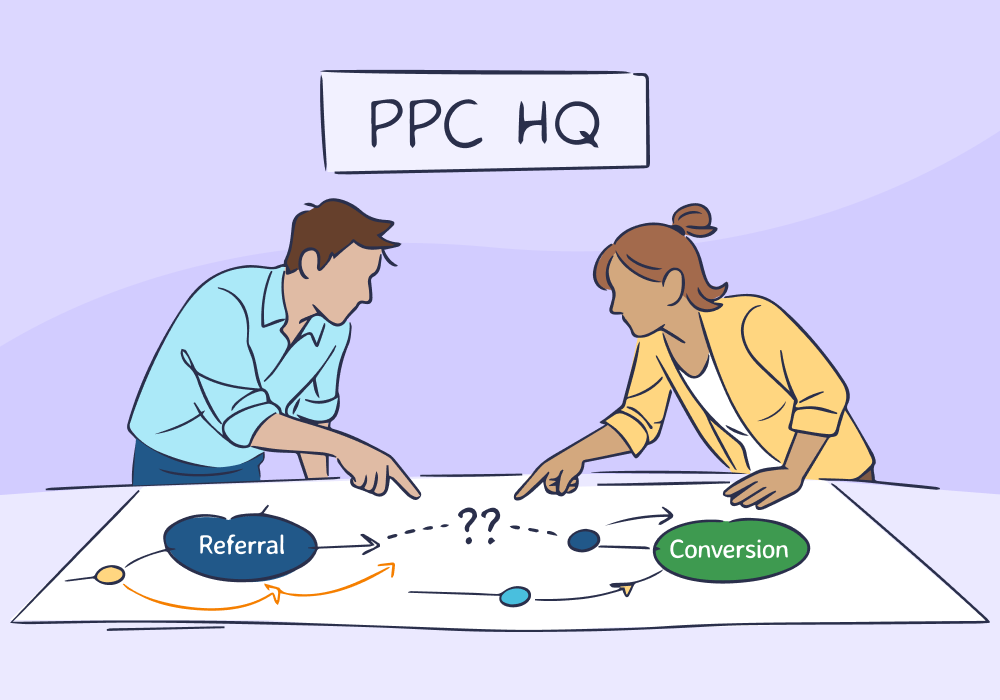
Referrals are one of the strongest sources of new business. They convert faster. They close at higher rates. They come with built-in trust.
But referrals don’t convert in isolation.
After a recommendation, buyers still search. They look up the company name. They read reviews. They compare options. They check pricing. They often research “best [service] near me” before making contact. And all that happens in search.
This is the referral-to-search funnel. For agencies, it represents one of the most underutilized optimization opportunities in paid media. That’s because the challenge isn’t capturing those searches. The challenge is knowing which ones were influenced by referrals.
This article shows how to identify referral-assisted leads and use that insight to optimize search campaigns more accurately.
Note: Not a WhatConverts user yet? Start your free 14-day trial today or book a demo with a product expert to see how we help prove and grow your ROI.
The Referral-to-Search Funnel Is Real (and Happens Constantly)
A referral introduces trust. It doesn’t end the buying process.
After a recommendation, buyers still want confirmation. They want proof they’re making the right decision. Search is where that confirmation happens.
For agencies, this matters because referral-assisted leads behave differently:
- They convert faster
- They require less persuasion
- They often produce higher deal values
For example, over 80% of small businesses say customer referrals are their best source for new customers—up from 65% last year.
When search supports this funnel well, it doesn’t just generate leads. It finishes deals that were already in motion. 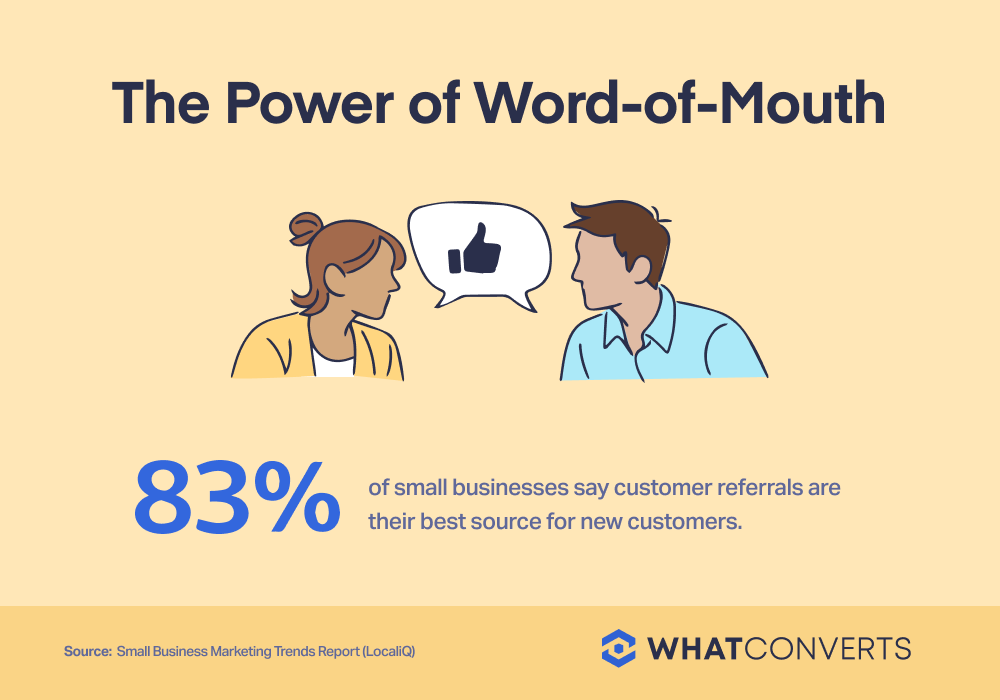
The Real Problem: You Can’t See Referral Influence in Search
Unfortunately, search phrases alone won’t tell you if a lead is a referral or not. That’s because most customer journeys (referral or not) end up searching for the same terms eventually.
For example, a non-referral’s search journey for roofing repair might look like this:
| Search Term | Search Journey Stage |
| 1. How to know if you need a roof replacement? | Problem Awareness / Education |
| 2. Best roofing companies near me | Solution Research |
| 3. Smith & Sons roofing | Brand Discovery |
| 4. Smith & Sons roofing reviews | Validation |
| 5. Smith & Sons roofing vs. ABC roofing | Comparison / Evaluation |
| 6. Smith & Sons roofing pricing | Purchase Confirmation |
Now here’s what a referral’s search journey may look like:
| Search Term | Search Journey Stage |
| 1. Smith & Sons roofing | Brand Discovery |
| 2. Smith & Sons roofing reviews | Validation |
| 3. Smith & Sons roofing vs. ABC roofing | Comparison / Evaluation |
| 4. Smith & Sons roofing pricing | Purchase Confirmation |
See how a referral skips the early education phases? That’s because they’re looking for validation, not education. They’ve skipped the line and are already looking to see if you’re the right solution.
The problem is you can’t use these last four searches to identify referrals because both referrals and non-referrals search for them.
So where does that leave you as a marketer? How can you identify which leads came from referrals (so you can optimize) and which didn’t?
How to Actually Identify Referral-Driven Leads
Before you can optimize the referral-to-search funnel, you need one thing:
A reliable way to tag referral influence at the lead level.
Here are the most effective methods agencies use.
1. Form Fields: “How Did You Hear About Us?”
Simple, but still useful when structured correctly.
Instead of free-text answers, use controlled options like:
- Friend or colleague referral
- Previous customer
- Online review referral
- Other
This creates consistent data you can actually report on.
Here’s what that looks like in the Lead Manager. Best of all, you can sort and filter your leads by this field just like any other data point. 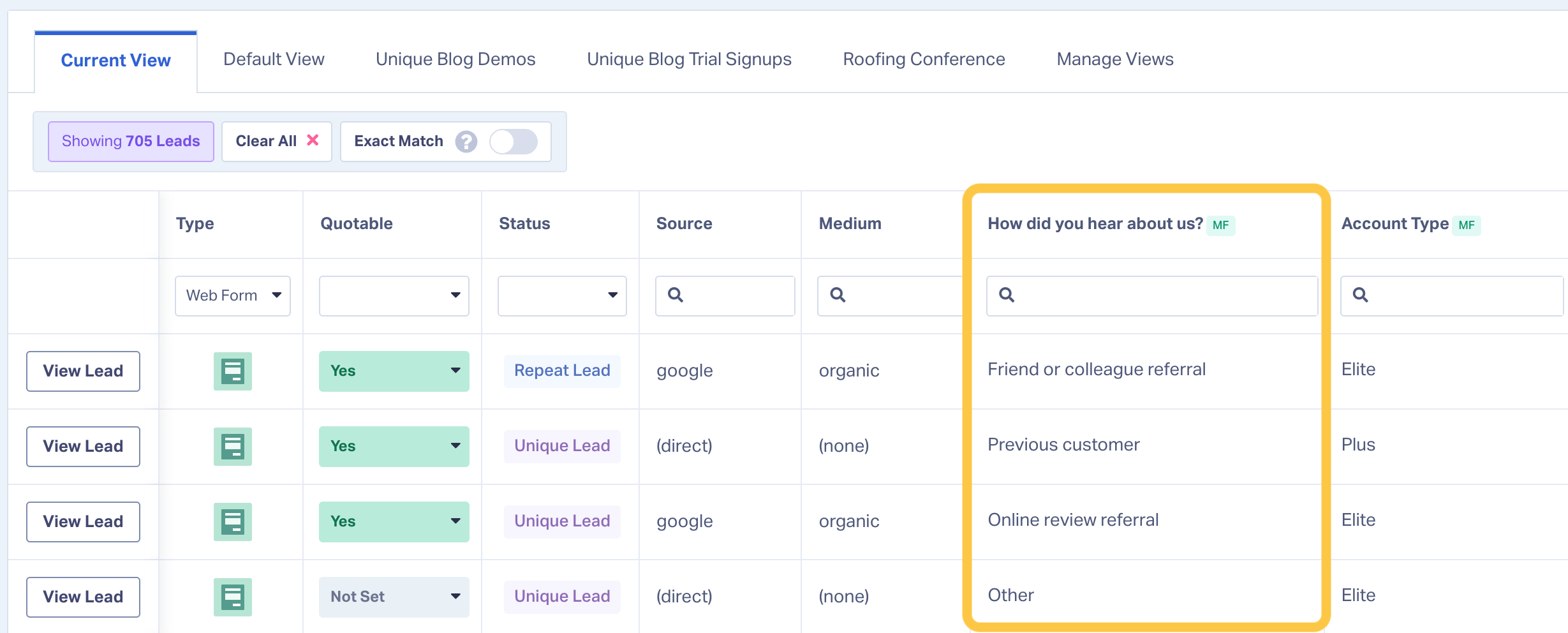
You can even create quick reports based on this field so you can see the most common referral sources: 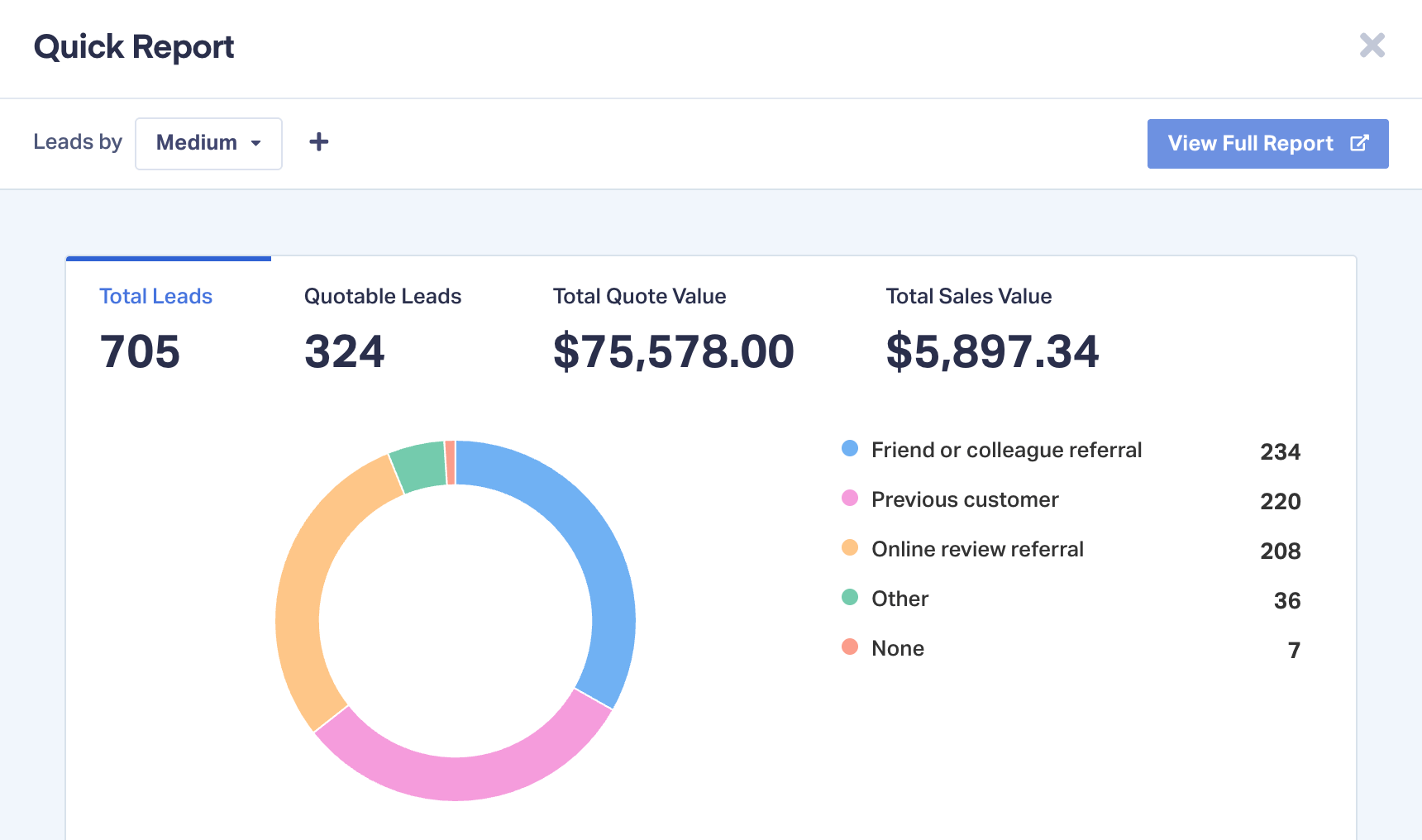
2. Call & Chat Qualification Questions
Adjust client-side processes to ask one simple question early in the conversation:
“Did a friend, colleague, or past customer recommend us?”
When paired with call intelligence or chat tagging, this allows referral signals to be captured automatically without relying on memory or manual notes.
Use AI Analysis in WhatConverts to pull this data from every lead and tag them for easy identification and reporting later. 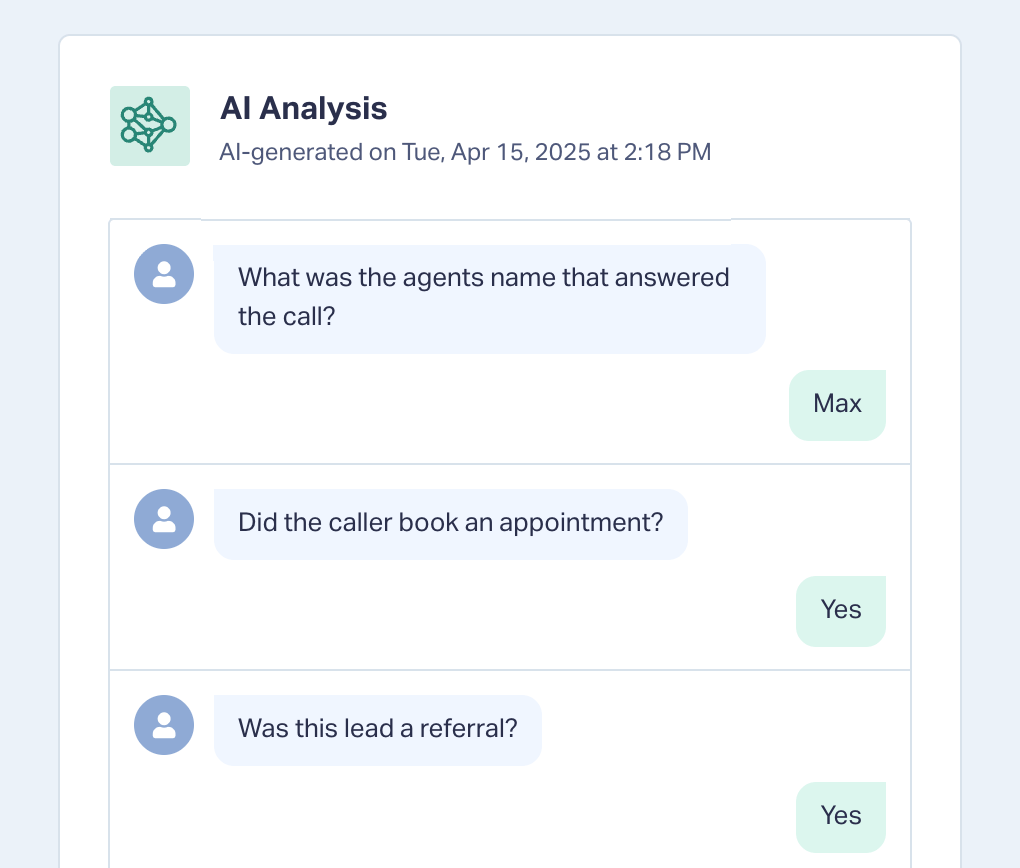
3. Referral Links With UTM Parameters
For clients with active customer bases, referral links are powerful.
Agencies can:
- Create unique referral URLs for customers
- Attach UTM parameters identifying the referrer
- Pair links with incentives or discounts
This allows referrals to be tracked like any other campaign: clean, consistent, and attributable.
4. Discount or Referral Codes
Codes work especially well for:
- Home services
- Local providers
- Seasonal promotions
When captured at the lead level, these codes become another reliable referral signal that can be tied back to channels and keywords.
What to Do After Referrals Are Tagged
Once referral tagging is in place, the real opportunity begins. Now you can answer questions most agencies can’t:
- Which channels drive the highest percentage of referral-assisted leads?
- Which campaigns consistently attract referred buyers?
- Which keywords close warm demand versus cold demand?
This is where WhatConverts changes how agencies optimize. Because referral data is captured at the lead level, you can trace those referrals back to:
- Channels
- Campaigns
- Ads
- Keywords
Each lead shows the full customer journey and each touchpoint with your marketing along the way. 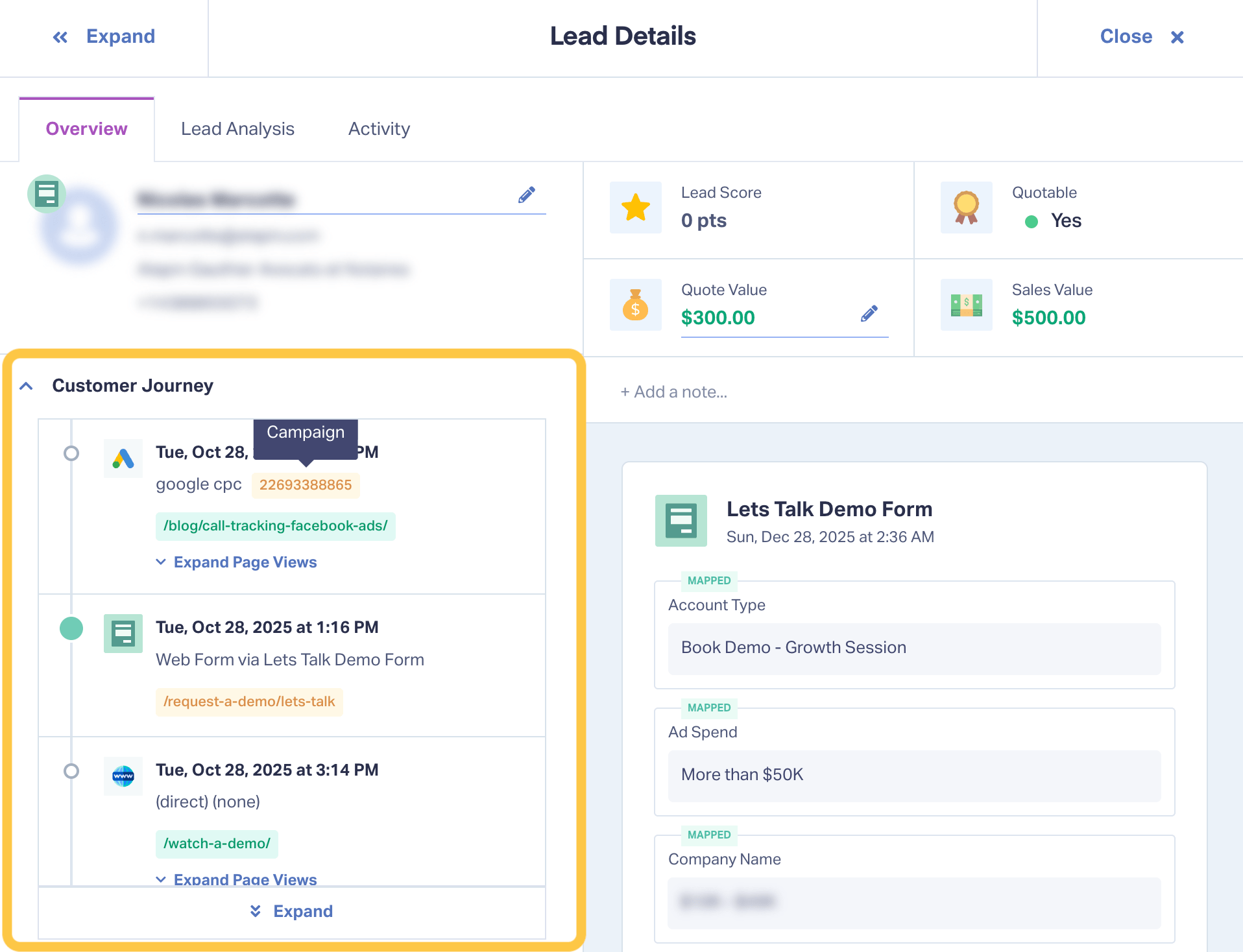
You can also zoom out and report on referrals across all your leads.
For example, you can run a report that shows which channels produce the most referral leads. This opens up the door to massive optimization opportunities.
How Agencies Use Referral Insights to Optimize Search
When you know where referrals convert, optimization gets sharper.
Agencies use referral insights to:
Allocate Budget With Confidence
- Raise bid caps on high-referral keywords
- Increase daily budgets on campaigns that amplify referrals
- Protect branded and comparison searches that consistently close warm demand
Adjust Messaging for Referral-Influenced Buyers
Referral-driven searchers don’t need education. They need validation. That changes ad copy and landing pages:
- More trust signals
- More proof
- Less introductory messaging
Improve CRO Based on Referral Likelihood
If a channel produces a high percentage of referrals:
- Emphasize reviews and testimonials
- Reduce friction in conversion paths
- Shorten forms and calls to action
Referral traffic doesn’t need convincing. It needs reassurance.
Why This Funnel Is an Agency Advantage
Most agencies already run the right campaigns. Very few know why those campaigns convert.
The referral-to-search funnel explains:
- Why some keywords close faster
- Why certain campaigns outperform without obvious reasons
- Why brand and “best near me” searches punch above their weight
When referral influence is visible, optimization stops being guesswork.
You’re no longer just capturing demand. You’re amplifying trust your client already earned.
The Bottom Line
Referrals are powerful. But they don’t bypass search. They flow through it.
The agencies that win aren’t the ones bidding on the right keywords. They’re the ones who can see which marketing finishes referral-driven deals.
If you want to stop treating referrals like invisible momentum and start optimizing around them, you need lead-level clarity.
That’s exactly what WhatConverts is built to provide.
Start your free 14-day trial of WhatConverts today or book a demo with a product expert to see how we help prove and grow your ROI.
Get a FREE presentation of WhatConverts
One of our marketing experts will give you a full presentation of how WhatConverts can help you grow your business.
Schedule a Demo
Grow your business with WhatConverts