


 Amanda Pell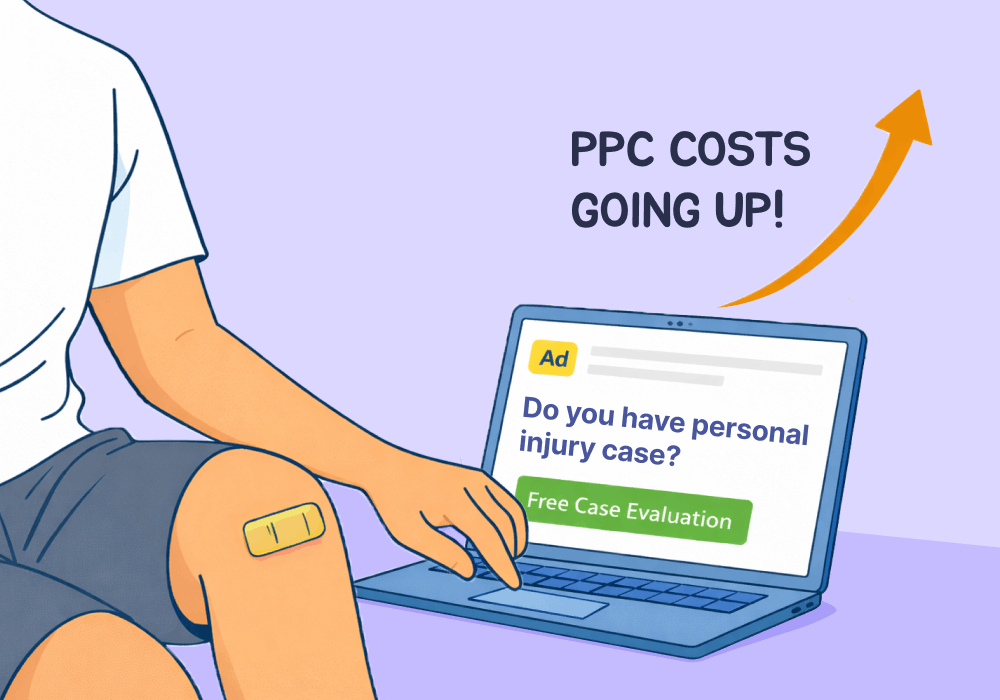
You’re paying $150+ per lead and half of them don’t have a case.
A caller says they “tripped at a grocery store.” No real injuries, no liability, just an opportunist who wants to know if they can turn a slip-and-fall into a jackpot. (No surprises here: they cannot.)
That call still counts as a conversion, which means it just cost you three figures on average for a single junk click.
Most agencies blame competition. And yes, PI keywords are expensive. But the real problem is that poor targeting means the algorithm isn’t just accepting these junk clicks—it’s actively optimizing to chase more.
This article explains why these casual searchers drive up PPC costs—and how personal injury marketers can use call-level qualification to stop paying for curiosity traffic and focus their campaigns on bringing in real cases.
Note: Not a WhatConverts user yet? Start your free 14-day trial of WhatConverts today or book a demo with a product expert to see how we help prove and grow your ROI.
High Settlement Values Attract the Wrong Audience
Personal injury law has a unique reputation: it’s seen as the “lottery ticket” of the legal world.
Sitcom characters fake accidents for settlements; news headlines celebrate seven-figure verdicts. As a result, anyone who has a minor fender-bender or a harmless slip and fall wants to know if they have a winning case on their hands.
These aren’t clients. They’re researchers. But to Google Ads, they look identical to real cases: same keywords, same clicks, same form fills or phone calls.
There’s no way for Google to distinguish between:
- Someone with documented injuries and a clear basis for a claim
- Someone testing whether their minor incident could turn into a payout
One could net millions, while the other is worthless. And Google views them as equally valuable conversions.
How This Torpedoes Personal Injury Campaigns
Once those junk calls get counted as conversions, the damage starts. Google doesn’t know which leads were real cases; all it can see is which leads were cheapest to acquire. So it optimizes for highest number of leads at the lowest average cost.
This creates a feedback loop:
- Low-intent searchers convert more easily
- Google prioritizes those conversions
- Campaigns attract more low-intent traffic
- High-quality cases become harder (and more expensive) to find
This is how a PI campaign “breaks”: suddenly you’re getting more conversions but fewer real cases. Your CPL drops, but because volume also spikes, you’re somehow paying more overall for fewer real leads.
The campaign itself isn’t malfunctioning. It’s doing exactly what you told it to do: optimizing for the cheapest conversions it can find.
What the Numbers Actually Look Like
Here's what that looks like when lead quality isn't tracked:
| Campaign Type | CPL | Leads/Month | What You Don't Know |
| Broad PI keywords | $210 | 48 | How many described an actual injury |
| Car accident terms | $680 | 14 | How many were at-fault parties or property damage calls |
| Slip and fall terms | $520 | 19 | How many were fishing for a payout on a claim with no liability |
Every one of those counts as a conversion, and Google Ads values them all equally.
So when performance declines, it’s not because demand disappeared—it’s because you’re optimizing without quality data.
The Fix: Stop Optimizing for Calls, Start Optimizing for Cases
The only way to break out of the low-quality optimization loop is to understand what's actually coming through—call by call, keyword by keyword.
WhatConverts captures what happens on every PI call and tracks it to the campaign and keyword that drove it. Which means you can answer the questions that determine whether spend is actually working:
- Did the caller describe a documented injury? Or were they testing the waters based on a news story they read?
- Which campaign drove the calls that became retained cases? Not form fills. Not 45-second calls that went nowhere.
- Which keywords are producing opportunistic traffic? Broad terms that attract curiosity searchers instead of clients.
From Call Volume to Case Intelligence
Once lead qualification is captured at the call level, the optimization logic changes completely:
- Mark only intake-qualified leads as conversions sent to Google Ads—filtering out the researchers, the at-fault parties, the "do I have a case" explorers before they poison the bidding algorithm.
- Identify the campaigns and keywords producing qualified PI leads, not just the ones producing volume.
- Feed case-quality signals back to Smart Bidding—so the algorithm learns what a real PI client looks like, not just what a PI searcher looks like.
The agencies managing PI campaigns who pull ahead aren't necessarily outbidding competitors. They're out-qualifying them—running leaner call volume with higher case conversion rates because they've cut the opportunistic traffic from their optimization signal.
Read about what other law firm marketers have achieved with WhatConverts: 9X ROI Secures Client Retention for Law Firm Marketing Agency [Case Study]
The Metric That Actually Matters in PI
CPL is a useful starting point. But in personal injury, cost per signed case is the only number that determines whether a campaign is profitable.
To track cost per case, you need to know which calls described a viable injury, which campaigns produced them, and which keywords are attracting curiosity traffic that inflates volume without producing cases.
That's not something Google Ads surfaces on its own. It's the layer of qualification context that turns a PI campaign from a high-CPL mystery into something you can actually optimize.
Ready to see which PI campaigns are producing real cases—not just calls?
Start your free 14-day trial of WhatConverts today or book a demo with a product expert to see how we help prove and grow your ROI.
Get a FREE presentation of WhatConverts
One of our marketing experts will give you a full presentation of how WhatConverts can help you grow your business.
Schedule a DemoGrow your business with WhatConverts