


 Alex Thompson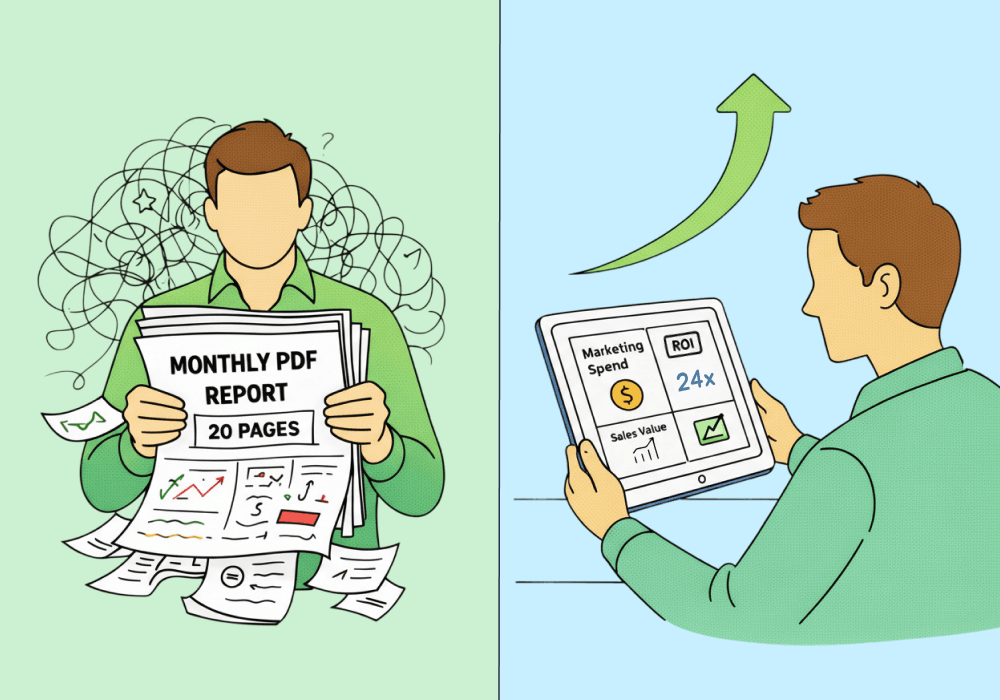
The traditional agency reporting model is broken. Every month, account managers spend billable hours building curated PDFs that highlight "green arrows" like clicks and impressions, while quietly burying the messy reality of the campaign.
The intent isn't malicious; agencies just want to prevent client panic.
But clients aren't stupid.
When they receive a perfect report but their bank account hasn't grown, they assume you are hiding something. According to the Association of National Advertisers (ANA), only 28.7% of client-side marketers have "high" trust in their agency, citing "black box" reporting as the primary driver of their skepticism.
To survive, agencies must adopt a Doctrine of Radical Transparency—an "open-book" policy giving clients total visibility into your data and results.
Note: Not a WhatConverts user yet? Start your free 14-day trial of WhatConverts today or book a demo with a product expert to see how we help prove and grow your ROI.
The Pivot: Stop Curating, Start Empowering
To move from a replaceable vendor to an indispensable partner, agencies must completely restructure how they share data. It requires abandoning the defensive "Status Quo" and embracing an interactive, open-book model.
The contrast is stark:
| Feature | The Curated Report (The Old Way) | The Open-Book Portal (The New Way) | The Agency Benefit |
| Format | Static PDFs | Interactive dashboard | Eliminates "black box" anxiety |
| Timing | Delivered monthly | 24/7 client access | Stops time-consuming ad-hoc updates |
| Lead Quality | Hides unqualified leads | Highlights exact lead quality | Proves you are actively guarding their budget |
| Primary Metric | Focuses on clicks and CPA | Focuses on closed Sales Value and ROI | Connects your retainer directly to their revenue |
This isn't just an upgrade in reporting software; it's a fundamental shift in business philosophy. By stripping away curated vanity metrics and exposing the raw, revenue-focused data, you eliminate the friction of secrecy that ultimately causes clients to churn.
Here is exactly how to execute this shift.
The Baseline: Give Them the Ultimate Answer Upfront
Radical transparency does not mean "data dumping." If you send a client a raw CSV file with 5,000 rows of Google Ads data, you aren’t being transparent; you’re being lazy. You still need to act as the expert.
The first rule of the open-book policy is to lead with the only metric that justifies your fee: Return on Investment (ROI).
Before a client sees a single click or impression, they should see:
- What was spent.
- How many qualified leads were generated.
- The actual quote or sales value those leads produced.
This is a survival strategy. Research from the 2024 Marketing Relationship Survey by Setup shows that 53% of client departures are caused by an agency’s "Inability to Demonstrate Value". By leading with revenue data, you address the number one cause of churn before the client even has to ask.
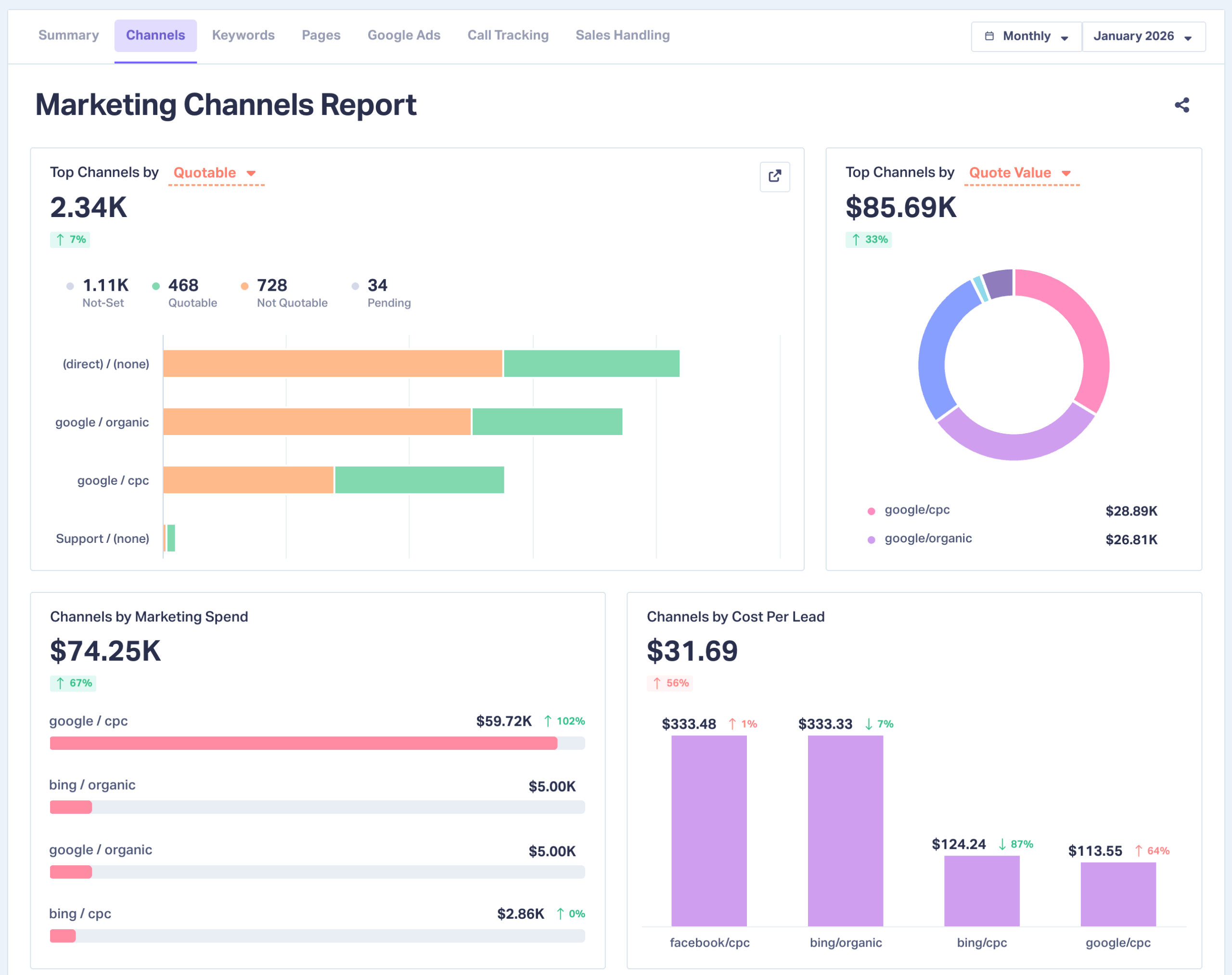
The WhatConverts Marketing Channels Report shows the main metrics clients care about: What was spent, how many qualified leads were generated, and the actual value those leads produced.
The "Open Door" Policy: Giving Clients the Keys
Once you have presented the high-level ROI, you must "open the hood."
Instead of forcing clients to email you for ad-hoc updates or wait for an end-of-month meeting, give them their own login to your tracking platform. If a client has a question at 10 PM on a Tuesday, they should be able to log in, view the dashboard, read form fills, and listen to call recordings themselves.
Why do this? Because Sprout Social reports that 86% of consumers (your clients included) believe transparency from businesses is more important than ever before. When you stop hiding the raw data, the client's anxiety about what goes on in the "black box" of marketing instantly disappears.
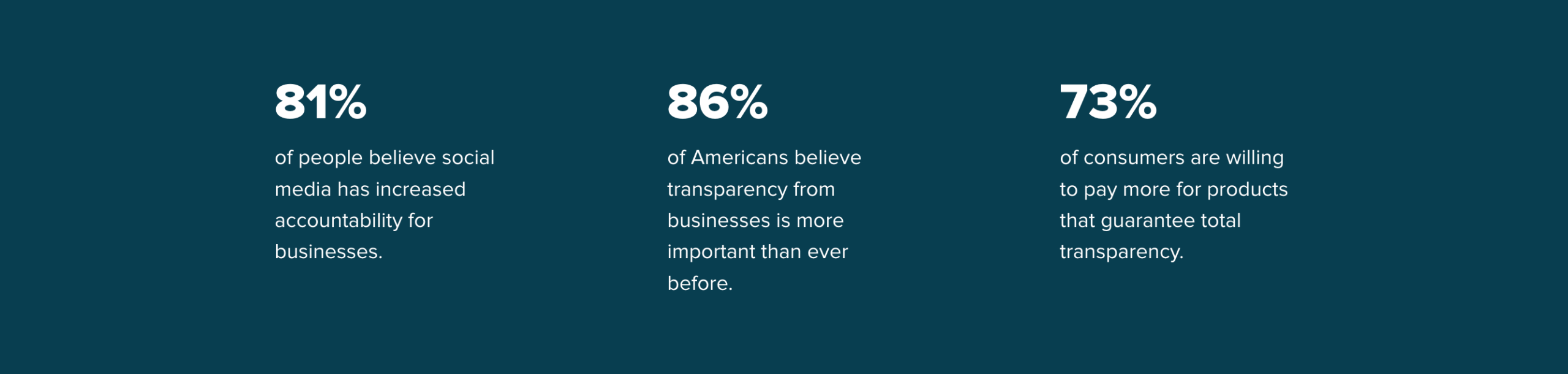
Source: Sprout Social
Owning the Truth with White Labelling
Agencies often resist the Open Door policy because of the "Software Bypass" fear. They worry that if they give a client full access to a third-party analytics tool, the client might wonder why they are paying agency management fees instead of just buying the software themselves.
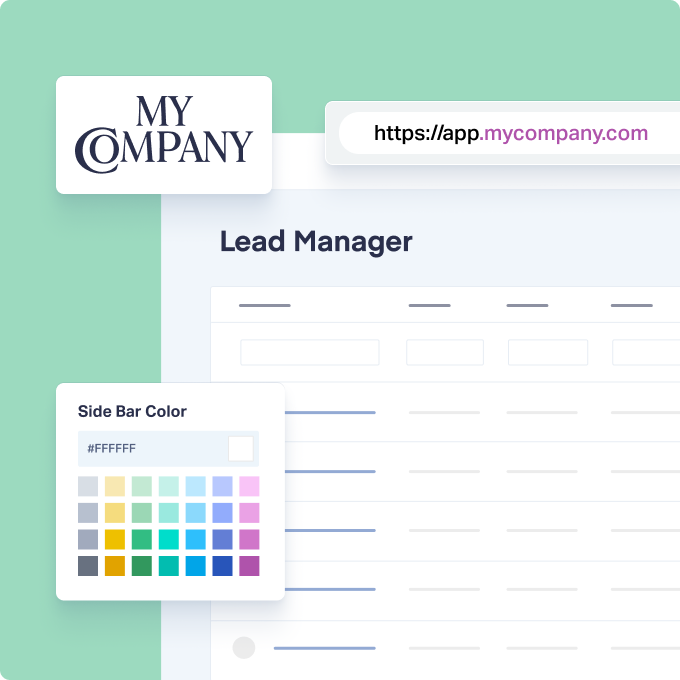
The Fix: Deliver this transparency through a White-Labeled Client Portal.
Not only does this position you as the owner of the "Truth Layer" for their business, but research shows that providing clients with an interactive portal can nearly double satisfaction scores—jumping from 50% to 89%. By replacing manual back-and-forth with a transparent "self-service" layer, you eliminate the friction of status requests and build the high-level trust necessary to scale the account.
How to set this up in 3 steps:
- Map your custom tracking domain (e.g., tracking.youragency.com).
- Upload your agency logo and brand colors to the platform.
- Create a restricted "Client User" login that only grants them access to their specific account's lead and revenue data.
Feature: White Label Call & Lead Tracking
The Proactive "Bad News" Strategy
An open door isn't an excuse for the agency to stop communicating. Because the client can now see everything—including the bad leads and failed campaigns—you must beat them to the punch.
Actively point out the flaws. When a campaign drives spam or a keyword wastes budget, flag it immediately and explain how you fixed it.
This feels terrifying, but it is your best insurance policy. Data from Sprout Social proves that 85% of people are more likely to give a business a second chance after a poor experience if the organization has a history of being transparent. Highlighting your own failures (and your swift corrections) proves you are actively guarding their budget.
Proof in Action: $1.8M in 6 Months Using the "Show Your Work" Model
When agency MakeMeVisible partnered with a new veterinary clinic burned by opaque reporting, they adopted a "Show Your Work" model rather than asking for blind trust.
By providing total transparency into lead quality and sales value instead of vanity KPIs, MakeMeVisible proved their exact ROI. The result? They grew the clinic to $150,000/month in revenue ($1.8M/year) in just six months.
Transparency didn't just protect the retainer—it built a business.
Read the full case study: Agency Grows Clinic to $1.8M/yr in 6 Months Using Transparency
Asset: The "Open Book" Client Onboarding Script
The average digital agency retains clients for just 3.7 years, compared to 7 years for traditional Agencies of Record (ANA/4As). Yet, a mere 5% increase in client retention can boost agency profits by 25% to 95% (Bain & Co).
Set the foundation for a 7-year relationship by copying and pasting this script when handing over dashboard access to a new client:
"Hey [Client], attached is your high-level ROI report for the month showing the revenue we generated. But we never want you to feel like our process is a black box. I’ve just created a custom login for you to our agency's tracking portal. You now have 24/7 access to see exactly what we see—every click, every call recording, and every lead. If you ever want to dig into the raw data or see exactly where your budget is going, the door is always open."
Conclusion: From Vendor to Partner
Transparency isn't about dumping data on a client; it's about eliminating the friction of secrecy.
Currently, 48% of clients who fire their agencies do so because of "Dissatisfaction with Delivery". When you hide behind curated PDFs, you are a discretionary expense. When clients can see the real ROI upfront, and verify the work themselves whenever they want, you become an essential revenue generator.
Stop hiding behind green arrows. Build your white-labeled source of truth today.
Start your free 14-day trial of WhatConverts today or book a demo with a product expert to see how we help prove and grow your ROI.
Get a FREE presentation of WhatConverts
One of our marketing experts will give you a full presentation of how WhatConverts can help you grow your business.
Schedule a DemoGrow your business with WhatConverts