


 Alex Thompson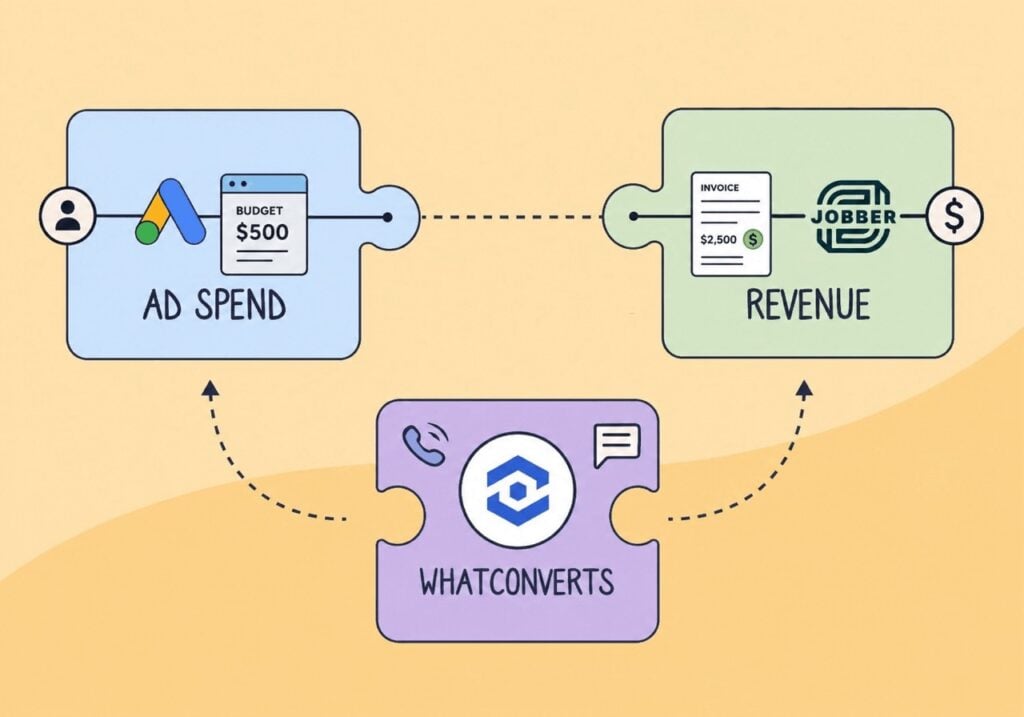
Your agency produces real value for your clients. So why aren't you pricing on that value?
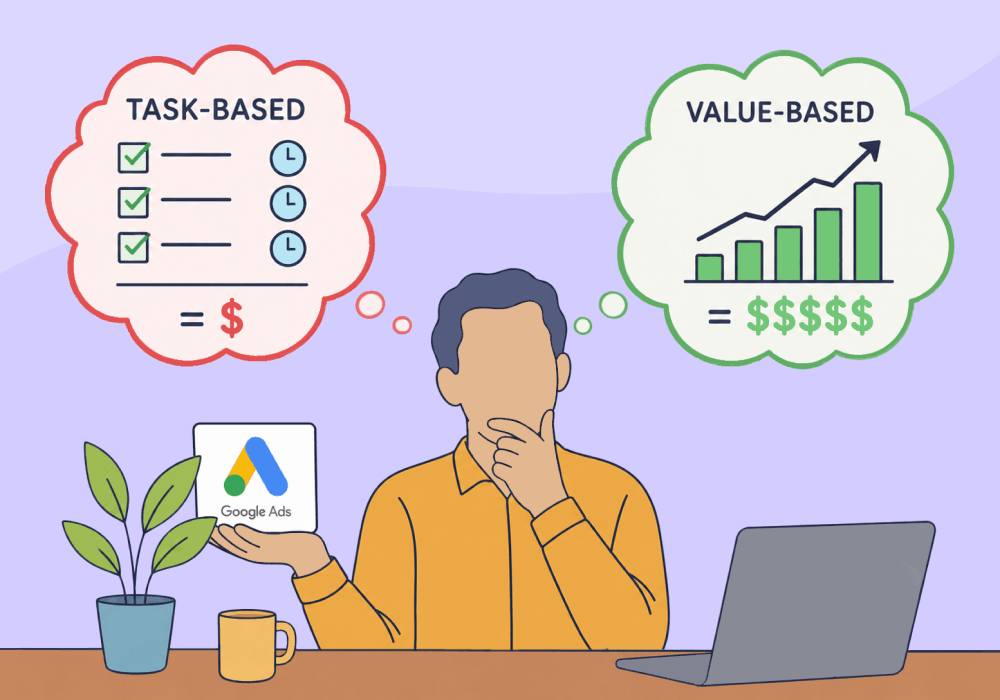
The vast majority of marketing agencies structure their pricing around costs: ad budget, hours spent, scope of projects. But these models demand more overhead in order to scale. And as revenue grows, margins continue to shrink.
Pricing your agency on value earned is the solution. Rather than charging clients for the hours you spend, you should be charging clients for the revenue you generate.
This is the heart of the Revenue Engine, a new system powered by WhatConverts. Below is a series of articles walking you through how the Revenue Engine helps agencies like yours thrive through value-based pricing.
What the Revenue Engine Does
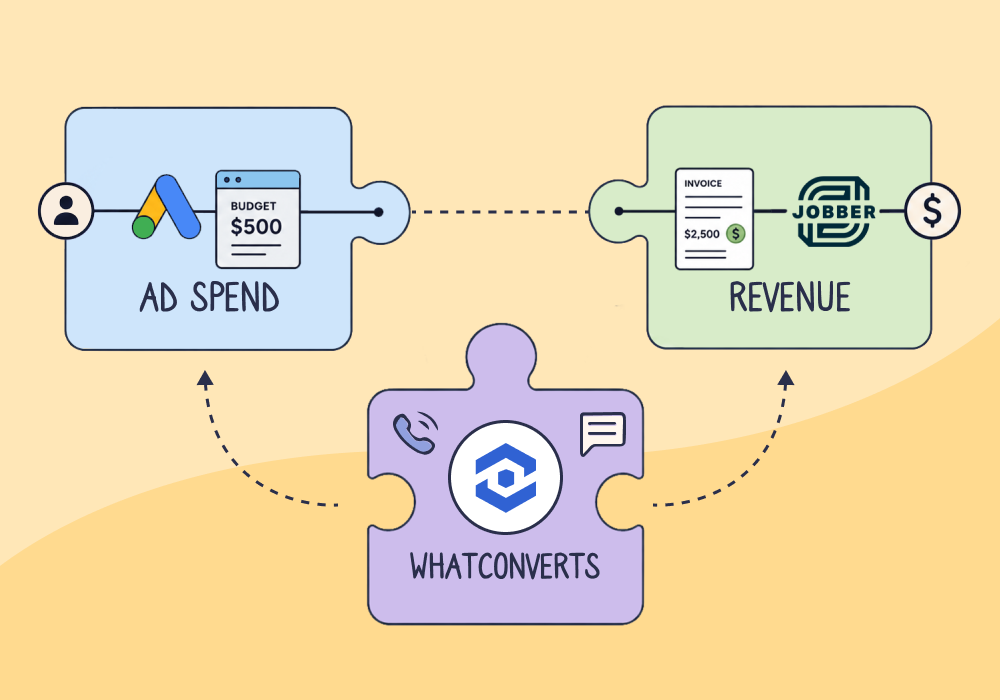
The Revenue Engine is how you prove the revenue and price on it. It connects every Google Ads lead to the paid invoice in Jobber, so every dollar of campaign revenue traces to the campaign that earned it. Because the number comes from the client's own books, they can verify it themselves. That turns a budget review from "here are your leads" into "here is the revenue your marketing produced."
Between the first click and the final payment, it tracks five stages: contact, appointment, estimate, job, and paid invoice. Six pieces make that work:
- Revenue Proof attaches Jobber-validated revenue to each lead
- Clean Data qualifies and organizes those leads automatically
- Full Visibility follows every step from first click to paid invoice
- The Optimization Flywheel sends invoiced revenue to Google Ads so bids target paid jobs
- Owner-Ready Reports give you financial statements for the client conversation
- The AREVOS integration adds forecasts, audits, quarterly reviews, and P&L reporting
The Revenue Engine is in limited beta with a fixed number of slots. It is free while the beta runs, and there is no commitment when it ends. Agencies in the pilot give feedback in exchange for premium features at no cost.
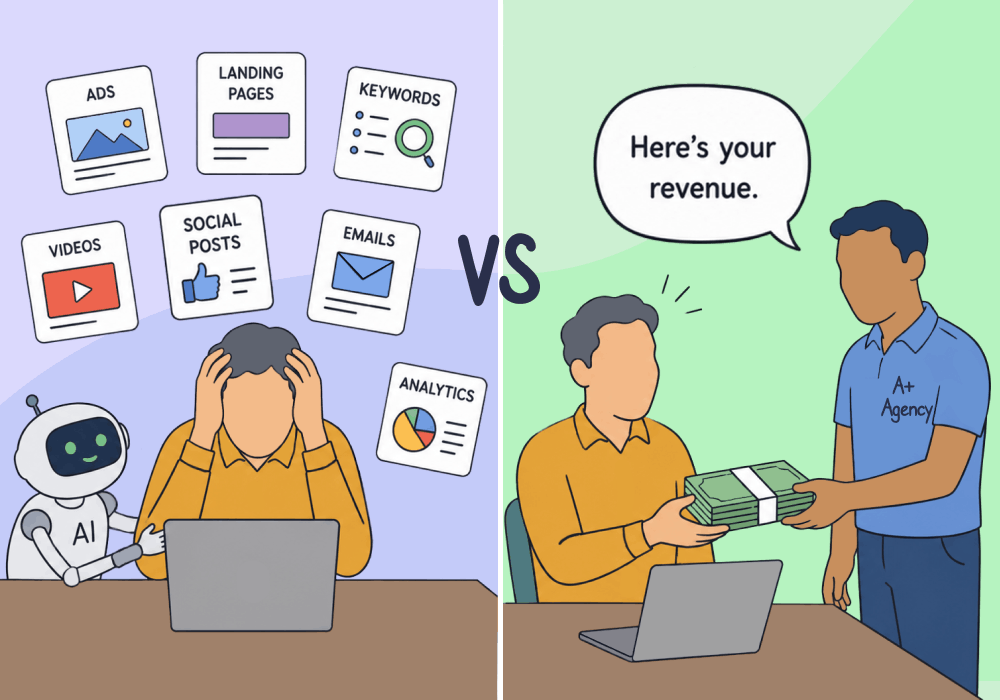
1. AI Can Do the Tasks. It Can't Own the Revenue Number.
Read this if a client has started asking what your retainer actually covers.
You'll learn:
- The four PPC line items Google automated, each mapped to the feature that replaced it
- Why paid media churns at 49% a year, the highest of any agency service line
- A direct answer for the client who asks what they are still paying you for
- Three things a revenue number needs: a real click, a booked job, a paid invoice
- How uploading invoiced revenue to Google Ads teaches Smart Bidding which clicks pay off
2. From Cost to Value: The Pricing Mindset Shift That Changes Everything for Agencies
Read this if you believe in value pricing but can't work out how to actually charge for it.
You'll learn:
- A quick check on whether you have underpriced your best client
- McKinsey's finding that a 1% price increase lifts operating profit by roughly 8%
- Worked example: a $4,500 retainer holds flat while campaign revenue rises from $40K to $200K
- Five steps that turn an attributed revenue figure into a monthly price
- Why Google Ads and the client's CRM can't produce the number value pricing needs
3. From Lead to Paid Invoice: How WhatConverts Closes the Attribution Loop
Read this if your monthly report ends at lead count and the client wants revenue.
You'll learn:
- Growing pressure from CFOs, CEOs, and boards to prove marketing's impact, per the CMO Survey
- Same month, same client: 'Leads: 47' or '$182,400 in invoiced jobs across nine campaigns'
- Google's 90-day window for offline conversions, 63-day for enhanced conversions for leads
- Why a storm-damage roof waiting on insurance approval can invoice after the 63-day window closes
- Three checkpoints that find where your own stack drops the lead source
- An interactive "Where does your loop break?" diagnostic, built into the article
4. Introducing the Revenue Retainer: A New Way to Price Agency Work
Read this if you have decided to change how you price and need the number that goes on the invoice.
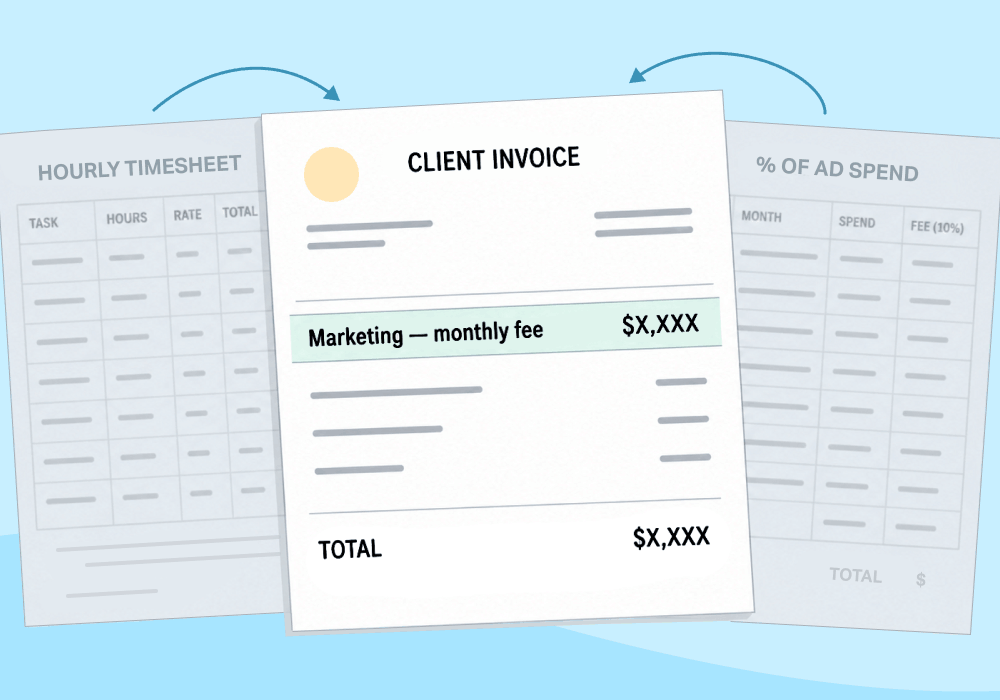
Read the Article – Introducing the Revenue Retainer: A New Way to Price Agency Work
You'll learn:
- The four-step formula worked through on an example roofing client with a $2.4M attributed baseline
- What $250 an hour across 25 billable hours a week caps a single biller at
- Why a fee based on ad spend shrinks every time you improve the account
- Four industries already charging a share of the result, and what each takes it from
- A readiness checklist and a Revenue Retainer calculator for your own numbers
5. You Don't Have to Jump All at Once: A Practical Path to a Revenue Retainer
Read this if you want to move on revenue-based pricing without betting the whole book.
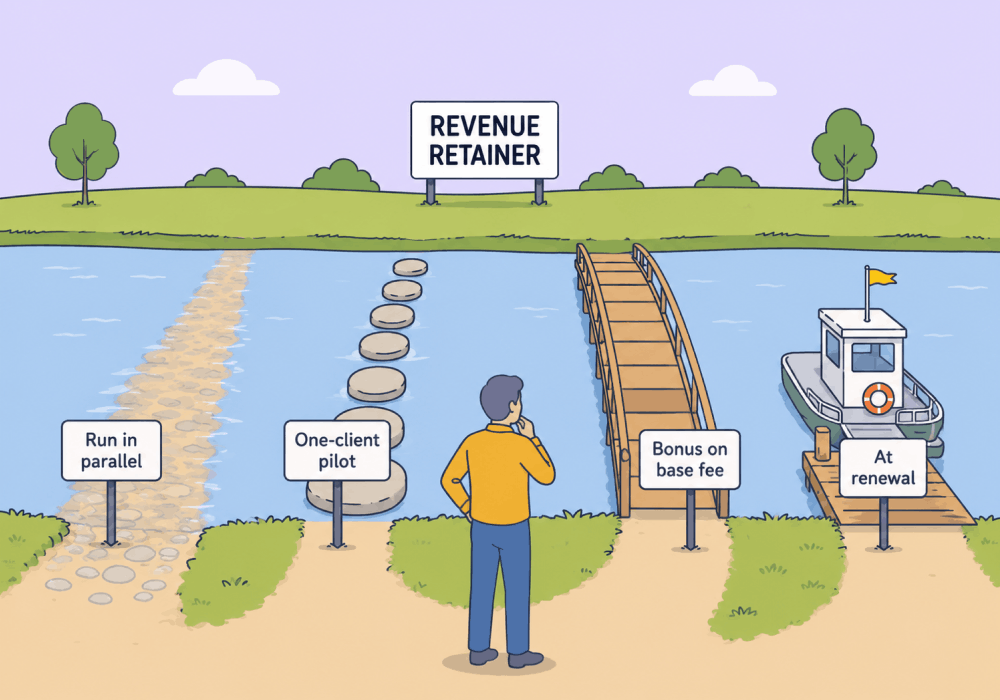
Read the Article – You Don't Have to Jump All at Once: A Practical Path to a Revenue Retainer
You'll learn:
- Four on-ramps: parallel run, bonus on the base fee, single-client pilot, or switch at renewal
- An interactive decision helper that matches an on-ramp to your book of business
- Karl Sakas: the 50% raise he accepted, the 75% jump that cost the vendor work
- Why renewal is the only on-ramp that works before your attribution is solid
6. Trust Before Price: What Happens in Your First 30 Days with a Revenue Retainer
Read this if a client stalls on your revenue-based fee and says they will think about it.
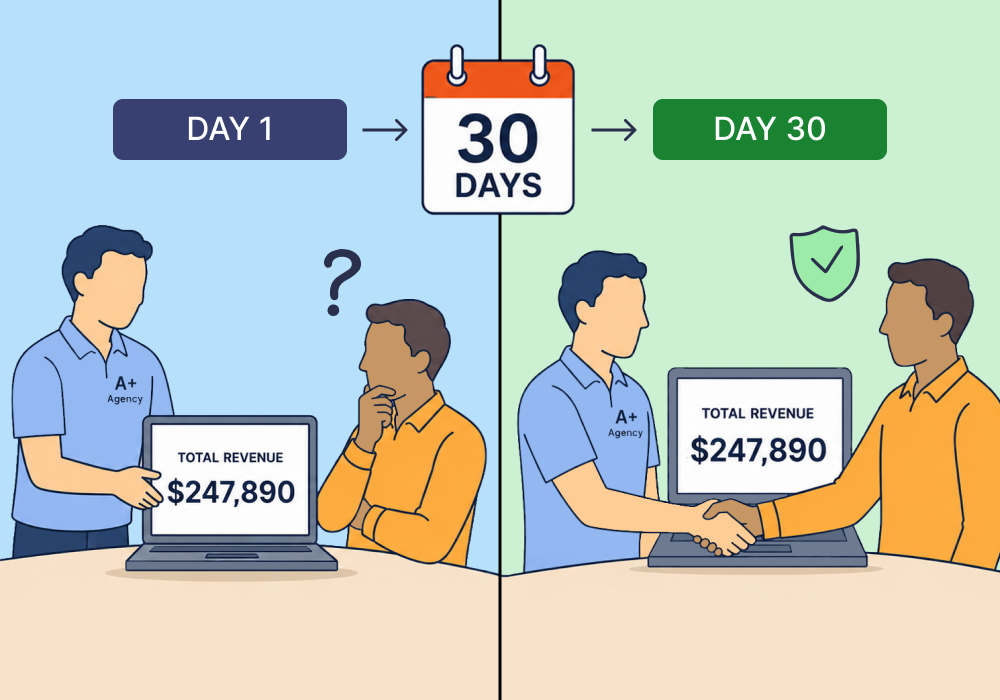
You'll learn:
- A 30-day plan you can run on a client's existing campaigns without launching anything new
- Why charging for the proof phase wins the deal that discounting it loses
- What proving the number early is worth: 8.1 years of client tenure against 3.8 for agencies that get audited every quarter
- The four checks that turn your revenue claim into a number the client can trace back to their own booked jobs
7. What Percentage Should You Charge? 5%, 10%, or 15% of Revenue
Read this if you are staring at a blank percentage field and cannot say why you picked the number.
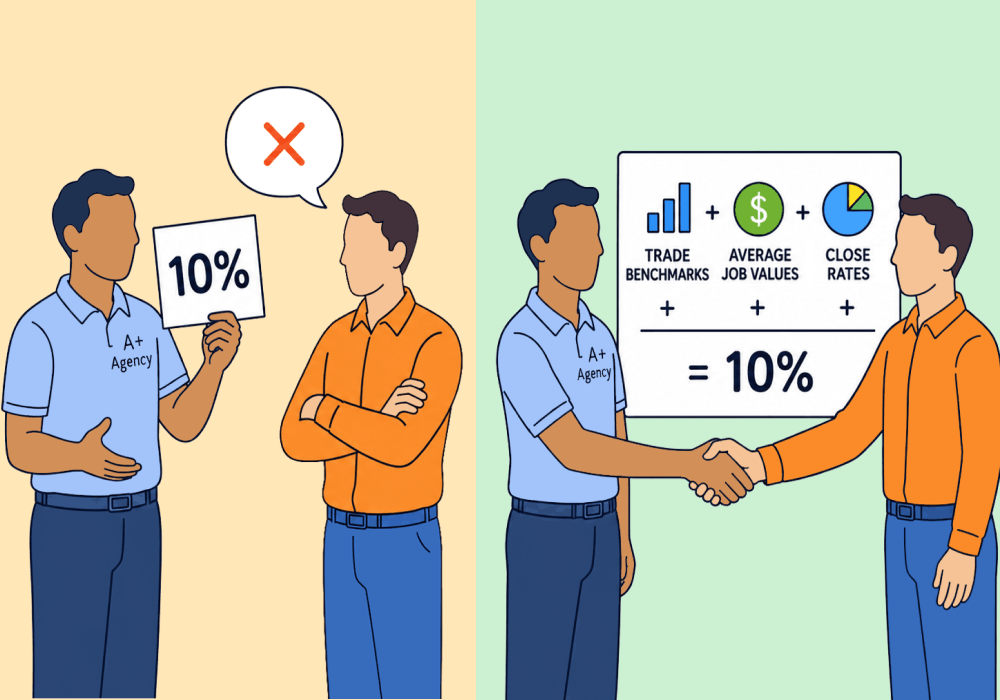
Read the Article – What Percentage Should You Charge? 5%, 10%, or 15% of Revenue
You'll learn:
- A defensible answer to "why that number?" that does not require becoming a pricing expert
- Why no clean "home services" rate exists, and how two inputs make one lead worth $135 to one client and $2,400 to another
- Whether 10% reads high or low, answered against what recruiting, consulting, franchising, and M&A charge
- Why a rate the client can trace to their own close rate and invoiced job values ends the argument over the percentage
8. The Mortgage Valuation for Marketing: Why Your Retainer Should Work Like an Appraisal
Read this if the client asks how you landed on that number and your only answer is your own judgment.
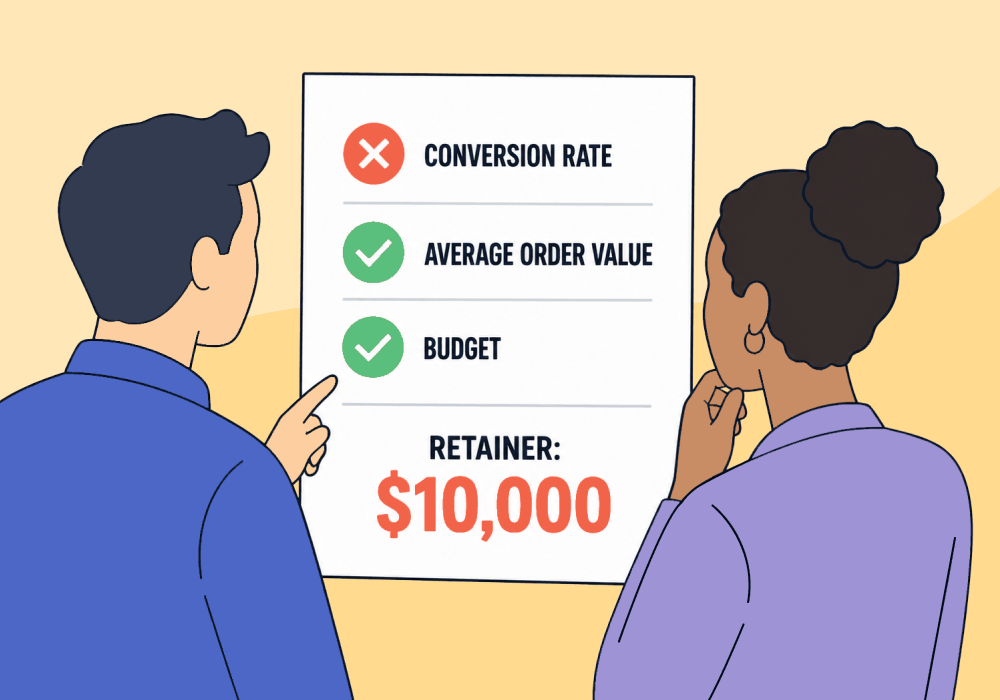
You'll learn:
- Why your expertise is not what is failing, and what actually changes the client's answer
- What a number nobody in the room invented buys you, and why it holds even when the client wishes it were lower
- The four-step version you can run by hand on your next proposal, before any tool is involved
- Why a figure built from the client's own close rate and invoiced job values is the one they stop negotiating
9. How to Handle Seasonality Without Changing Your Price
Read this if a client's revenue swings by season and you are renegotiating every few months.
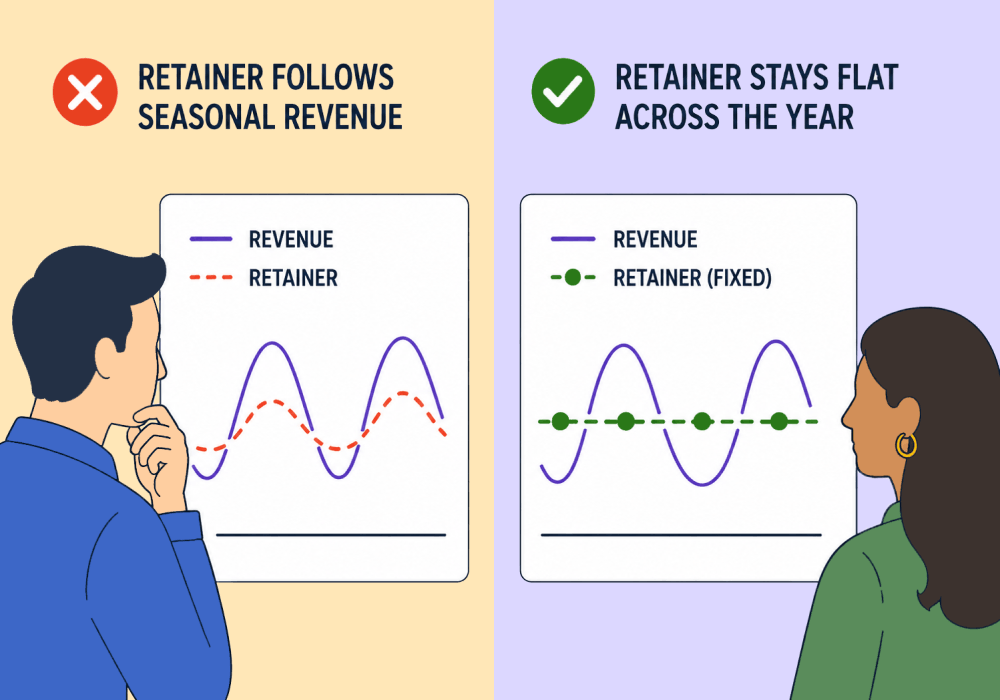
Read the Article – How to Handle Seasonality Without Changing Your Price
You'll learn:
- How to hold one price across a swinging year, and what to tell the client who asks why it does not move
- What ramping the fee actually costs you: four to six pricing talks a year, each reopening the same question
- Why a packed July and a dead February are both already inside the number, worked through a modeled $2M contractor
- Why the twelve-month number has to be attributable revenue rather than the client's whole top line
10. When Reality Doesn't Match the Forecast: What a Revenue Retainer Miss Actually Means
Read this if the question stopping you is what happens the first quarter you come in under.
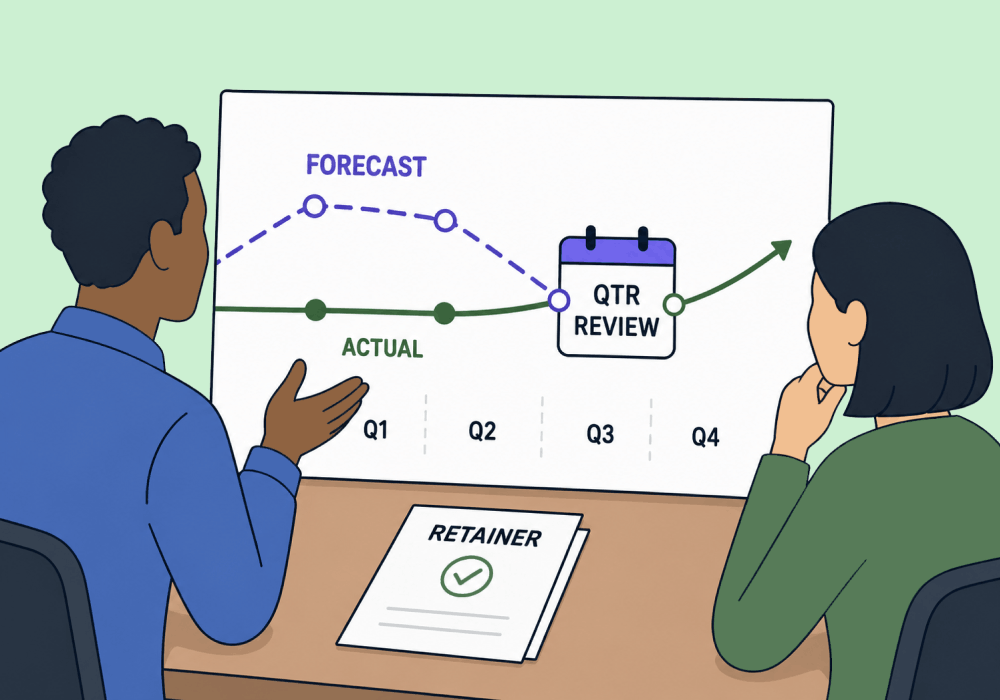
You'll learn:
- Why the fee for the closed quarter stays earned, and what the review actually adjusts
- A worked HVAC quarter, $180,000 planned against $152,000 actual, and how to show the gap was the client's staffing rather than your targeting
- Clean answers to the three money questions: do I refund the difference, is this just renegotiation, what if I miss every quarter
- Why the review needs the forecast and the attributable-revenue actual on one screen, not two versions of the number
Start With the Number, Then Pick the Price
Start with article 3 if your reporting still ends at lead count. Start with article 4 if you already have the revenue number and need the price that goes on the invoice. Either way the fee depends on the same link, and the Revenue Engine builds it between Google Ads and Jobber.
Get a FREE presentation of WhatConverts
One of our marketing experts will give you a full presentation of how WhatConverts can help you grow your business.
Schedule a DemoGrow your business with WhatConverts